
If you mainly iron cuffs
After a trip, you want to work neatly around buttons and seams without getting out a large appliance for just one shirt.


For a pair of shirt cuffs, a compact steam iron with an easy-to-manoeuvre tip and adjustable steam is usually the most suitable choice, provided the care label allows ironing. If the fabric is still damp, don’t automatically add more steam: use steam first if needed, then continue without steam, and let the shirt dry thoroughly. A steam generator is mainly worth considering if you also regularly iron larger loads of laundry.
After a trip, you want to work neatly around buttons and seams without getting out a large appliance for just one shirt.
You want to smooth out creases without making the cuff wetter with extra steam. The care label and the ability to adjust the steam are important considerations.
You also iron piles of shirts and need to weigh up a larger water tank against the space the appliance takes up.
Suitable if: you mainly iron one shirt or a few cuffs and want an appliance that doesn’t need much storage space.
Trade-off: according to the Dutch Consumers’ Association, a steam iron has a smaller water tank than a steam generator, so you’ll need to refill it sooner during longer ironing sessions.
Suitable if: as well as cuffs, you regularly iron lots of shirts or other laundry, and have room for the appliance and its separate water tank.
Trade-off: the Dutch Consumers’ Association highlights the larger water tank as an advantage when you have a lot of ironing to do; a steam generator also takes up more storage space.
Suitable if: you mainly want to freshen up light creases in a hanging shirt without using an ironing board; Braun describes garment steamers as appliances that don’t require an ironing board.
Trade-off: if you want a crisp, flat-pressed cuff, check that the specific appliance is suitable for the job.
| What to consider | What to look for | Who is this important for? |
|---|---|---|
| Precise ironing | Check the shape of the tip and whether you can lay the cuff flat. | When I’m working around buttons and seams, I want to position the tip accurately without relying solely on a powerful steam boost. Around 36% of consumers prioritise precise ironing around cuffs. |
| Moisture and steam | Check whether you can adjust or turn off the steam, and follow the care label. | After a wet journey, I want to smooth out creases without making the cuff wetter. Around 29% of consumers prioritise control over moisture and steam. |
| Fabric and finish | Before buying and using the iron, check the care label and the temperature and steam settings. | For delicate fabrics, I want to be able to match the settings to the care label. Around 21% of consumers prioritise protecting the fabric and its finish. |
| Longer ironing sessions | Compare the tank capacity with the storage space available; if you choose a generator, allow for its separate water tank. | If I regularly iron a lot of laundry as well as cuffs, I want to refill the tank less often. Around 14% of consumers prioritise longer ironing sessions. |
Too much steam can turn into water and make the shirt or ironing board damper. The Dutch Consumers’ Association advises continuing to iron without steam after steaming, until the fabric is dry.
Check whether the steam can be adjusted, follow the care label and let the shirt dry thoroughly before wearing it.
When ironing cuffs, it’s important to be able to reach around buttons and seams. Braun’s product information lists both 2700 W and 2600 W for the SI5256BL, so wattage alone isn’t a reliable basis for choosing.
Compare the tip and settings of the exact model, and check that the care label allows ironing and steam.
An anti-scale feature doesn’t eliminate the need for maintenance. Some systems use cartridges or cassettes that need to be replaced periodically.
Before buying, check the descaling method and whether your chosen model uses replaceable cartridges.
Systems with replaceable anti-scale cartridges or cassettes can involve ongoing costs.
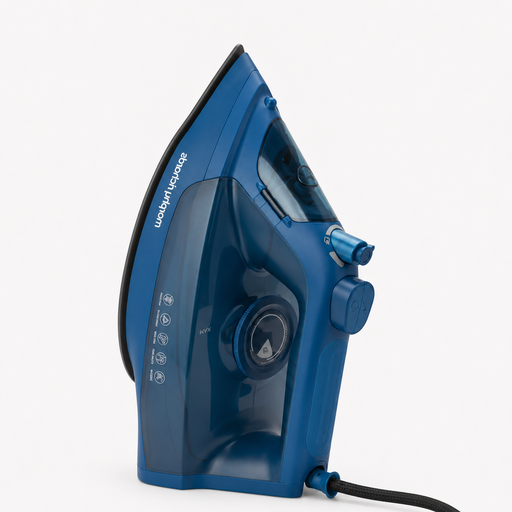
TexStyle models are worth considering if you want to work precisely around seams and buttons. Braun lists a precision tip and manual temperature control for the SI5256BL.
The Ultimate Pure FV9851 is worth a look if you want a slim tip for edges, seams and collars.
The 3000 Series, including the DST3041/80, is an option for smaller amounts of ironing.
This selection of Joybuy products includes steam irons for quick ironing around cuffs and steam generators for anyone who also does longer ironing sessions.
 No image available
A compact option for quick ironing sessions when you want to adjust the temperature and steam manually.
Dry and steam ironing; ceramic soleplate; removable 0.15-litre tank.
 No image available
The listed precision tip may suit anyone who wants to iron around buttons and hard-to-reach areas.
300 ml water tank; anti-drip system; FreeGlide 3D SuperCeramic soleplate.
 No image available
An option worth considering if a precision tip and adjustable steam matter to you when ironing seams and hard-to-reach areas.
Ceramic soleplate; 350 ml water tank; 2-metre cord.
 No image available
A steam generator to consider if you do longer ironing sessions as well as ironing cuffs; the Dutch Consumers’ Association points out that a generator needs more storage space.
1.4-litre water tank; 2400 W; 350 g steam boost; vertical steam; automatic shut-off.
 No image available
A generator for anyone looking to combine a larger tank with longer ironing sessions.
1.8-litre water tank; Durilium AirGlide soleplate; Calc Clear anti-scale system.
Not automatically: first check whether the care label allows ironing and steam. Too much steam can make the fabric and ironing board damper. The Dutch Consumers’ Association advises that, if ironing is allowed, you should use steam first where appropriate, then continue without steam, and let the shirt dry thoroughly.
For a crisp, flat-pressed cuff, an iron is the more obvious choice, but make sure you can lay the cuff flat safely. According to the Dutch Consumers’ Association, a steam generator is mainly worth considering if you often iron larger loads. A garment steamer can freshen hanging clothes without an ironing board, but it won’t necessarily be suitable for a sharply pressed cuff.
The Dutch Consumers’ Association says that tap water in the Netherlands is generally suitable. Follow the instructions for your specific appliance when descaling or, if applicable, mixing with distilled water; don’t add perfumed ironing water or other products.
According to the Government of the Netherlands, the seller must offer an appropriate solution if a product is faulty, such as a repair or replacement and, where applicable, a refund. The Netherlands does not have one fixed statutory guarantee period for all products; a manufacturer’s guarantee does not replace your statutory rights.