
Precise ironing around the collar
If you want to work neatly along edges and in hard-to-reach areas, look at the shape of the soleplate tip. Braun highlights a precision tip on the TexStyle 3, while Philips recommends ironing the collar first.


If you mainly iron one or a few collars for the working week, a standard steam iron is likely to be the practical choice. Look for a pointed soleplate and adjustable temperature and steam settings. A steam generator is better suited to large piles of ironing and stubborn creases, while a 2-in-1 model is worth considering if you also want to freshen up hanging clothes. For any model, check that you can iron the collar flat and follow the garment care label.
If you want to work neatly along edges and in hard-to-reach areas, look at the shape of the soleplate tip. Braun highlights a precision tip on the TexStyle 3, while Philips recommends ironing the collar first.
A standard steam iron can be handy for quick ironing sessions, especially if storage space is limited. The Dutch Consumers’ Association considers this type suitable if you don’t have much ironing to do at a time.
If you want to adjust the temperature and steam for different fabrics, check which settings the model offers and always follow the garment’s care label. Philips recommends checking the washing and ironing instructions before use.
Best if: you usually iron a few shirts and want to keep storage space to a minimum.
The trade-off: if you have a larger pile of laundry, you may need to refill the reservoir more often than with a steam generator. The Dutch Consumers’ Association describes this type as compact and suitable for lighter ironing needs.
Best if: ironing collars is part of a larger pile of ironing and you regularly deal with stubborn creases.
The trade-off: the separate tank takes up more storage space, and its extra capacity may not be necessary if you only iron a few collars. The Dutch Consumers’ Association makes this distinction based on how much ironing you do.
Best if: you want to freshen up hanging clothes as well as iron collars.
The trade-off: steaming clothes vertically isn’t the same as pressing a collar flat. Tefal describes both ways of using the JF4031E0 and highlights its precision tip. Check whether an ironing mat is included, too.
| What to consider | What should you check? | Who is this important for? |
|---|---|---|
| Collar edges | Check the shape of the soleplate tip and the space around buttons; make sure the steam control is easy to reach. | If you want to iron the edges and narrow sections of a collar neatly, precise control is key. Around 40% of consumers give collar precision top priority. |
| Quick ironing sessions | Compare the size, heat-up time and reservoir capacity with how you plan to use the iron. | If you want to get a few shirts ready and store the iron neatly, a quick, straightforward ironing session is likely to matter most. Around 30% of consumers put this need first. |
| Fabric and settings | Read the care labels and compare the temperature and steam settings on the exact model. | If you iron shirts made from different fabrics, you’ll want to adjust the heat and steam to suit their care labels. Around 20% of consumers prioritise this flexibility. |
| Maintenance | Find the descaling instructions for the exact model and check that you can carry them out. | If you use steam regularly, it’s useful to know what maintenance is involved. Around 10% of consumers make ease of maintenance their main consideration. |
The larger tank and more powerful steam are most useful for larger piles of ironing or stubborn creases. For a small ironing session, the extra storage space and capacity may be unnecessary.
First consider how many clothes you iron at a time, then compare the different types of appliance.
Steaming clothes vertically and ironing them flat with a heated soleplate are two different ways of using an appliance.
If you’re considering a 2-in-1 model, check that it can be used for flat ironing and look at the soleplate tip and any included ironing mat.
Some labels rule out ironing or steam, and using the wrong setting could damage the garment.
Check the label before heating the iron, and don’t use steam if the label advises against it.
Specifications and features for different models aren’t an independent comparison of how well they iron your shirt.
Compare the full model number and relevant features, and base your choice on how you plan to use the iron and the garment’s care label.
The TexStyle 3 range is worth a look if you’re after a standard steam iron with a precision tip.
The Express Steam FV2838E0 is a standard steam iron, while the Duo Power JF4031E0 is a separate 2-in-1 option.
The 3000 Series gives you an idea of the steam and reservoir specifications you can compare when choosing a standard iron.
The Autosteam DW4020D1 is worth comparing if you like the idea of automatic steam and temperature control.
This selection features standard steam irons for quick ironing sessions and precise work on shirt collars.
 No image available
The slim tip is designed to reach awkward areas, such as around buttons.
Adjustable temperature and variable steam. Calc-Clean system. Steam isn’t available on the synthetic setting; the product information warns that using steam on this setting may cause water to spit.
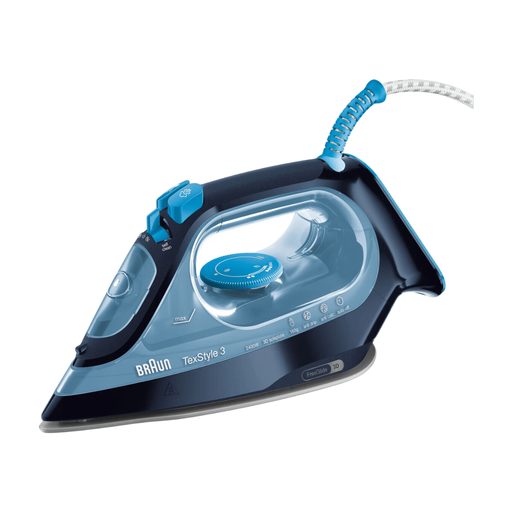 No image available
The precision tip is designed to reach awkward areas, including collars and around buttons.
According to the product information, the iron heats up in as little as 35 seconds. It has an anti-scale system and an anti-drip function.
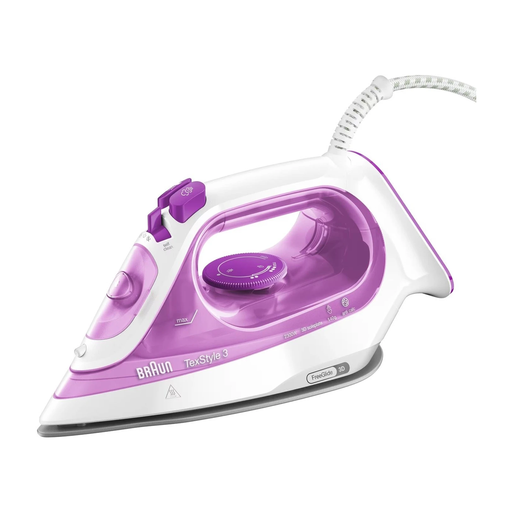 No image available
The precision tip is designed to reach awkward areas of a collar.
270 ml reservoir, self-cleaning function and a stated heat-up time of 35 seconds.
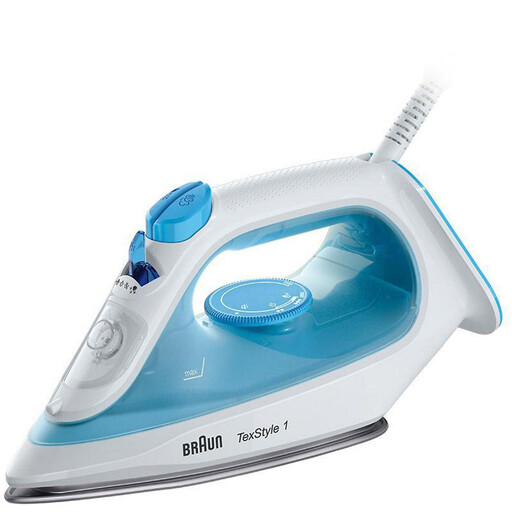 No image available
The precision tip is designed to reach awkward areas, such as collars and seams.
According to the product information, the iron is ready to use in 35 seconds. It has a self-cleaning function and an anti-drip system.
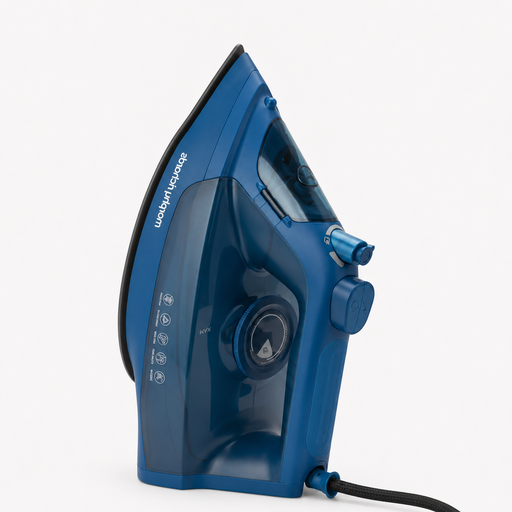 No image available
The precision tip is designed for collars and the space between buttons.
Ceramic soleplate, variable steam, self-cleaning function and anti-scale function.
First check the ironing symbol and the permitted heat setting. An iron symbol with a cross through it means you shouldn’t iron the garment; if the label rules out steam, iron without it. Philips recommends ironing the collar first.
Not just for that small task. The Dutch Consumers’ Association says a standard steam iron is suitable if you don’t have much ironing to do or want to save storage space. A steam generator is better suited to larger piles of ironing and stubborn creases.
Follow the descaling instructions for the exact model. Philips notes that limescale can build up more quickly in hard water and provides model-specific instructions. Don’t assume these instructions apply to other brands.
According to ACM ConsuWijzer, ordinary products bought online generally come with a statutory cooling-off period of up to 14 days after delivery, subject to legal exceptions. The seller must also address a faulty product that has been used normally, in line with the applicable terms. There isn’t one fixed two-year guarantee period in the Netherlands for every iron.
The EU Low Voltage Directive applies to electrical equipment within the relevant voltage range. According to EU guidance, CE rules may apply to electrical and electronic equipment; the requirements for a particular model depend on its specifications and product documentation. A CE mark alone says nothing about how well an iron presses a collar.