
Iron-on patch wearer
Wants to attach a patch to clothing after a weekend away without exposing the fabric or the application to unsuitable heat or steam. MrPatch advises following the patch instructions and switching off the steam function.


For a few iron-on patches, you usually won’t need a steam generator. What matters more is being able to apply the patch with dry heat and set a temperature that’s suitable for the fabric and the patch instructions. If you also iron a lot of laundry regularly, a steam generator can be useful for longer ironing sessions, but bear in mind its size, weight and maintenance requirements.
Wants to attach a patch to clothing after a weekend away without exposing the fabric or the application to unsuitable heat or steam. MrPatch advises following the patch instructions and switching off the steam function.
Wants to iron a larger pile of creased clothes as well as patches, and is weighing up a larger water tank and more steam against the size of a steam generator. The Consumentenbond describes this as a consideration for people who do a lot of ironing.
Is looking for an appliance that’s easy to put away after occasional use. The Consumentenbond points out that a steam generator’s larger size may be a concern if you’re short on space.
Suitable for: a few patches, not much other laundry or limited storage space.
Trade-off: the Consumentenbond notes that it has a smaller water tank and produces less steam than a steam generator.
Suitable for: people who also regularly have long ironing sessions after a weekend away.
Trade-off: the base unit takes up more space, and steam power alone says nothing about how well a patch will stick.
Suitable for: freshening up clothes vertically.
Trade-off: it won’t replace an iron soleplate when an iron-on patch needs to be pressed down.
For patch application, MrPatch recommends dry heat; steam control is mainly relevant to your regular ironing. So consider these two uses separately.
| Thing to consider | What should you check? | Who is this important for? |
|---|---|---|
| Pressing a patch on with dry heat | Follow the patch instructions and the garment care label; check that you can switch off the steam and set a suitable temperature. | I want to apply a patch without exposing the fabric or adhesive layer to the wrong heat or steam; around 39% of consumers say attaching a patch is their top priority. |
| Ironing lots of weekend laundry | Compare the tank capacity and the dimensions of the base unit; check that the appliance fits your ironing board and storage space. | If I have a large pile of laundry to deal with after a weekend away, I want to weigh up longer sessions against the space and size needed; around 23% of consumers prioritise ironing lots of laundry. |
| Dealing with different fabrics | Check the garment care label and patch instructions together; find out what temperature controls the exact model has. | I want to work with different clothing fabrics without applying a patch setting to every garment; around 23% of consumers say handling different fabrics is their top priority. |
| Allowing for space and maintenance | Measure the space for the base unit and check the descaling instructions for the exact model. | If I only use the appliance occasionally, I want to know whether storing and maintaining it will fit into my routine; around 15% of consumers prioritise space and ease of use. |
Steam specifications describe steam ironing; for iron-on patches, MrPatch specifically recommends dry heat.
Check the patch instructions and garment care label first. Compare steam specifications only for your other ironing needs.
The right temperature for a patch also depends on the fabric and the instructions for the adhesive layer.
Before choosing, compare the patch and garment instructions with the controls on the exact model.
A steam generator also includes a base unit that takes up space; descaling methods also vary by model.
Check the dimensions of the complete appliance and consult the manual for maintenance advice.
The 3000 Series includes steam generators for people considering an appliance for everyday ironing. The PSG3000/20 is one specific model.
According to Tefal, the Express and Pro Express ranges include models both with and without a boiler. The SV8110 is one example from the Express range.
Braun offers the CareStyle and UpStyle 2 ranges. The brand also positions the UpStyle 2 IS2755BK as a compact option for storage.
Laurastar presents Lift as a steam station that can be used on an ironing board or with clothes on a hanger.
These models are steam generators for people who have regular, potentially longer ironing sessions as well as patchwork. Their steam and tank specifications can help with laundry, but they don’t prove that a model can provide the dry heat and temperature required by your patch instructions.
 Image unavailable
For people who have longer everyday ironing sessions as well as patchwork; the steam specifications say nothing about how well a patch will stick.
2400 W; 120 g/min continuous steam; 350 g steam boost; 1.4-litre tank; ceramic soleplate; temperature adjustable to suit the fabric type.
 Image unavailable
For people who want automatic temperature control for everyday ironing; for patchwork, check separately that the appliance works in line with the patch instructions.
120 g/min continuous steam; 360 g steam boost; 1.3-litre tank; SteamGlide soleplate; OptimalTEMP; vertical steaming.
 Image unavailable
For longer everyday ironing sessions where a 1.8-litre tank may be useful; the steam output doesn’t determine whether a patch can be applied with dry heat.
120 g/min continuous steam; 380 g steam boost; 1.8-litre tank; Calc Clear anti-scale technology.
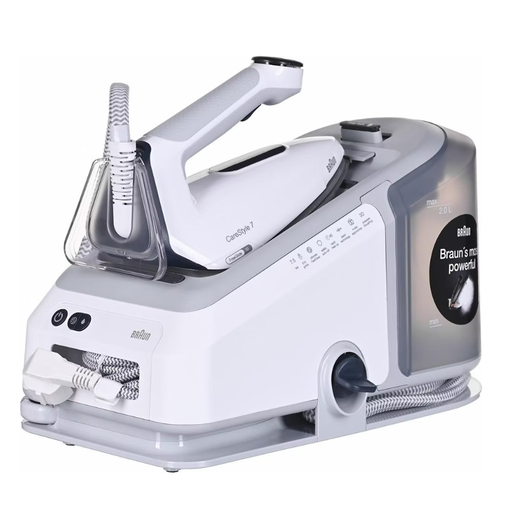 Image unavailable
For people considering a steam ironing system for everyday clothes as well as patchwork; check separately that the required dry method can be used for patches.
2-litre water tank; vertical ironing; FreeGlide 3D soleplate; EloxalPlus soleplate; FastClean descaling system.
 Image unavailable
For people who want to compare a removable tank and ECO mode for everyday ironing; the steam specifications don’t tell you whether a patch can be applied with dry heat.
2400 W; 6 bar pressure; 120 g steam boost; 70 g steam output; removable 1.8-litre tank; ECO mode; self-cleaning function; vertical steaming.
No. Patch supplier MrPatch recommends using dry heat. Follow the instructions for your patch, use a temperature that’s safe for the fabric and check that you can use the iron without steam.
Don’t simply turn up the temperature to make the adhesive stick. MrPatch’s instructions limit the temperature to one that’s safe for the fabric. If that setting isn’t compatible with the patch instructions, it hasn’t been established that the patch can be attached suitably.
Follow the descaling procedure for the exact model. Philips advises choosing the method according to the model number and its manual; don’t assume that a maintenance interval applies to another brand or model.
No. ACM ConsuWijzer explains that the legal guarantee depends on what you could reasonably expect from the product under normal use, and that the retailer is responsible for providing an appropriate solution if a product is faulty. A separate manufacturer’s guarantee doesn’t replace this legal right.
For online consumer purchases, there is generally a legal 14-day cooling-off period after delivery, according to ACM ConsuWijzer. Exceptions and conditions may apply when trying out the product, so check these before using the appliance more than necessary to assess it.