
Student applying patches
You want to repair or customise clothing without damaging the fabric. Follow the instructions for the specific patch; a powerful steam setting isn’t automatically the right approach.


For just a few patches, you probably won’t need a steam generator; a more compact steam iron may be more practical if you do little ironing or have limited storage space. If you also regularly iron large loads of laundry, a steam generator could be a good fit. Always check first that the patch and fabric instructions are compatible with the settings available on the appliance.
You want to repair or customise clothing without damaging the fabric. Follow the instructions for the specific patch; a powerful steam setting isn’t automatically the right approach.
You iron occasionally and need to share the ironing area or put the appliance away after use. The Consumers’ Association lists a standard steam iron as an option when storage space is limited.
You also regularly iron larger loads of clothing. In that case, it’s more important to compare the steam generator’s tank capacity, refilling and maintenance requirements. Follow the model’s manual for descaling.
When choosing an appliance for patching in student accommodation, start with the instructions for the patch and fabric. Then consider how much space you have and how much ordinary laundry you iron.
A good fit if: you regularly iron larger loads of clothing as well as patches, and have a stable place for the separate tank.
Trade-off: the base takes up more space and needs maintenance; extra steam doesn’t prove that a patch will adhere better.
A good fit if: you occasionally iron a patch or an item of clothing and have limited space.
Trade-off: for longer ironing sessions, you’ll need to refill the smaller tank more often, according to the Consumers’ Association.
A good fit if: the patch or the surface isn’t suitable for the ironing method available, or the area will get a lot of wear.
Trade-off: sewing it on takes extra work. Prym also recommends this for its repair fabric on knees and elbows subject to heavy wear; that advice doesn’t necessarily apply to other patches.
| What to consider | What should you check? | Who should pay particular attention? |
|---|---|---|
| Patch and fabric | Read the instructions for both materials and check that you can set the appliance accordingly. Don’t assume there’s a universal temperature or pressing time. | If I want to apply a patch, I need to know whether both the patch and fabric can withstand the specified heat and method. Around 36% of consumers say that checking the patch and fabric are suitable is their main buying concern. |
| Shared ironing area | Check that the base can stand securely and that the socket is suitable. Agree who will switch off the appliance, and let it cool before putting it away. | If we share an ironing area, I need to know where the appliance can be placed safely and how we’ll put it away after use. Around 29% of consumers put safe use in a shared space first. |
| Space and purchase | Compare the dimensions of the base with your storage space and ironing board, not just those of the iron itself. | If I have little cupboard space and only iron occasionally, I don’t want to choose an appliance that’s awkward to store. Around 21% of consumers prioritise space and choosing an appliance that suits their needs. |
| Regular ironing | Compare the tank capacity and the model-specific descaling method; follow the manual for maintenance. | If I often iron lots of clothing as well as patches, I need to know how often I’ll have to refill the tank and what maintenance is required. Around 14% of consumers say larger ironing loads are their main buying concern. |
The Consumers’ Association describes steam mainly as an aid for smoothing creases. That doesn’t tell you whether the heat and method are right for a particular patch.
Read the instructions for the patch and fabric first. Then compare them with the appliance’s settings.
A steam generator has a separate tank and, according to the Consumers’ Association, may be too large or heavy for a standard ironing board.
Before buying, check that your ironing board and storage space can accommodate the complete appliance.
Limescale can cause problems with the appliance, and the descaling method varies by model. The Consumers’ Association recommends following the manual.
Check which descaling method and maintenance are recommended for your model.
Cleaning takes time, so factor in the maintenance listed in the model’s manual.
Automatic shut-off is an additional feature on models that actually have it; a shared ironing area and power connection still need attention.
Agree who will switch off the appliance and let it cool before putting it away. The Netherlands Fire Service advises against connecting extension leads to each other and overloading extension sockets.
The ST-8930 is a steam generator with an adjustable thermostat, which may be useful if the patch instructions specify a particular temperature.
The 3000 Series and PerfectCare ranges offer different models to compare. Always check the exact model number.
The Express Easy SV6131E0 is worth comparing if you also have longer ironing sessions as well as patches to apply.
The CareStyle 3 IS3255BL is an option to compare if you’re looking for a steam generator described as compact for everyday ironing.
These Joybuy products are steam generators for anyone who irons everyday clothing as well as working with patches. Whether a model is suitable for a specific patch depends on the instructions for the patch and fabric.
 Image unavailable
Could be suitable if you iron everyday clothing as well as patches; check that the settings match the patch and fabric instructions.
2400 W; 350 g steam boost; 1,4 l water tank.
 Image unavailable
An option to compare if you do everyday ironing as well as working with patches; always follow the instructions for the fabric and patch when applying patches.
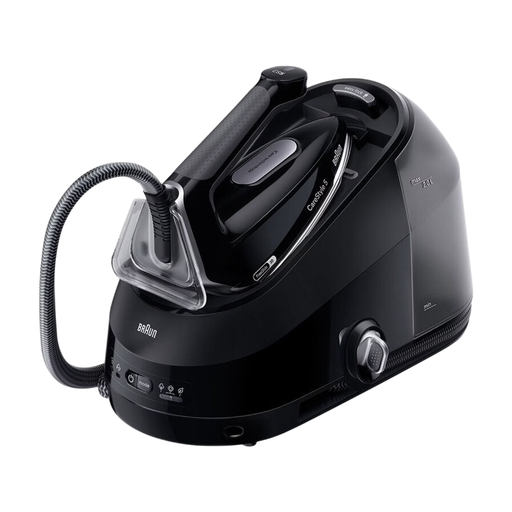 Image unavailable
Could be worth considering if you also do everyday ironing; check the model’s settings against the instructions for the patch and fabric.
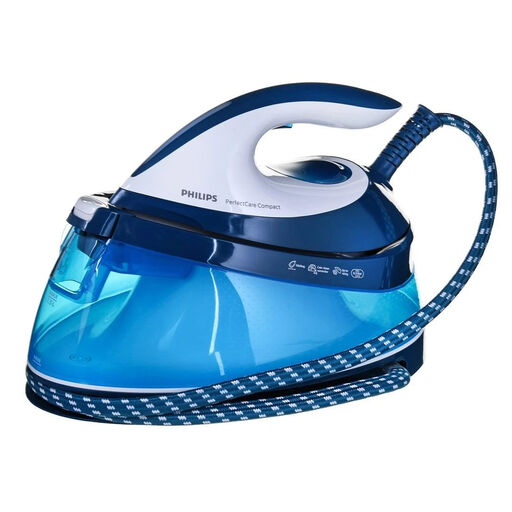 Image unavailable
An option for anyone who irons everyday clothing as well as working with patches; the patch instructions should always guide you on the right method.
2400 W; 400 g steam boost; 1,5 l water tank; vertical steaming.
 Image unavailable
An option to compare if you regularly iron as well as working with patches; check which settings are suitable for the patch and fabric.
2400 W; 120 g steam boost; 70 g steam output; 6 bar pressure; ECO mode; removable 1,8 l tank; anti-scale function; automatic shut-off.
No, that doesn’t depend on the type of appliance. Check the instructions for the specific patch and fabric, then compare them with your model’s settings. For example, Prym describes certain repair patches for areas subject to heavy wear; this isn’t a recommendation for all patches.
Not necessarily, but check whether your board can support the base securely. The Consumers’ Association notes that a steam generator may be too large or heavy for a standard ironing board.
Follow the descaling method in your model’s manual. The Consumers’ Association identifies limescale as a cause of iron problems; the maintenance required varies by appliance.
Not automatically. According to the Government of the Netherlands, when you buy something in the Netherlands you’re entitled to a statutory guarantee. If you’re considering additional cover, check what extra protection the terms and conditions offer.
For mains-powered electrical equipment that falls within the scope of the EU Low Voltage Directive, the applicable requirements must be met when it is placed on the market. These include CE marking, as described by EUR-Lex. A CE mark on its own isn’t an independent assessment of the specific item.