
Patch maker with limited space
You apply patches occasionally and want to use the recommended heat and pressure, while being able to put your workspace away again afterwards.


For the occasional patch, a compact standard steam iron is usually more practical in a small home; the Dutch Consumers’ Association cites limited storage space as a reason to choose a steam iron. A compact steam generator could be a good fit if you also regularly iron a large amount of everyday laundry and have room for the base and hose. Always follow the instructions for your patch and fabric: Cricut’s guidance applies to its own materials, and a high steam output alone does not prove that a patch will adhere properly.
You apply patches occasionally and want to use the recommended heat and pressure, while being able to put your workspace away again afterwards.
You also use the same appliance for longer ironing sessions and weigh up a larger water tank against the space taken up by the base.
You want to compare controls and maintenance without assuming that automatic temperature control is suitable for every iron-on patch.
Choose this if: you mainly apply patches occasionally, iron small amounts of laundry and have limited storage space. Check that the temperature and steam settings suit the patch instructions.
Trade-off: the smaller water tank and lower steam output are less suited to long ironing sessions; this says nothing about whether a particular patch will adhere.
Choose this if: you also regularly iron a large amount of everyday laundry, as well as applying patches, and have room for the complete base and hose in your workspace and storage area.
Trade-off: you’ll need more space than you would for an iron alone. Also check that the controls meet your patch’s instructions.
Choose this if: the patch maker specifies a temperature, pressure or surface that your iron cannot demonstrably provide, or if the fabric cannot be heated appropriately.
Trade-off: a heat press needs space of its own. Sewing on a patch or using a self-adhesive patch is a different application method, each with its own instructions. Cricut’s press instructions are intended for its own materials.
| What to consider | What should you check? | Which consumers does this matter to? |
|---|---|---|
| Applying the right heat to the patch and fabric | Compare the temperature and steam controls with the patch instructions, and check that the fabric can be ironed. For its own materials, Cricut recommends a firm, flat surface. | When I apply patches to different fabrics, I want to know whether I can use the recommended heat and pressure. Around 42% of consumers particularly value compatibility between the patch and fabric. |
| Storage and workspace | Measure the space available for the complete base, hose and appliance; also check that the surface is stable. The Dutch Consumers’ Association points out that a steam generator needs extra space. | In a small home, I want to be able to put everything away after ironing and have enough stable space while applying a patch. Around 33% of consumers prioritise storage and workspace. |
| Ironing lots of everyday laundry | Compare the tank capacity and continuous steam output separately, and weigh them against the larger base. The Dutch Consumers’ Association describes this trade-off between a steam iron and a steam generator. | If I regularly iron a large amount of laundry as well as applying patches, I want to refill less often. Around 17% of consumers say long ironing sessions are their main need. |
| Maintenance and use | Check the descaling instructions for the exact model and make sure your ironing board is suitable for the steam settings you plan to use. The Dutch Consumers’ Association explains that limescale can disrupt the steam supply and that steam can condense inside the board. | If I use the appliance regularly, I want to know what cleaning it needs and how using steam affects my ironing board. Around 8% of consumers consider easy maintenance most important. |
A high steam output does not prove that the combination of material, heat, pressure and surface is suitable for your patch. Cricut’s instructions are specific to its own patch materials.
Read the patch instructions first and compare them with the controls on the exact appliance you’re considering.
A steam generator has a separate base and hose. The Dutch Consumers’ Association warns that these appliances can be too large or heavy for a standard ironing board.
Measure the space you have for use and storage separately, and check the dimensions of the exact model.
The Dutch government states that there is no fixed statutory warranty period in the Netherlands. A manufacturer’s warranty is not the same as your statutory rights with the seller.
If a product doesn’t meet your expectations, contact the seller and treat any manufacturer’s warranty separately from your statutory rights.
The PerfectCare Compact GC7808/40 is designed for anyone who wants to use a compact steam generator for everyday laundry too.
According to Braun, the CareStyle Compact IS 2144 BK has Eco, iCare and Turbo programmes for everyday ironing.
Tefal’s range includes the Express Compact SV7112 and the separate Express Airglide SV8026.
The Compact Steam DG7520F0 is a space-saving steam generator model for which Rowenta has a spare parts and support page.
This selection features steam generators for anyone who wants to iron everyday laundry as well as apply patches. Choosing a model does not prove that it is suitable for every patch; always compare the controls with the instructions for your patch and fabric.
 No image available
Could suit you if you iron everyday laundry as well as applying patches; the name alone doesn’t tell you whether the controls meet your patch instructions.
Listed features: 2400 W, 350 g steam boost, 1.4 l tank, vertical ironing and a compact design. Colour: blue.
 No image available
An option to compare if you’re looking for a steam generator for patches and everyday laundry; first check that the controls suit your patch instructions.
Listed feature: 6.5 bar.
 No image available
Could be worth considering if you’re looking for a compact steam generator for everyday ironing; check separately whether the controls match your patch instructions.
Listed features: Compact Essential version and pink colour.
 No image available
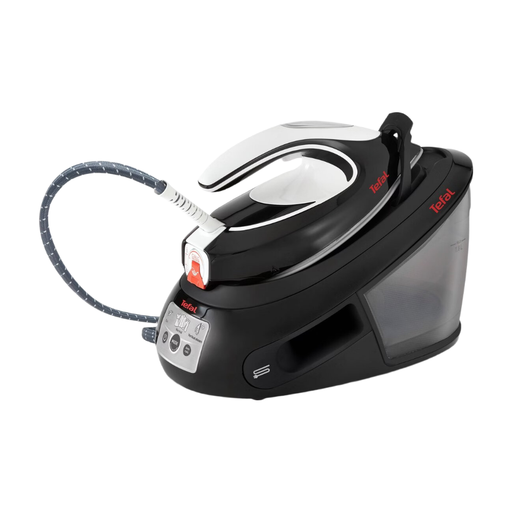
Could suit you if you’re considering a steam generator for everyday laundry too; Tefal lists a single temperature and steam setting combination for this model, so compare it with your patch instructions.
 No image available
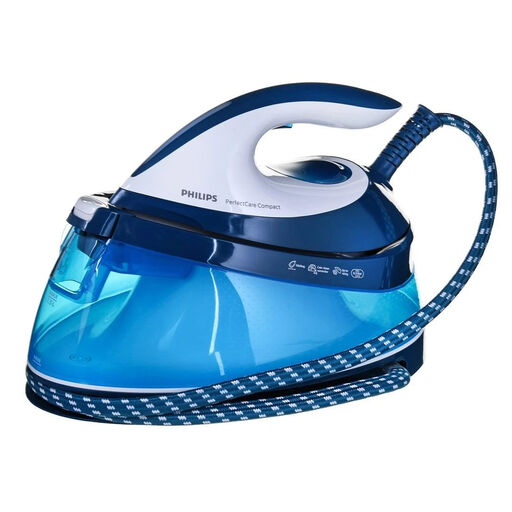
A model to compare if you iron everyday laundry as well as apply patches; don’t assume it’s suitable for patches without checking the instructions and controls.
Listed features: 2400 W, 400 g steam boost, 1.5 l tank, vertical steaming and fast heat-up. Colour: blue.
No. You can’t tell from the appliance name or the amount of steam it produces. Check the instructions for the specific patch and make sure the fabric underneath can be ironed. For its Everyday Iron-On, Cricut says to switch off the steam when using a standard iron and provides a specific setting; this instruction does not automatically apply to other types of patch.
Not necessarily. For its own heat-transfer materials, Cricut recommends a firm, flat surface and warns that a standard ironing board may not be sturdy enough to provide the necessary pressure. Protect the table or worktop according to the instructions for your patch and heat tool.
Follow the descaling and cleaning instructions for the exact model. The Dutch Consumers’ Association explains that limescale can disrupt the steam supply and that lots of steam can condense inside an ironing board; adjust your steam use to suit the task.
In the Netherlands, you can contact the seller if the product does not meet what you could reasonably expect; there is no fixed statutory warranty period of two years. Online purchases generally also come with a cooling-off period of up to 14 days after delivery, subject to possible legal exceptions. The Dutch government and the Netherlands Authority for Consumers and Markets’ ConsuWijzer service explain these rights.
For electrical consumer products covered by Dutch safety requirements, the Netherlands Food and Consumer Product Safety Authority states that a CE mark is mandatory. The mark does not prove that a particular offer or product identity meets the requirements.