Who is this for?

Patch maker with limited storage

Do you mainly apply small patches and want to put your ironing tool away easily after use? A mini soleplate can be practical, but you’ll also need a flat, heat-resistant work surface. MrPatch explains the process in its patch instructions.

Careful fabric crafter

If you work with different fabrics, match the temperature, any protective layer and the patch instructions before applying pressure. MrPatch and Holland Label both highlight the importance of following the instructions for the patch and fabric.

Clothes ironer and patch maker

If you want one appliance for patches and everyday clothes, check the temperature control and make sure you can work without steam for your patch. MrPatch recommends switching off the steam function in its patch instructions.

What should you look for when choosing?

Compact sewing or travel iron

Choose this if: you mainly apply small patches, work along seams or have limited storage space.

Trade-off: with a larger patch, a small soleplate means applying pressure in several carefully overlapping positions.

Precision or appliqué iron

Choose this if: you mainly work on small appliqués or areas close to seams.

Trade-off: a small tip covers only a limited area at a time; heat settings don’t prove that a particular patch adhesive will reach the required temperature.

Standard steam iron

Choose this if: you also want to use the same appliance for everyday clothes and can switch off the steam for your patch.

Trade-off: a standard iron takes up more storage space than a mini iron; steam performance says nothing about how well a patch will stick.

Steam generator iron

Choose this if: you also have a lot of everyday ironing and need the extra steam and separate tank for that job.

Trade-off: the separate tank needs extra space for use and storage; more steam has no proven benefit for patches.

What to consider What to look for Who should pay particular attention?
Dry heat and pressure Read the instructions for the patch and fabric; check the temperature control, whether steam can be switched off and the usable soleplate area. If you mainly want to apply a patch, choose a method that suits both the patch and the fabric. Around 36% of consumers say suitable heat and pressure are their main concern.
Storage and workspace Compare the model’s dimensions and consider where you can press safely and put down the hot appliance. If you have limited cupboard space, you may want a compact appliance, but you’ll still need a flat, heat-resistant surface to use it on. Around 29% of consumers say storage is their main concern.
Fabric protection Check the care label alongside the patch instructions; look at the temperature settings and whether a protective layer is recommended. If you work with delicate or varied fabrics, you’ll want to avoid damaging them with the method you choose. Around 21% of consumers say fabric protection is their main concern.
Dual use Check the temperature and steam controls, and make sure the dimensions suit your storage space. If you want one appliance for patches and everyday clothes, consider both uses and the settings required. Around 14% of consumers say dual use is their main concern.

Common pitfalls

  • Assuming steam output proves a patch will stick properly

    Patch instructions may specify dry heat and pressure instead. Steam performance figures for ironing clothes won’t tell you whether a particular adhesive will bond.

    First choose a method that follows your patch instructions; then consider whether the appliance is also suitable for everyday ironing.

  • Comparing only the appliance’s dimensions

    Even a compact iron needs a flat, heat-resistant surface for safe pressing.

    Before you buy, decide where you can work without damaging furniture or flooring, and where the appliance can cool down afterwards.

  • Assuming a shortened model name always refers to the same version

    A model code and an important product specification may differ between listings. Tefal gives the FV5736E0 a 270 ml tank; the Joybuy product listing states 200 ml.

    Compare the full model code, version and key specifications before treating two listings as the same product.

Brands to consider

Prym

Prym describes the Mini 611915 as a small sewing and travel iron designed for precision work.

  • Prym specifies a Europlug and a soleplate measuring 130 × 75 mm for this model.
  • The small soleplate won’t cover a large patch in one go; these product specifications don’t prove that your patch will stick.

Clover

Clover describes the Mini Iron II 8003EU as a precision iron for small work areas; this is the EU version.

  • Clover lists a small tip, a protective cover and two heat settings.
  • The small tip is not a large soleplate, and the heat settings don’t indicate which patch adhesives it will bond.

Braun

Braun describes the TexStyle 3 SI3030PU as a standard steam iron for anyone who also wants to iron everyday clothes.

  • Braun lists a manual thermostat, precision tip, self-cleaning function and 270 ml tank for this model.
  • These manufacturer specifications are not an independent test of patch adhesion; check the patch instructions before use.

Tefal

According to Tefal, the Easygliss Plus FV5736E0 combines a precision tip with features for everyday steam ironing.

  • Tefal lists 220–240 V, automatic shut-off and a 270 ml tank for this model.
  • Its standard shape needs more storage space than a mini iron; a manufacturer’s claim about glide is not a comparison of patch results.

Joybuy products

This selection includes portable steam appliances and irons for small spaces. Before using any model for a patch, check its manual to see whether it allows dry pressing with suitable flat contact.
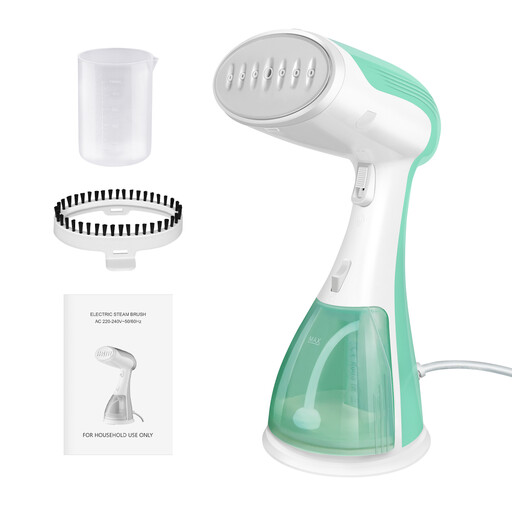
Portable garment steam iron, 1500 W

Portable garment steam iron, 1500 W

The product name describes a portable steam iron. Before choosing it for a patch, check the manual to see whether the model is suitable for dry pressing with flat contact.

Power according to the product name: 1500 W.

Joybuy

2400 W handheld steam iron with non-stick soleplate

2400 W handheld steam iron with non-stick soleplate

The product name mentions a soleplate; check whether the manual allows dry ironing and whether the settings suit your patch and fabric.

Power according to the product name: 2400 W. The product name also mentions a non-stick soleplate.

Joybuy
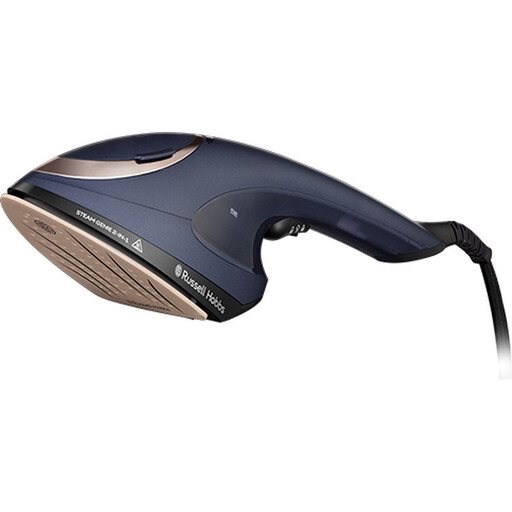
Russell Hobbs Steam Genie 2in1, model 28370-56

Russell Hobbs Steam Genie 2in1 (28370-56)

The model name indicates a 2-in-1 appliance. Check the manual to see whether the ironing function is suitable for dry pressing the patch you want to apply.

Joybuy

Xiaomi Handheld Steam Iron, model BHR9034EU, dual voltage

Xiaomi Handheld Steam Iron BHR9034EU, dual voltage

The product name describes a handheld steam iron with dual voltage. Check whether the manual allows dry pressing for your patch and which settings are suitable for the fabric.

Joybuy

Philips 1000 Series DST1030/20 steam iron, 2000 W

Philips 1000 Series DST1030/20, 2000 W

The product name describes a steam iron; check the manual for temperature control and a steam-free setting that suits your patch instructions.

Power according to the product name: 2000 W.

Joybuy

Frequently asked questions

Should the steam be on when applying iron-on patches?

Not according to the MrPatch instructions consulted: they recommend dry heat with the steam function switched off. Follow your patch instructions and take the fabric’s heat resistance into account; this method won’t necessarily work for every adhesive.

Can you press a patch on a table in your rented home?

Only if you can create a stable, flat, heat-resistant work surface without damaging it. MrPatch’s instructions recommend an ironing board or another heat-resistant surface, together with a protective cloth or suitable paper. Follow the guidance for your patch and workspace too.

Is a mini iron or a standard iron better for patches?

A mini iron is more suited to small patches and limited storage space; a standard iron may be more convenient if you also iron clothes. For either type, check that the settings and the way it delivers heat and pressure suit your patch and fabric instructions.

Is CE marking required for an electric iron on the Dutch market?

Electrical equipment covered by EU low-voltage rules, including equipment designed for 50–1,000 V AC and sold on the Dutch market, must meet the applicable safety requirements and CE-marking obligations. EUR-Lex describes these EU rules; a general requirement does not confirm that an individual model or item complies with them.
