
Patch maker working with different fabrics
You want to match the temperature to the garment’s safe ironing setting and check whether the patch needs dry heat. MrPatch and CraftKitchen provide instructions for applying patches.


First, choose an iron that suits both the patch instructions and the fabric’s safe ironing temperature: a higher setting won’t make an unsuitable fabric safe to iron. If you’re only applying patches, an adjustable dry iron may be enough; a mini iron is designed for small details, while a steam iron may be more practical if housemates also use it for everyday laundry. MrPatch advises turning off the steam when its patches require dry heat. You’ll also need a stable, heat-resistant work surface.
You want to match the temperature to the garment’s safe ironing setting and check whether the patch needs dry heat. MrPatch and CraftKitchen provide instructions for applying patches.
You’re looking for an appliance for patches as well as everyday laundry, and want to make sure it can be put down safely, switched off and maintained when used in a shared space.
You’re working on small areas or have limited storage space. A compact soleplate may be a good fit, but it doesn’t automatically make every fabric suitable for ironing.
Choose this if: you mainly apply patches and don’t need steam.
Bear in mind: housemates may miss having a steam function for everyday laundry.
Choose this if: small patches, edges or limited storage space are your priorities.
Bear in mind: its small soleplate is less suited to large ironing jobs; check the voltage setting too.
Choose this if: you’ll also use the same appliance for everyday laundry.
Bear in mind: turn off the steam when the patch requires dry heat, and factor in the steam system’s maintenance.
| Buying consideration | What should you look for? | Who should weigh this up carefully? |
|---|---|---|
| Temperature and fabric suitability | Compare the patch instructions with the garment’s care label and check that the iron has a suitable temperature setting. Choose another application method if the instructions are incompatible. | If I’m applying patches to different fabrics, I want to avoid damaging them with the heat required. Around 36% of consumers focus mainly on the combination of patch, fabric and temperature. |
| Putting it down and storing it safely | Check that there’s a stable place to put it down and whether the exact model has automatic shut-off. Use a heat-resistant work surface away from walkways. | In a shared space, I want to be able to put down and store the hot appliance safely. Around 29% of consumers prioritise shared work and storage space. |
| Precision for small patches | Compare the soleplate size with your project and check the temperature controls and plug type. | For small patches or seams, I want to work precisely without a large soleplate getting in the way. Around 21% of consumers focus mainly on precision over small areas. |
| Suitable for everyday laundry too | Check with your housemates whether steam is needed, and whether the temperature and steam can be controlled separately. Read the maintenance instructions too. | If one appliance needs to handle both patches and laundry, I want to be able to use the extra steam function when needed. Around 14% of consumers prioritise this versatility. |
The highest safe temperature for the garment may be lower than the temperature a patch needs. According to the instructions we consulted, some heat-sensitive fabrics aren’t suitable for this method.
Read both the patch instructions and the garment’s care label before you begin. Choose another application method if the instructions aren’t compatible.
Excessive heat can damage clothing or mean a patch isn’t suitable for that fabric.
Automatic shut-off doesn’t make the soleplate any less hot or remove the need for a safe place to put the iron down. The feature also varies by model.
Check the specifications of the exact model, switch the iron off deliberately and put it away only once it has cooled down.
The patch instructions we consulted require dry heat. If you also use the appliance with steam for laundry, the steam system will need maintenance.
Choose a dry iron if you don’t need steam. Choose a steam iron if your housemates genuinely need the extra function, and agree on who will look after its maintenance.
Using the water tank for steam means you’ll need to clean and descale the appliance.
The BA 3211 is an adjustable dry iron for anyone who wants to press patches without steam.
The Easy Dry 20 FS4020E0 is a dry iron for anyone who doesn’t need a steam function.
The MINI Set 611961 is designed for fine sewing and patchwork, and takes up little storage space.
The TexStyle 3 SI 3043 GR is a steam iron for shared use with both patches and everyday laundry.
These are steam irons for anyone in a shared household who also wants to iron everyday laundry. For each model, check whether the steam can be fully switched off when a patch requires dry heat.
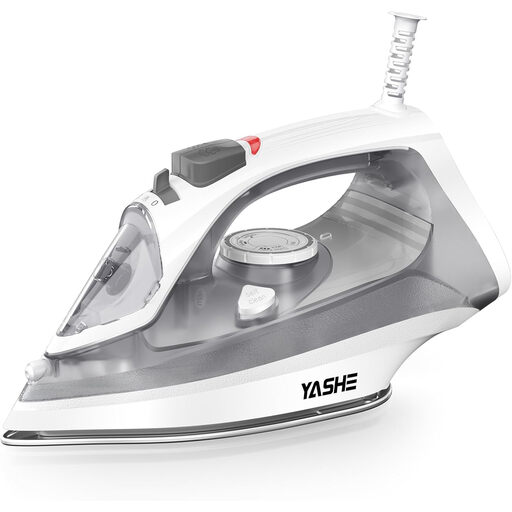 No image available
Could suit anyone who wants one iron for patches and everyday laundry; check that the steam can be fully switched off before using it for patches.
The product name lists 2300 W and a 300 ml tank. The product information mentions an adjustable thermostat and steam control down to no steam.
 No image available
The steam generator may be worth considering if you’ll also use it for everyday laundry. Before applying patches, check whether the model can be used without steam.
The product name identifies this model as a steam generator iron.
 No image available
This handheld steamer could suit anyone looking for a portable appliance; check the patch and fabric instructions before using it for patchwork.
The product name lists dual voltage. The product information mentions manual temperature and steam controls, and use with or without steam.
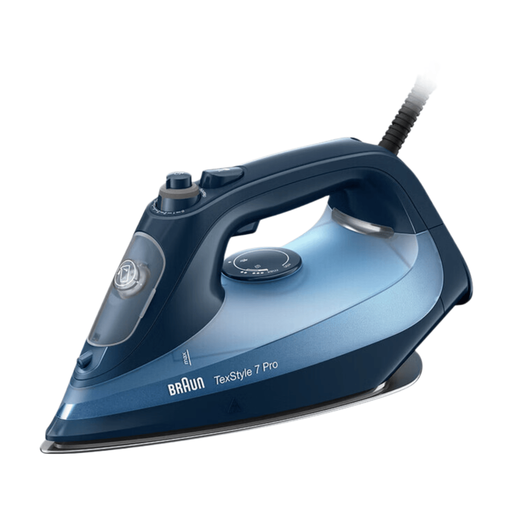 No image available
Could suit anyone who also irons everyday laundry. Check that the steam can be fully switched off for patchwork, and don’t leave the hot appliance unattended.
The product information lists a temperature dial, steam button, automatic shut-off, self-cleaning and a precision tip.
 No image available
Could suit anyone who wants one appliance for everyday laundry and patchwork; check the temperature and steam instructions before pressing on a patch.
The product information lists a 300 ml tank, self-cleaning and automatic shut-off. It also specifies a steam output of 50 g/min and a steam shot of up to 180 g.
Yes, provided the patch and fabric are suitable for the chosen temperature and you can use the model without steam. MrPatch advises turning off the steam for its patches; follow the product instructions for other patches.
Follow the patch instructions and check the garment’s care label first. For its patches, MrPatch advises using a thin pressing cloth or baking paper, working on a heat-resistant surface and pressing firmly in place rather than moving the iron back and forth. Let the patch cool before checking that it has stuck; the recommended pressing time varies by patch.
If you use the steam function, follow the maintenance instructions for the exact model. Philips explains that limescale can affect the steam vents; this isn’t a maintenance schedule for every brand or for a dry iron.
According to the Dutch government, online purchases from a business come with a 14-day cooling-off period in many cases, although there are exceptions. The product must also be of satisfactory quality. The Netherlands doesn’t have a fixed statutory guarantee period of exactly two years; if there’s a fault, contact the seller.