
Occasional ironing with limited space
If you only iron a few tea towels at a time, a compact steam iron may be easier to store than a steam generator. The Consumers' Association lists limited storage space as a reason to consider a steam iron.


If you only have a few linen tea towels to iron and little storage space, a compact steam iron is a sensible first choice. The Consumers' Association considers this type of iron suitable if you don't iron often or have limited space. A dry iron may suit you if you don't want to manage a water tank and are happy to dampen the fabric slightly before ironing if needed. A steam generator is worth considering if you have a large amount of ironing, but it takes up more space. Whichever type you choose, follow the care label and check that the specific appliance meets the relevant conformity requirements before buying.
If you only iron a few tea towels at a time, a compact steam iron may be easier to store than a steam generator. The Consumers' Association lists limited storage space as a reason to consider a steam iron.
When sharing an iron, it's important to agree on who switches it off and makes sure it cools down safely. The Fire Service advises switching off electrical appliances. Automatic shut-off features vary by model and are no substitute for doing this.
Check the tea towel's care label first. The Consumers' Association and Linen Tales highlight the importance of following the care instructions for the specific linen item. Ironing it while slightly damp or using a suitable steam setting can help smooth out creases.
Start with the care label, then think about how much steam, storage space and maintenance will suit the way you use the iron.
| What to consider | What to look for | Who is this important for? |
|---|---|---|
| Smoothing creases in linen | Check the care label and see whether the temperature and steam settings are adjustable. For stubborn creases, consider using a spray or a suitable steam setting. | If I want to smooth out linen tea towels, I need to choose a method that follows the care label. Around 36% of consumers put crease removal first. |
| Sharing safely | Check whether the exact model has automatic shut-off, and agree on who switches it off and lets it cool down. | If housemates share the same hot appliance, I want everyone to know who is responsible for switching it off. Around 29% of consumers prioritise safe shared use. |
| Storage space | Allow room for both the appliance and its cord. With a steam model, weigh up the tank size against how often you'll need to refill it. | If cupboard space is limited, I want an iron that's easy to put away after use. Around 21% of consumers put storage space first when choosing an iron. |
| Water and maintenance | Check the care instructions and what type of water the model allows. Don't add fragrances or other products to the water. | If several housemates use the appliance, I want to know in advance who is responsible for maintaining the steam system. Around 14% of consumers want as little maintenance as possible. |
A steam generator takes up more storage space. For small loads, a compact iron may be more practical.
First, compare how often your housemates iron together and how much room you have for the appliance and water tank.
Remember that a larger set-up takes up extra space.
Shut-off times vary by model. The Fire Service advises switching off electrical appliances; an automatic feature is no substitute for using the iron carefully.
If you share the iron, agree on who will switch it off and let it cool down safely.
According to the Consumers' Association, additives can cause deposits to build up and lead to problems with the appliance.
Follow the water and descaling instructions in the manual for the exact model.
Using the wrong water can mean extra maintenance or problems with the steam function.
Philips offers both compact steam irons and a dry iron in the product ranges mentioned.
The Smart Protect Plus FV6870 is a steam iron with an automatic temperature setting for ironable fabrics.
The TexStyle 3 SI 3054 is a conventional steam iron with features specific to this model.
HEMA lists a steam iron with a manually adjustable thermostat.
This selection features compact steam irons for smaller loads. Before buying, check that the specific appliance has the applicable CE marking and EU declaration of conformity.
 No image available
A compact steam iron for smaller loads. Always check the care label before ironing linen.
Tank: 300 ml. The product name lists a 180 g steam boost and 40 g/min.
 No image available
Worth considering if you're looking for a steam iron for smaller loads. Follow the care label instructions when ironing linen.
 No image available
The product name describes a compact handheld steam iron. Check that its size suits your ironing board and how you plan to use it.
The product name lists dual voltage. Before use, check that the electrical specifications are suitable for where you plan to use the appliance.
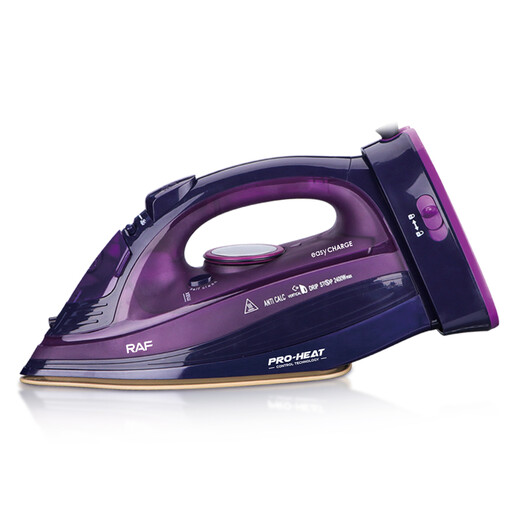 No image available
A cordless option if you want to move around freely while ironing. Don't leave the hot appliance unattended on its charging base.
The product name lists 2400 W, a 320 ml tank, a steam output of 15–25 g/min and a ceramic soleplate.
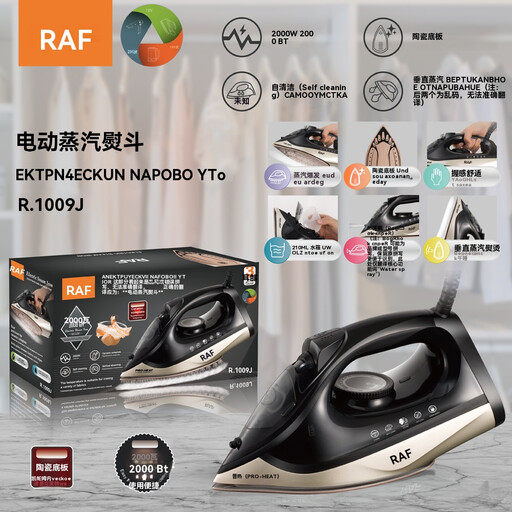 No image available
A steam iron for smaller loads. Check that the listed features suit the level of maintenance you're happy to do.
The product name lists 2000 W, a 210 ml tank, a ceramic soleplate and a self-cleaning function.
No. Check the care label on the specific tea towel first. Ironing it while slightly damp or using a suitable steam setting can help smooth out creases. The label tells you the maximum temperature to use.
According to the Consumers' Association, steam irons are generally designed for tap water. Check the manual for your exact model, especially if you have softened water, and don't add perfume or other products to the water.
No. For appliances covered by the relevant EU rules, CE is a conformity marking that shows the manufacturer declares the product meets those requirements. Business.gov.nl emphasises that CE is not a quality mark and does not compare models. Check the applicable marking and EU declaration of conformity for the specific appliance.
For a consumer purchase in the Netherlands, the retailer is your point of contact for the statutory guarantee. According to the Dutch government, there is no fixed statutory two-year guarantee period; what you can expect depends in part on the product and the circumstances.