
If you press the occasional hem
You want to press a turned-up trouser hem precisely, then put the iron away. A useful pointed tip and a suitable pressing surface matter more to you than a large steam station.


For the occasional trouser hem, a standard handheld steam iron is usually the more practical choice. A steam generator is better suited to regular, larger loads of ironing and homes with room for a base unit. Press the hem in sections by lifting and lowering the iron, and always follow the garment care label for the recommended temperature and whether to use steam.
You want to press a turned-up trouser hem precisely, then put the iron away. A useful pointed tip and a suitable pressing surface matter more to you than a large steam station.
You take extra care with temperature, shine and steam. Follow the garment care label, and consider using a pressing cloth or ironing the fabric inside out if it is delicate.
You press trouser hems and regularly iron larger loads of clothes. In that case, reservoir capacity, maintenance and space for the appliance become more important.
Best for: one pair of trousers or a few hems at a time, especially if you want to put the appliance away after use.
Bear in mind: it has an integrated reservoir, and the shape of the tip matters. You may need to refill it sooner during longer ironing sessions.
Best for: anyone who regularly irons larger loads as well as trouser hems and has space for a separate station.
Bear in mind: the base unit takes up extra space when in use and in storage, so it may be impractical for a quick hem job.
Best for: freshening up trousers on a hanger or easing light creases.
Bear in mind: without an iron soleplate, you cannot apply the same targeted pressure to press a turned-up hem flat.
| What to consider | What to look for | Who this matters to |
|---|---|---|
| Pressing a flat hem | Check the shape of the tip and make sure you have a flat pressing surface. Lift the iron and place it on the next section, rather than sliding it along the hem. | If I want to keep the turn-up exactly in place, I look for a pointed tip and a suitable surface. Around 40% of consumers put precise pressing at the top of their list of priorities when buying. |
| Protecting fabric and finish | Follow the care label for temperature and steam. If the fabric is prone to shine or pressure marks, use a pressing cloth or iron it inside out where appropriate. | If my trousers are sensitive to heat or shine, I want to be able to follow the instructions on the label. Around 30% of consumers prioritise protecting the fabric and finish. |
| Safe use and storage | Check whether the model has automatic shut-off, and think about where you can safely set it down, let it cool and store it. | In a shared space, I want to be able to set down and store the hot appliance safely. Around 20% of consumers put ease of use in a shared home at the top of their list of priorities when buying. |
| Larger ironing sessions | If you iron plenty of other items as well as hems, consider the reservoir capacity and the space needed for a base unit. | If I regularly iron large loads of clothes as well as trouser hems, capacity matters. Around 10% of consumers put larger ironing sessions at the top of their list of priorities when buying. |
A stated steam boost figure alone does not tell you how precisely you can press a hem. For a neat finish, it is important to be able to place the iron on one section at a time and lift it between sections.
Start by considering the tip, ease of handling, garment care label and available pressing surface. Steam output matters more if you also iron plenty of other items.
GINETEX explains that the care label sets the maximum ironing temperature. Steam may not be suitable at a low temperature, and fabrics prone to shine may need extra care.
Read the label before use. Where appropriate, use a pressing cloth or iron the fabric inside out.
A generator has a separate station that needs space. This extra bulk is particularly relevant if you have to set it up and put it away every time you do a quick hem job.
Measure the space you have and choose based on your whole ironing routine, not just trouser hems.
The FreeStyle 7 FI7255GR is an example of a standard steam iron whose tip shape may be useful when ironing hems.
The Puregliss FV8066E0 is an example of a standard steam iron with automatic shut-off and an anti-scale filter.
The PerfectCare PSG7200/20 represents the steam generator option for anyone who has larger ironing sessions as well as hems.
The Autosteam DW4020D1 is another option to consider if you want straightforward, automatically regulated steam and temperature.
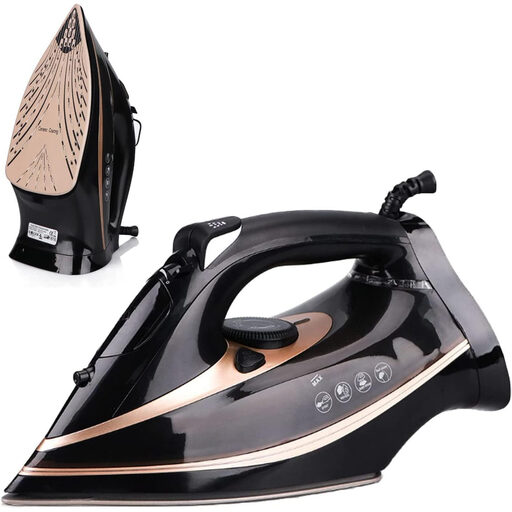
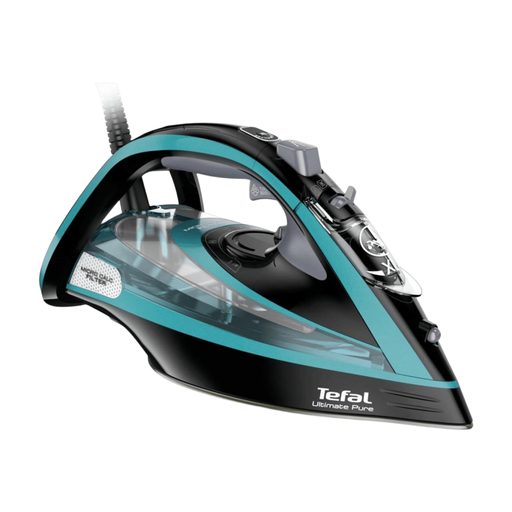
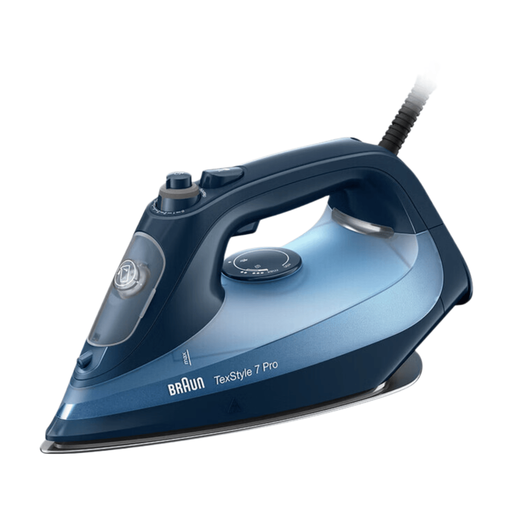
These Joybuy product picks are standard steam irons for targeted pressing, such as pressing a trouser hem.
 No image available
A standard steam iron for targeted pressing; the ceramic soleplate is mentioned in the product name.
2600 W; steam output 70 g/min; extra steam boost 120 g; 300 ml water reservoir; self-cleaning.
 No image available
A standard steam iron with manual temperature and steam settings, as stated in the product description.
Ceramic soleplate; steam boost 180 g; steam output 40 g/min; 300 ml water reservoir; automatic shut-off and anti-drip system.
 No image available
The product description mentions temperature and steam settings that you can adjust to suit the fabric.
Durilium Airglide soleplate; automatic shut-off; anti-drip system.
 No image available
A standard steam iron with manual temperature selection and variable steam output, as stated in the product description.
Durilium AirGlide soleplate; automatic shut-off; Micro-Calc filter.
 No image available
The product description mentions a precision tip for hard-to-reach areas, which may be useful for narrow sections of a hem.
FreeGlide 3D soleplate; adjustable temperature; automatic shut-off; self-cleaning.
Lay the turn-up flat and place the iron on one section at a time. Lift it before moving to the next section, rather than sliding it back and forth with pressure. Check the garment care label first; some fabrics need a pressing cloth or should be ironed inside out.
It depends on the hemming tape and what the garment care label allows. Prym describes hemming tape for items including trousers that is ironed on using protective paper. Check that the recommended heat treatment is suitable for your trousers.
Set the appliance down safely, switch it off, unplug it and leave it to cool out of other people's reach before putting it away. Automatic shut-off is an extra safety feature, not a substitute for these steps.
Online consumer purchases generally come with a statutory cooling-off period; according to the ACM, it ends 14 days after delivery. The statutory guarantee is separate from any manufacturer's guarantee: the ACM explains that there is no fixed statutory two-year guarantee period in the Netherlands. If a product breaks too soon under normal use, contact the seller.
The Dutch government states that electronic appliances sold in the EU must carry a CE marking. For the model on offer, also check that the electrical specifications are suitable and that the safety instructions are easy to understand. A CE marking is not an independent performance test.