
Occasional trouser-hem ironer
Wants to press a narrow hem at home with precision, then put the iron away without taking up too much space.


For the occasional trouser hem, a standard steam iron is often a practical starting point: it takes up less storage space than a steam generator and combines heat with steam. A dry iron is suitable if you don’t need built-in steam. If you regularly iron thick trousers, the extra space needed for a steam generator may be worth it if it means refilling less often. Always follow the care label and choose based on how easy it is to reach the tip of the soleplate, the temperature controls and the space you can safely set aside.
Wants to press a narrow hem at home with precision, then put the iron away without taking up too much space.
Needs space for a safe ironing area but wants to put the appliance away after use. The Consumers’ Association notes that limited storage space is one reason to consider a standard steam iron.
Often irons heavy cotton or denim and weighs up whether the extra steam is worth the space needed for a larger appliance.
Suitable for: occasional hemming or small amounts of ironing in a home with limited storage space.
Trade-off: the water tank is built into the iron, so you’ll need to refill it sooner during longer ironing sessions.
Suitable for: short, controlled pressing sessions if you don’t need built-in steam.
Trade-off: there’s no built-in steam for creases where you’d want to use that function.
Suitable for: regularly ironing lots of thick, heavily creased trousers, if you have space for the separate tank and a suitable ironing board.
Trade-off: the larger, heavier base needs more storage space and may not fit on every ironing board.
Suitable for: removing creases from clothes without an ironing board.
Trade-off: a handheld steamer is not necessarily a substitute for an iron soleplate when you need to press a trouser hem precisely.
Check the care label before ironing: the recommended temperature and whether you can use steam depend on the fabric.
| What to consider | What to check | Who this matters to |
|---|---|---|
| Precise pressing | Check the shape of the soleplate tip and how easy it is to reach the area; a powerful steam shot doesn’t replace this check. | If I want to work along a narrow hem without catching the surrounding fabric, precision matters most to me. Around 36% of consumers prioritise precision. |
| Space to iron and store | Check the total storage space, room for the cord and a safe ironing area; a separate tank takes up more room. | In a small rented flat, I want to use the iron safely and put it away afterwards. Around 29% of consumers prioritise space. |
| Protecting the fabric | Follow the care label and check that you can set a suitable temperature and steam level. For fabrics that show shine easily, you may want to use a pressing cloth or iron inside out, if the label allows it. | With delicate or shine-prone fabrics, I want to avoid damaging the hem with too much heat. Around 21% of consumers prioritise fabric protection. |
| Several thick items in a row | Weigh up longer ironing sessions and fewer refills against the extra space required. Don’t compare continuous steam in g/min with a short-lived steam shot. | If I often iron several pairs of thick trousers in a row, a long ironing session matters more to me than compact storage. Around 14% of consumers prioritise heavy-duty ironing. |
A steam shot and continuous steam are different functions. Too much steam can wet your trousers and ironing board, while the shape of the soleplate tip also affects how easily you can reach the hem.
For a narrow hem, first look at the tip, temperature settings and how easily you can adjust the steam. If needed, let the fabric dry after steaming before you continue pressing.
A separate tank can be useful if you have lots of ironing to do, but it takes up extra space in a small home and may require a larger, sturdier ironing board.
Choose this option mainly if you regularly iron heavy fabrics and have checked where the base can go and whether your ironing board is suitable.
Allow for the extra space needed for the tank and the room taken up by a suitable ironing board.
For the Tefal FV2838E0, Tefal lists five preset temperature settings. So don’t rely on a general description of the controls alone.
Check the manufacturer’s manual and model specifications to see how to set the temperature for your fabric.
The TexStyle 3 SI 3030 PU is a steam iron worth comparing if the reach of the tip matters when pressing narrow hems.
Tefal offers the Express Steam FV2838E0 steam iron and the Easy Dry 20 FS4020E0 dry iron: two different options for short pressing jobs.
The Philips 3000 Series DST3031/20 is a standard steam iron option for smaller loads of ironing.
These Joybuy product picks are aimed at pressing trouser hems, with a focus on irons for short sessions and homes with limited storage space.
 Image unavailable
The manual temperature and steam controls, along with the choice of dry or steam ironing, make it suitable for short pressing sessions.
The product description mentions a compact design, a removable 0,15 L tank and dual voltage.
 Image unavailable
The listed precision tip and temperature control are useful features to check for narrow hems and different care-label instructions.
The product description mentions a dry setting, variable steam and a slim-tip soleplate.
Power: 2000 W.
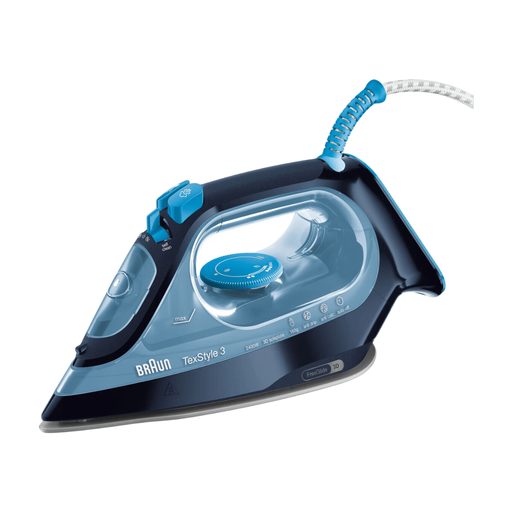 Image unavailable
The listed triangular precision tip is a useful feature if you need to reach a narrow hem or seam.
The product description mentions a ceramic soleplate, a steam shot of up to 170 g and a maximum heat-up time of 35 seconds.
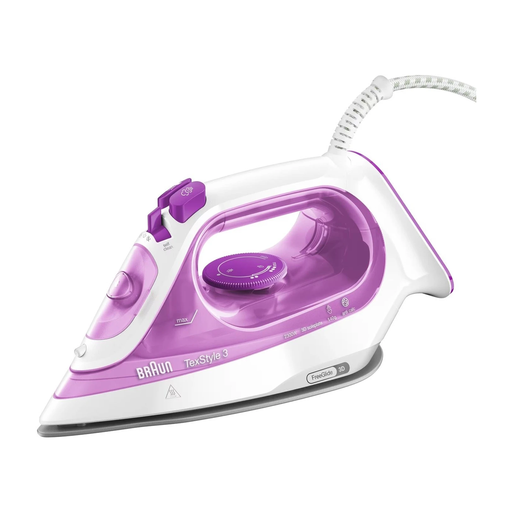 Image unavailable
The product description mentions a triangular precision tip for hard-to-reach areas, making it relevant if you’re focusing on narrow hems.
Tank: 270 ml. The description also mentions self-cleaning, a required temperature setting and a heat-up time of 35 seconds.
 Image unavailable
The listed precision tip is worth considering if being able to reach around seams and hems matters to you.
Tank: 300 ml. The product description also mentions self-cleaning, automatic shut-off, continuous steam and a steam shot.
No. Check the trousers’ care label first. Use steam only if the label and fabric allow it; too much heat can damage the fabric or make it shiny.
Use a stable, suitable surface and make sure there’s a safe place to put down the hot iron. If you’re using a steam generator, also check that its base and weight are suitable for your ironing board.
A dry iron may be suitable if you’re doing short, controlled pressing sessions and don’t need built-in steam. Check the care label and make sure the model’s features are right for your fabrics.
Not necessarily. A steam generator may be suitable if you often iron lots of thick, heavily creased trousers and have room for the separate tank and a suitable ironing board. For a single hem, the extra space it takes up may be less practical.
Follow the descaling and maintenance instructions for your exact model. The Consumers’ Association explains that limescale can block steam vents; Braun lists a self-cleaning function for the SI 3030 PU.