
Patch maker with limited space
You want to apply patches on a small, heat-resistant work surface and store the iron away compactly afterwards. The Consumentenbond lists limited storage space as a reason to choose an iron.


For small patches and limited storage space, a compact mini or detail iron is an obvious choice. If you also iron clothes regularly, a standard iron may be more practical. Let the patch instructions and the fabric’s care label guide you on whether the fabric can withstand the required heat and whether you should press it dry; MrPatch recommends turning off the steam when applying patches. The Dutch government says manufacturers must test electrical appliances, apply a CE mark and draw up an EU declaration of conformity. Check this information for the model you choose.
You want to apply patches on a small, heat-resistant work surface and store the iron away compactly afterwards. The Consumentenbond lists limited storage space as a reason to choose an iron.
You mainly work on small corners, edges and seams, so a precise tip is more useful than a large soleplate. Clover describes the small tip of the Mini Iron II as suitable for pressing only the areas you need.
You want one appliance for patches and everyday ironing, and are happy to accept a larger size. The Consumentenbond describes a standard steam iron as an option for people who also iron clothes.
Suitable for: small patches, seams and limited storage space.
Bear in mind: a small soleplate means you may need to press larger patches in several positions.
Suitable for: working on small corners, edges and seams.
Bear in mind: the small tip covers less surface area and is less practical for everyday clothes.
Suitable for: anyone who regularly irons clothes as well as applying patches.
Bear in mind: it takes up more workspace and storage space than a detail model.
Suitable for: anyone who does a lot of everyday ironing and has room for a separate base unit.
Bear in mind: the base unit needs extra storage space, and steam capacity does not prove that a patch will stick better.
Start with the requirements of the patch and fabric. Then choose a size and shape that suit your workspace and any other ironing tasks.
| What to consider | What should you check? | Who is this most important for? |
|---|---|---|
| Heat and material | Compare the patch instructions with the fabric’s care label. Check the temperature controls and whether you can turn off the steam when dry heat is needed. | If I want to avoid overheating the fabric, I carefully match the patch to the material. This is a priority for around 33% of consumers. |
| Workspace and storage space | Check the dimensions of the appliance and soleplate. Also set aside a flat, heat-resistant surface for pressing and a safe place to rest the hot iron. | In a small home, I want to be able to rest the appliance safely after pressing and store it compactly. Space is the top buying priority for around 25% of consumers. |
| Precision and pressure | Check whether the tip or soleplate can reach and press the entire patch as instructed. | For small corners and seams, I want to apply heat and pressure precisely. This kind of intricate work is a priority for around 25% of consumers. |
| Also ironing clothes | Check whether the temperature and steam can be adjusted separately to suit your clothes and the patch instructions. | If I want to use the same appliance for everyday ironing too, that matters as much as its compact size. Using the iron for clothes as well is a priority for around 17% of consumers. |
Steam specifications do not tell you how well a patch will stick. MrPatch recommends turning off the steam when applying patches.
Follow the instructions for the specific patch, and check that your chosen iron can work without steam if dry heat is recommended.
Fabrics tolerate different temperatures, and patch instructions may vary in pressing time and technique. Too much heat can damage fabric; the Consumentenbond warns about this when ironing.
Follow both the patch instructions and the fabric’s care label. Don’t use timings from another set of instructions as a fixed setting.
Even a small, hot iron needs a flat, heat-resistant surface to work on and a safe place to rest.
Before you buy, plan for both the pressing surface and a suitable place to rest and store the iron.
The Mini 611915 is designed for detailed work and seams; Prym lists a version with a European plug.
The Mini Iron II “The Adapter” 8003EU is designed for small areas, patchwork and other detailed sewing projects.
The Easygliss Plus FV5736 is a standard steam iron for anyone who also wants to iron clothes.
The TexStyle 3 SI 3055 is a standard iron with a manual thermostat and precision tip.
This Joybuy product selection includes standard steam irons and steam generators for patchwork using an iron. For each model, check whether you can turn off the steam if the patch instructions call for dry heat.
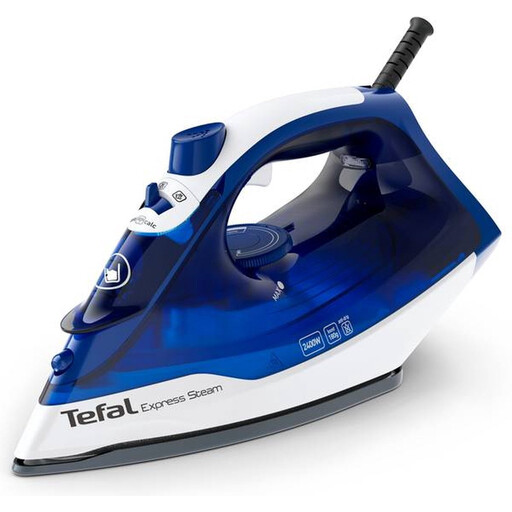 No image available
A standard steam iron for anyone who wants to iron clothes as well as work on patches; check whether you can turn off the steam when the patch requires dry heat.
2400 W; automatic temperature selection.
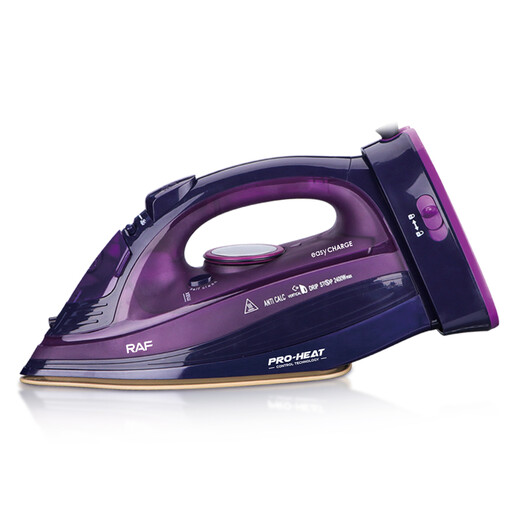 No image available
A cordless model for anyone looking for a portable iron to use at home or on the go; check the settings against the patch and fabric instructions.
2400 W; 320 ml reservoir; steam output of 15–25 g/min; ceramic soleplate; self-cleaning function.
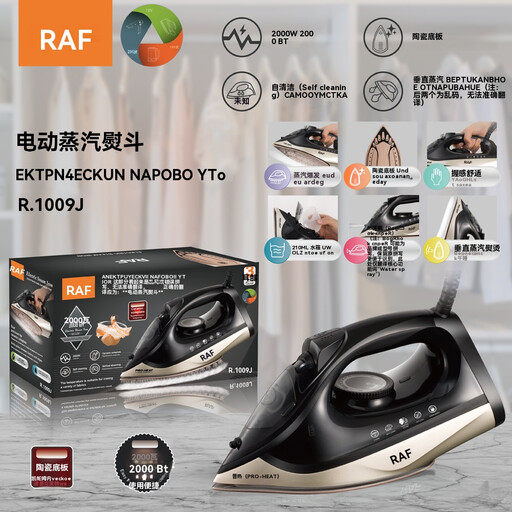 No image available
A standard steam iron for anyone who also irons clothes; before working on patches, check that the settings suit the fabric and that you can turn off the steam when needed.
2000 W; ceramic soleplate; steam boost; vertical steam function; 210 ml water tank; self-cleaning function.
 No image available
A steam generator for anyone who wants to do everyday ironing as well as work on patches; allow for the separate base unit and check whether you can press dry when the patch instructions require it.
1.3 l water tank; the generator base takes up extra space in a small home.
 No image available
A steam generator for anyone who also does everyday ironing; allow for the base unit and check the patch instructions before using steam.
The generator base measures 36 × 21 × 26 cm and needs extra storage space.
Don’t assume you can: MrPatch’s instructions describe pressing with an iron and the steam switched off. Follow the instructions for your patch; a steamer without a pressing soleplate does not automatically work in the same way.
Use a flat, heat-resistant surface. MrPatch also recommends placing a thin cloth or baking paper between the patch and the soleplate; first check whether your patch has different instructions.
No. Check the patch instructions and the fabric’s care label together. The Consumentenbond warns that too much heat can damage fabric; an appliqué guide advises against ironing materials including nylon and PVC. That guidance does not automatically apply to every patch.
The Dutch government says the manufacturer is responsible for testing, applying the CE mark to the appliance and drawing up the EU declaration of conformity. So check the information for the specific model, rather than relying solely on a logo in a product listing.
According to the Dutch government, when you buy online from a business, you generally have 14 days to change your mind. Check the terms and exceptions; an online purchase from a private seller is not covered by the same distance-selling rules.