
Patch maker working on fine details
You apply small patches or appliqués and want to apply heat and pressure close to seams and edges. Follow the instructions for both the patch and the fabric for each project.


Choose a mini or precision iron if you mainly press small appliqués and areas close to seams; a standard iron is a more practical choice if you also iron clothes regularly. Follow the instructions supplied with each patch and bear in mind the fabric’s maximum safe temperature. Fasola and MrPatch recommend dry heat, while the Consumers’ Association says a steam generator is mainly suited to larger loads of laundry.
You apply small patches or appliqués and want to apply heat and pressure close to seams and edges. Follow the instructions for both the patch and the fabric for each project.
You often iron just a few garments, and occasionally a patch too. A handy appliance that can also work without steam could suit this combination.
You work with fabrics that don’t all tolerate the same amount of heat. So, prioritise the fabric and patch instructions over speed or steam output.
Start with the patch instructions and the garment care label, then compare the soleplate and settings with the tasks you usually tackle.
| What to consider | What to look for | Who is this important for? |
|---|---|---|
| Dry heat and fabric protection | Compare the patch instructions with the garment care label; check whether you can turn off the steam and set a suitable temperature. | If I want to avoid the patch failing to stick or the fabric getting too hot, I follow the instructions for both materials. Around 33% of consumers prioritise carefully controlled heat for the patch and fabric. |
| Quick set-up for a small ironing session | Check the stated heat-up time and the size of the exact model; wattage is not a measured heat-up time. | When I only iron a few garments at a time, being able to get the iron out and put it away quickly matters. Around 27% of consumers give short, frequent ironing sessions top priority. |
| Precise pressing on small areas | Compare the shape and size of the soleplate with your patches, and consider whether you can apply the pressure you need comfortably. | When working around seams, edges or small appliqués, I want to reach the area easily without having to awkwardly reposition the patch. Around 27% of consumers choose mainly for precise reach and soleplate size. |
| Care and aftercare | Check the model’s manual for care instructions and weigh any additional warranty against your statutory rights. | If I also use the appliance with steam, I want to know what maintenance is involved. Around 13% of consumers place the greatest emphasis on easy maintenance and aftercare. |
The safe temperature depends on the fabric, and instructions vary from patch to patch. A setting that works for one combination won’t necessarily suit another.
Read both the patch instructions and the garment care label, and if possible, test on a similar fabric first.
The Consumers’ Association mainly recommends a steam generator for large loads of laundry. For patches, however, Fasola and MrPatch recommend dry heat.
Choose this type of appliance mainly if you also regularly iron larger loads; always follow the instructions supplied with each patch.
A steam generator also takes up space for its separate base unit, while its extra steam capacity offers no proven benefit for applying a patch with dry heat.
A similar product name doesn’t always tell you enough to match a version to the manufacturer’s full code and specifications.
Compare the full model code and key specifications on the product page before comparing models.
Prym positions the Mini 611915 for fine sewing work and precise pressing.
Clover describes the Mini Iron II 8003EU as an iron for small areas, including sewing and patchwork.
Braun TexStyle 3 is a range of standard steam irons; the SI 3030 may be worth considering if you also iron small amounts of clothing.
Tefal offers a dry-ironing option in the Easy Dry 20 FS4020E0 and a steam-ironing option in the Easygliss Plus FV5736E0.
The Philips 6000 Series DST6130/40 is a standard steam iron option for anyone who irons other laundry as well as patches.
This selection includes standard steam irons, some of which have a dry-ironing setting. Check the settings for each model, and follow the patch and fabric instructions when applying patches.
 No image available
The listed manual temperature and steam controls, along with the dry-ironing function, may suit you if you want to combine patchwork with short ironing sessions.
The product description lists a weight of 0.77 kg and a 30-second heat-up time.
Check the instructions for the specific patch and fabric; turn off the steam if those instructions specify dry heat.
 No image available
The listed dry-ironing setting and temperature dial are useful if you want to turn off the steam and adjust the heat for patchwork.
The product description lists a narrow tip, a 1.6 m cord and a power rating of 2000 W.
For the right temperature, follow the patch instructions and the fabric’s maximum safe temperature.
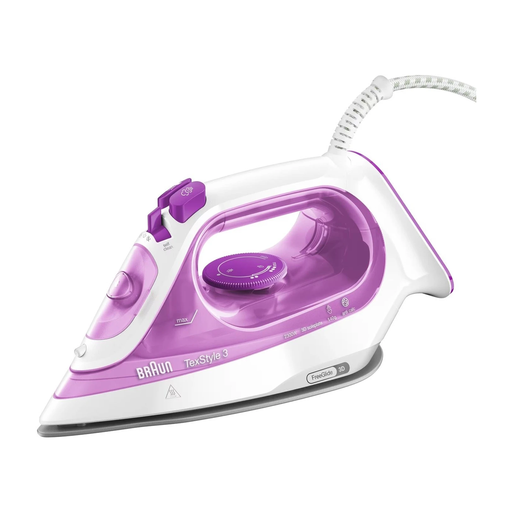 No image available
This model may suit you if you also iron small amounts of clothing alongside patchwork and value being able to reach awkward spots.
The product description mentions a precision tip and says it is ready to iron after 35 seconds on the Max setting. Braun lists a thermostat dial for the SI 3030.
Turn off the steam if the patch instructions specify this, and adjust the temperature to suit the fabric.
 No image available
The product description mentions a precision tip for hard-to-reach areas, which may be useful around seams and edges.
It also lists automatic shut-off after 30 seconds in a horizontal position and a 300 ml reservoir.
For patchwork, always follow the patch and fabric instructions; turn off the steam if dry heat is specified.
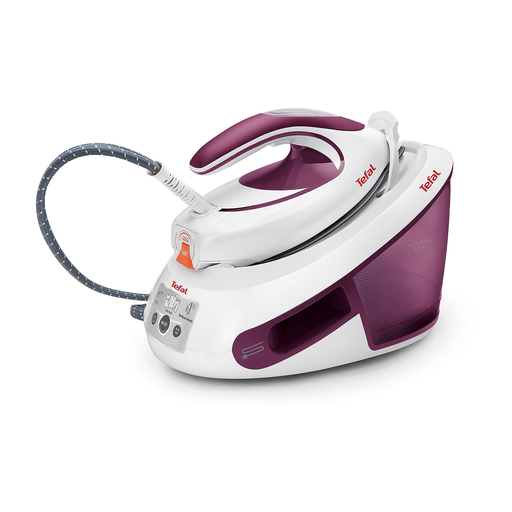 No image available
The product description mentions a precision tip and a fabric selection setting; check whether these settings match the instructions for your patch and fabric.
The stated water tank capacity is 1.8 l.
Fasola and MrPatch recommend dry heat when applying patches, so follow the instructions for the specific patch.
No. Adjust the heat and technique to the instructions for the specific patch and the fabric’s maximum safe temperature. Fasola and MrPatch recommend turning off the steam, but their instructions may differ; don’t use the same time or temperature for every patch.
Lay the fabric flat, use the protective layer specified in the patch instructions and, if possible, test on a similar fabric first. MrPatch recommends pressing firmly without moving the iron back and forth, then letting the item cool completely; follow the relevant instructions for other patches.
Follow the model’s manual for descaling and cleaning. The Consumers’ Association recommends emptying the water tank after ironing; even a model with a self-cleaning function still needs maintenance.
Yes. The Netherlands Food and Consumer Product Safety Authority states that CE marking is compulsory for electrical products. Check the product information and the marking on the model being sold; a CE mark doesn’t tell you whether the iron is suitable for a particular patch.
No. According to the Dutch government, consumers are entitled to a product that works properly, and the Netherlands has no fixed statutory warranty period; if a product is faulty, the seller must provide a solution. A manufacturer’s warranty or an extended warranty you buy is in addition to those rights. For distance sales, you will also usually have a 14-day cooling-off period.