
Applying patches once
You want to apply a few patches before moving and won’t need to do much ironing afterwards. The Consumers’ Association recommends considering a standard iron if you have little ironing to do or limited storage space.


For applying a few patches before a move, a standard steam iron is usually a more sensible choice than a steam generator iron. The Consumers’ Association (Consumentenbond) recommends a standard iron if you do little ironing or have limited storage space. A steam generator iron may suit you if you also regularly iron large loads or stubborn creases, but always check each patch’s instructions for the temperature, pressing method and whether it should be applied without steam.
You want to apply a few patches before moving and won’t need to do much ironing afterwards. The Consumers’ Association recommends considering a standard iron if you have little ironing to do or limited storage space.
You want to keep ironing after you move, but have little room for both the appliance and its separate water tank. The Consumers’ Association describes a steam generator iron as larger and harder to store than a standard iron.
You want to apply the patches as well as iron large loads or clothes with stubborn creases. According to the Consumers’ Association, a steam generator iron may suit your needs better if you iron a lot than if you only iron occasionally.
Best for: a few patches, little ironing or limited storage space.
Trade-off: according to the Consumers’ Association, it is more compact, but has a smaller water tank and produces less steam for large loads of creased laundry.
Best for: regular ironing and choosing the temperature setting yourself.
Trade-off: the separate tank needs storage space. Also check whether the exact model can be used without steam, as stated in its manual.
Best for: doing a lot of everyday ironing when automatic controls appeal to you.
Trade-off: automatic settings for clothes don’t prove that the temperature, pressure and pressing time are right for your patch’s adhesive layer.
| What to consider | What to look for | Most relevant to |
|---|---|---|
| Patch and fabric | Read the patch instructions and the garment care label. Check the recommended temperature and whether steam can be used. | I want to apply the adhesive layer as instructed without damaging the fabric. Around 42% of consumers say patch compatibility is their main concern. |
| One-off use and storage | Think about how much ironing you’ll do after moving and how much space the base and iron will take up. | I want to apply a few patches without being left with a bulky appliance afterwards. Around 25% of consumers prioritise one-off use or limited storage space. |
| Ironing in future | Compare the water tank capacity and continuous steam output for everyday ironing, not as a measure of patch suitability. | I’ll also be ironing large loads regularly after moving and want to know if a separate water tank suits my needs. Around 17% of consumers base their choice mainly on future ironing needs. |
| Maintenance | Check the descaling instructions and whether the model has a part that needs cleaning or replacing. | I want to know in advance what maintenance routine the appliance requires. Around 16% of consumers make maintenance their main consideration. |
Steam specifications mainly describe how well an appliance removes creases from laundry. Some instructions for iron-on patches specifically say to apply them without steam.
Start by following the patch and fabric instructions. Then choose an appliance based on the steam output you need for other ironing.
A setting for ironable clothes doesn’t confirm that your patch’s adhesive layer will receive the recommended heat and pressure.
Check the patch instructions against the manual for the exact model before you start.
Prym also sells a self-adhesive patch that the manufacturer says does not need ironing or sewing.
First check whether your patch is designed to be ironed on, is self-adhesive or needs to be sewn in place.
The Consumers’ Association says an anti-scale system slows the build-up of limescale, but doesn’t remove the need for maintenance.
Before buying, check the descaling method and maintenance instructions for the exact model.
An option to consider if you want to choose the temperature yourself for fabrics with specific ironing requirements.
A model with a removable tank and features designed to make it easier to move and store.
A steam generator iron to consider if you also want to use it regularly to remove creases.
These steam generator irons are for anyone who also wants to use the appliance for everyday ironing. Their steam and temperature features don’t prove that a particular patch can be applied with them. Follow the instructions for both the patch and the appliance.
 No image available
Suited to anyone who also wants to iron laundry regularly as well as apply patches; the stated steam output is not a measure of patch suitability.
Philips lists continuous steam output of 120 g/min and a 350 g steam boost for this model.
 No image available
A steam generator iron to consider for everyday ironing across different fabrics; check separately that the patch and appliance instructions are compatible.
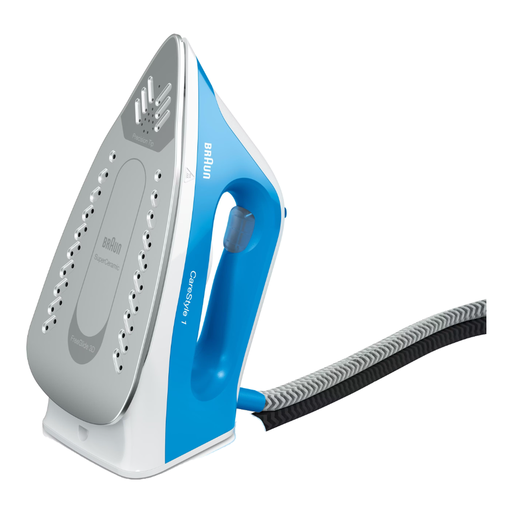 No image available
Suited to anyone who also has ironing to do in future and wants to choose the temperature setting themselves; check the instructions for the exact appliance before using it on patches.
Braun lists four thermostat settings, a 1.5-litre tank and a locking system.
 No image available
May suit you if a removable tank is important for your future ironing needs too; the steam specifications don’t determine whether the generator is right for your patch.
The product name lists a removable 1.8-litre tank, steam output of 70 g, a 120 g steam boost and a pressure of 6 bar.
No. Follow the instructions for the specific patch or adhesive layer. For the product in question, Vlieseline describes dry ironing as ironing without steam; this isn’t a general rule for all patches.
Check the patch instructions before putting it under strain or washing it. For a self-adhesive STRETCHDESIGN patch, Prym states that maximum adhesion is reached after 72 hours; this timing doesn’t automatically apply to iron-on patches.
Yes. An anti-scale system doesn’t remove the need for maintenance. The Consumers’ Association recommends following the model’s descaling instructions; also check whether the appliance uses a replaceable cassette or cartridge.
For an eligible distance purchase from a business, you generally have 14 days to change your mind. You’re also entitled to a product that is fit for purpose; if there’s a problem, contact the seller about your statutory guarantee. The Dutch government says there is no fixed statutory two-year period for this in the Netherlands.