
Careful tie-ironer
You want to preserve the shape and finish of a cotton tie, and are looking for an approach that uses controlled heat and little pressure. We Love Ties recommends using the lowest setting for its cotton ties.


For a few cotton ties, a compact iron with adjustable temperature is a practical starting point. A mini iron may suit you if precise work on a narrow surface is your priority. Always follow the tie’s care label: We Love Ties recommends using the lowest setting for its cotton ties and letting the tie dry first. A steam generator is worth considering mainly if you also iron a lot of other laundry regularly; according to the Consumentenbond, it needs more storage space.
You want to preserve the shape and finish of a cotton tie, and are looking for an approach that uses controlled heat and little pressure. We Love Ties recommends using the lowest setting for its cotton ties.
You have limited room to dry ties and store an appliance. The Consumentenbond says a standard steam iron is suitable if you have little ironing to do or limited storage space.
You want to smooth a narrow piece of fabric with precision, and are weighing up a small soleplate against an appliance that can also handle larger garments. Prym describes its Mini as being designed for detailed ironing.
Suitable if: you also want to iron everyday clothes and have limited storage space.
Trade-off: steam adds moisture and is no substitute for drying a washed tie.
Suitable if: precise work on a narrow surface matters more to you than ironing larger loads of laundry.
Trade-off: check the specific version, temperature settings and mains voltage; a small soleplate is no guarantee of a better result.
Suitable if: you mainly want to lightly freshen up a dry tie while it is hanging, without using an ironing board.
Trade-off: consider whether the method is suitable for the finish you want for your tie.
Suitable if: you regularly iron a lot of laundry with stubborn creases as well as ties, and have space for the appliance.
Trade-off: according to the Consumentenbond, steam generators are larger and harder to store. Limited drying space alone is no reason to choose one.
For a cotton tie, its own care label takes precedence over the general cotton setting. A Dutch tie retailer recommends using the lowest setting for its cotton ties; don’t use steam as a substitute for drying.
| What to consider | What to look for | Who should pay particular attention? |
|---|---|---|
| Heat and preserving the shape | Check the temperature and steam settings, and follow the tie’s care label. | If I want to preserve the shape and finish of my cotton tie, I need to be able to work carefully; around 39% of consumers prioritise preserving the fabric and shape. |
| Drying and storage space | Compare the space needed for the appliance and a stable ironing surface; let a washed tie dry according to its care label. | If my drying and storage space is limited, I don’t want an appliance to take up extra room or to skip drying; around 38% of consumers give limited space top priority. |
| Smoothing with precision | Compare the soleplate shape, grip and temperature control of the specific model. | If I want to smooth a narrow tie precisely, I look for control over the working area; around 23% of consumers prioritise precision. |
A Dutch tie retailer actually recommends using the lowest setting for its cotton ties. A general high-heat cotton setting may therefore differ from the advice for your tie.
Check your tie’s care label first. If ironing is permitted, work carefully and use a pressing cloth if needed.
According to the Consumentenbond, a generator takes up more space, and the tie still needs to be dried according to its care instructions after washing.
Only consider a generator if you also have a lot of other laundry to iron and enough room for the appliance and a suitable ironing surface.
A model number with a different suffix may refer to a different version. For example, Philips lists a voltage of 127 V for DST3010/32; don’t confuse this version with DST3010/30.
Check the full model number, rating plate, plug and manual for the item on offer.
Philips makes standard steam irons with settings and features that vary by model.
The Virtuo range includes standard steam irons, including the FV2C40.
The TexStyle 1 is a range of standard steam irons to consider if ease of handling is important.
The ST-8300 is a standard steam iron with an adjustable thermostat.
According to Prym, the Mini is designed for detailed ironing and is an alternative to a standard iron.
This selection features standard steam irons for pressing a dry tie flat and, potentially, other laundry. Follow the tie’s own care label.
 Image unavailable
A standard steam iron for pressing a dry tie flat; follow the tie’s own care label.
Steam shot: 180 g. Continuous steam: 40 g/min. Water tank: 300 ml.
 Image unavailable
A handheld steam iron to consider if a compact appliance suits your needs; check the temperature settings before using it on a tie.
The product name mentions dual voltage; check the voltage of the exact version and the socket you intend to use it with.
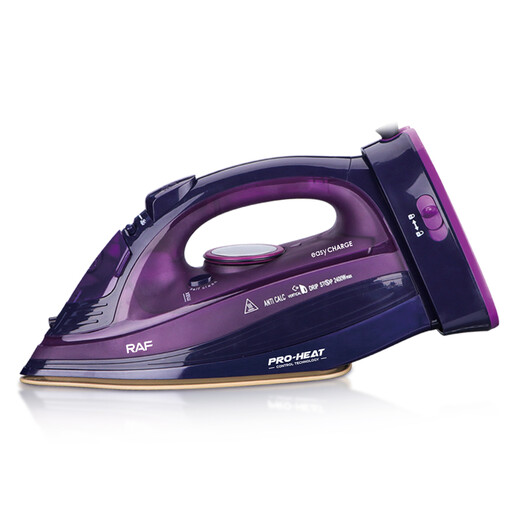 Image unavailable
A cordless steam iron for pressing garments flat; only use it on a tie in accordance with the care label.
Power: 2400 W. Tank capacity: 320 ml. Steam output: 15–25 g/min. Ceramic soleplate.
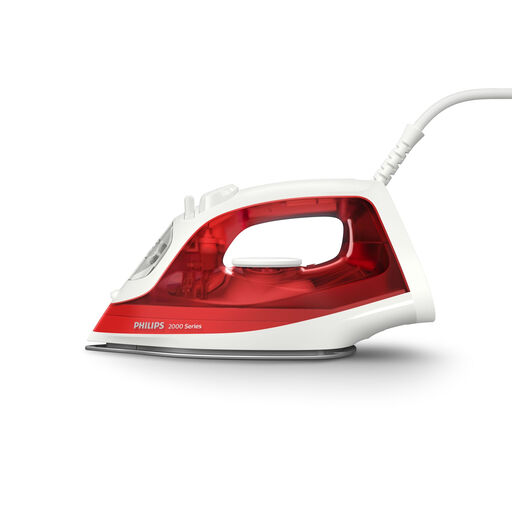 Image unavailable
A standard steam iron for pressing a dry tie and, potentially, other clothes; follow the care instructions for each item.
Continuous steam: 25 g/min. Water tank: 250 ml. Non-stick soleplate.
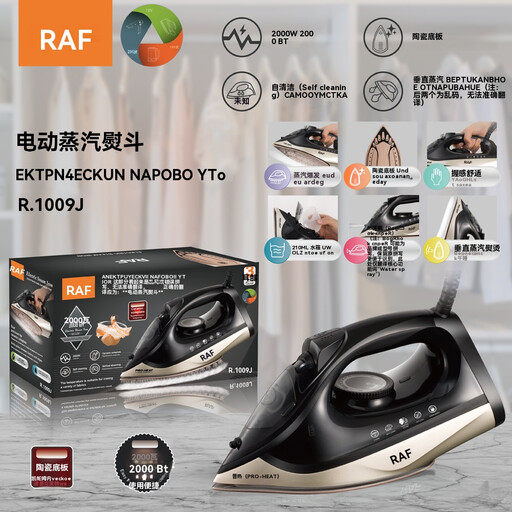 Image unavailable
A standard electric steam iron for pressing garments flat; check that its settings are suitable for the tie’s care label.
Power: 2000 W. Tank capacity: 210 ml. Ceramic soleplate, vertical steam function and self-cleaning function.
The Dutch government states that electrical appliances offered for sale in the Netherlands must meet the applicable European requirements and carry the required CE marking. Check the product information and marking on the specific item; the model name alone doesn’t confirm this.
Don’t assume that you can. We Love Ties recommends letting its cotton ties dry after washing and then, if desired, ironing them on the lowest setting. Check your tie’s care label; steam is not a proven substitute for drying.
Check the care label first and use a stable, heat-resistant ironing surface. SuperStropdas recommends ironing carefully with a cotton cloth between the iron and the tie, without applying much pressure. Don’t ignore a care label that says not to iron.
Follow the manual for the exact model. The Consumentenbond advises checking the manufacturer’s instructions before using water other than ordinary tap water; Philips describes descaling procedures that vary by model and notes that limescale can build up.
According to Business.gov.nl, electrical appliances offered for sale must comply with the applicable European rules and carry the required CE marking. Check the marking and product information on the specific appliance; a general model description doesn’t confirm that an individual item complies.
No. According to the Dutch government, there is no fixed period for the statutory guarantee in the Netherlands: you’re entitled to a product that works properly for as long as you can reasonably expect it to. If a product is faulty, the seller must provide a solution; any manufacturer’s guarantee is in addition to this.