
Occasional patch applier
You apply a patch now and again and want adjustable, dry heat without needing a steam function. MrPatch advises turning the steam off when ironing on a patch.


For occasional patches, a dry iron with adjustable temperature is a sensible choice. If you also want to iron your everyday laundry, a model that can be used without steam may be more practical. Match the heat to both the patch instructions and the garment, and work on a heat-resistant surface. If you have lots of similar patches to apply, a heat press could be worth considering: Dutch Label Shop describes it as an option offering more control over pressure, time and heat distribution.
You apply a patch now and again and want adjustable, dry heat without needing a steam function. MrPatch advises turning the steam off when ironing on a patch.
You apply patches to different garments, so you need to match the heat to both the fabric and the patch. MrPatch advises taking account of the highest temperature the fabric can safely withstand.
You want one iron for patches and regular ironing. Severin says the BA 3210 can be used with or without steam; for patches, you need to be able to turn the steam off.
Choose this if: you mainly apply individual patches and want to set the temperature yourself.
Bear in mind: a dry iron has no steam function for your everyday laundry.
Choose this if: you also iron everyday laundry in the same utility room and the manual confirms that the exact model can be used dry.
Bear in mind: you need to turn the steam off for patches. The water tank and maintenance matter most when you use the steam function.
Choose this if: you apply lots of similar patches and want control over pressure and timing.
Bear in mind: a heat press is not a substitute for everyday ironing. The fabric and patch still determine which settings are suitable. Dutch Label Shop describes the benefits for this use.
| What to consider | What should you check? | Who should pay more attention to this? |
|---|---|---|
| Dry, adjustable heat | Check whether you can adjust the temperature and turn off the steam; also follow the patch and fabric instructions. | If I mainly press on individual patches, I want to be able to adjust the heat and work without steam. Around 36% of consumers say dry, adjustable heat is their main purchasing concern. |
| Protecting the fabric and work surface | Compare the patch and garment instructions, and use a heat-resistant surface and the protective layer specified. | When working with delicate fabrics, I want to avoid using heat that is unsuitable for the material or patch. Around 29% of consumers put protecting the fabric and work surface first. |
| Ironing everyday laundry too | Check the manual for the exact model to see if it can be used without steam. Factor in the water tank and maintenance if you use the steam function. | If I want to use one appliance for patches and everyday laundry, the model needs to handle both. Around 21% of consumers say this dual use is their main purchasing concern. |
| Applying lots of patches in a row | Consider whether you regularly do similar work, and check what time, heat and pressure the materials can withstand. | When I apply lots of similar patches, I want to be able to repeat the process consistently. Around 14% of consumers put consistent patch application first. |
Patch supplier MrPatch recommends using dry heat. For this task, a steam function is no substitute for being able to turn the steam off.
Check that the exact model can be used without steam. Only consider a steam function if you also want to use the appliance for everyday laundry.
The heat needed for the patch may be higher than the fabric underneath can withstand.
Compare the patch instructions with the care label, use the specified protective layer and, if possible, test on a similar fabric first.
The BA 3211 is a dry iron; according to Severin, the BA 3210 can be used with or without steam.
The Easy Dry 20 FS4020E0 is a dry iron for anyone who doesn't need a steam function.
The DST3041/30 is a steam iron for regular ironing alongside occasional patch application.
The TexStyle 3 range is worth considering if you combine everyday steam ironing with occasional patch application.
These irons may suit you if you want to apply patches and might also iron everyday laundry. Before buying, check whether the exact model can be used without steam and whether you can adjust the temperature to suit the patch and fabric. The NVWA describes the Low Voltage Directive as applying to electrical equipment with a nominal AC voltage of 50 to 1,000 V; check the relevant product information and CE marking for the specific appliance. A CE marking alone is not proof of independent testing.
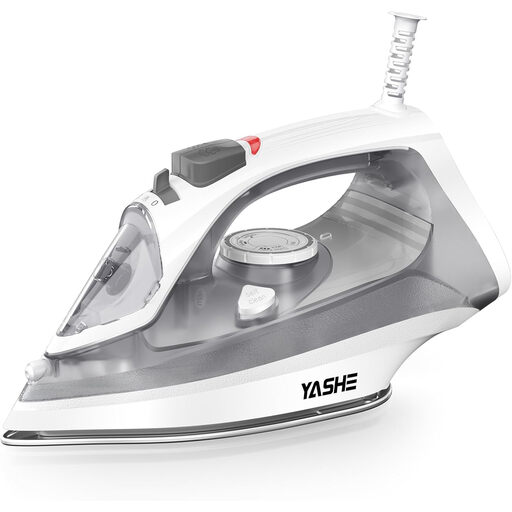 No image available
The temperature and steam controls described, including a no-steam setting, may suit patch application if the fabric and patch can withstand the selected setting.
2300 W; 300 ml water tank; manual temperature and steam controls; 150 g/min steam boost and 25 g/min continuous steam; non-stick soleplate.
 No image available
The product description mentions dry ironing and five temperature settings; check that these settings suit the patch and garment.
2400 W; five temperature settings; non-stick soleplate and anti-drip system.
 No image available
The description mentions both dry and steam ironing with manual controls. For patches, use the dry setting if the manual confirms it's suitable for the materials.
Removable water tank; automatic shut-off; manual temperature and steam controls.
 No image available
If you're considering this model for patches too, first check the manual to see whether it can be used without steam and what temperature is suitable for the fabric and patch.
Steam iron; the product name lists the colour as Violet.
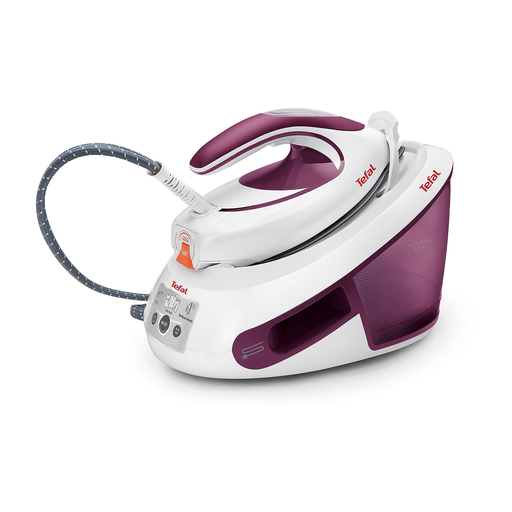 No image available
If you want to use this model for patches, check the manual for this version to see whether it can be used dry and what heat the fabric can withstand.
2800 W; 1.8 l water tank; Durilium soleplate.
Yes. Patch supplier MrPatch recommends using dry heat. Set the iron to the highest temperature the fabric underneath can safely withstand, and follow the patch instructions too.
Lay the garment flat on a heat-resistant surface and use the protective layer specified in the patch instructions. If possible, test on a similar fabric first and check the care label.
Check the relevant product information and the CE marking on the specific appliance. The NVWA describes the Low Voltage Directive as applying to electrical equipment with a nominal AC voltage of 50 to 1,000 V; a CE marking alone doesn't prove that a model has been independently tested.
Limescale can build up when you use the steam function. Philips advises following the descaling instructions for the specific model of its steam irons.
No. ACM ConsuWijzer distinguishes between a manufacturer's warranty and statutory rights in the Netherlands. With normal use, a product must meet the standards you could reasonably expect. The retailer is responsible for providing an appropriate solution if the product proves faulty too soon.