What to look for in an iron for patches
Compact iron
Choose this when: you mainly work on small appliqués or hard-to-reach areas, and both the fabric and patch are suitable for ironing.
Trade-off: the soleplate size can help you assess how suitable it is for precision work, but it doesn’t prove that a particular fabric and patch combination is suitable.
Adjustable household iron
Choose this when: you also want to use the same appliance for everyday clothes, and its settings are suitable for the patch and fabric.
Trade-off: a household model may feel less precise for small patches; extra steam doesn’t prove that a patch will stick better.
Self-adhesive patch—no iron needed
Choose this when: the outer fabric isn’t suitable for ironing and the patch manufacturer says the patch can be used on that material.
Trade-off: Patagonia describes a self-adhesive patch kit for materials including nylon; check the material requirements for the specific kit.
iFixit recommends following the temperature instructions on the patch packaging. Check the garment care label too before choosing an ironing method.
| What to consider |
What to look for |
Who is this most important for? |
| Fabric suitability |
Check the garment care label and the instructions for the specific patch before applying heat. |
If I want to repair a jacket after a wet ride, I want to avoid choosing a method that isn’t suitable for the outer fabric; around 36% of consumers prioritise fabric and patch suitability. |
| Precision for small patches |
Compare the soleplate size with the patch and check that you can reach the area easily; also check the design and plug type of a compact model. |
For a small appliqué, I want to be able to position the soleplate accurately; around 29% of consumers give precision for small patches top priority. |
| Use for everyday laundry |
Look for temperature controls and features suited to your other ironing needs; steam specifications don’t predict how well a patch will stick. |
If I want to iron patches as well as everyday clothes, I’m looking for one appliance that can handle both jobs; around 21% of consumers prioritise this dual use. |
| Repair without ironing |
Check whether the manufacturer says a self-adhesive patch is suitable for the outer fabric material. |
If my jacket can’t withstand the heat of an iron, I want a suitable repair option that doesn’t need one; around 14% of consumers prioritise this heat-free approach. |
Joybuy products for iron-on patches
The models below are steam irons for anyone who can iron patches onto their fabric according to the material and patch instructions, and who also wants to use the appliance for everyday ironing. When buying, check the applicable CE marking and product documentation for the individual appliance.
 No image available
Handheld steam iron, 2400 W
May suit patch work if both the patch and fabric can be ironed and you also want to iron everyday clothes.
The product name lists 2400 W, a non-stick soleplate, automatic cleaning and an anti-drip function. The description mentions five temperature settings and dry ironing.
View on Joybuy
 No image available
Xiaomi Handheld Steam Iron BHR9034EU
May be suitable if you also want to iron everyday clothes as well as patches, provided the patch and garment can withstand the recommended treatment.
The product name lists dual voltage. The description mentions manual temperature and steam controls, dry ironing and vertical steaming; the listed dimensions are 25 × 7,50 cm.
View on Joybuy
 No image available
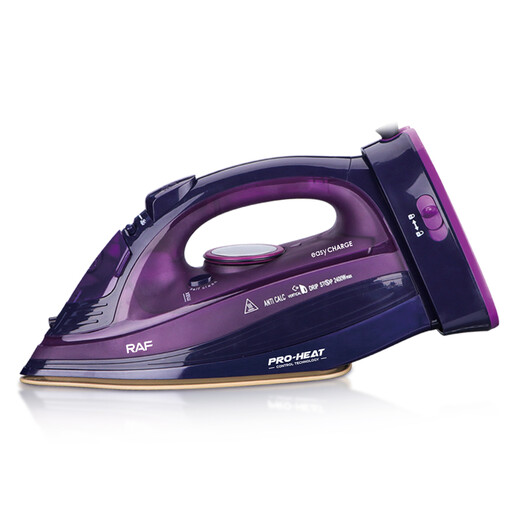
RAF Cordless Steam Iron R.1210B Purple
May suit ironing at home or on the go when the fabric and patch can withstand the required heat.
The product name lists 2400 W, a 320 ml tank and a steam output of 15–25 g/min. The description mentions a ceramic soleplate and precision tip.
View on Joybuy
 No image available
Morphy Richards EasySteam+ MUH-ISE4B
Suitable for anyone who also wants to do regular household ironing as well as patches, provided the patch and fabric instructions allow ironing.
The product name lists 2400 W, a steam output of 70 g/min, a 120 g steam boost, 6 bar and a removable 1,8-litre tank. The description mentions vertical steaming.
View on Joybuy
 No image available
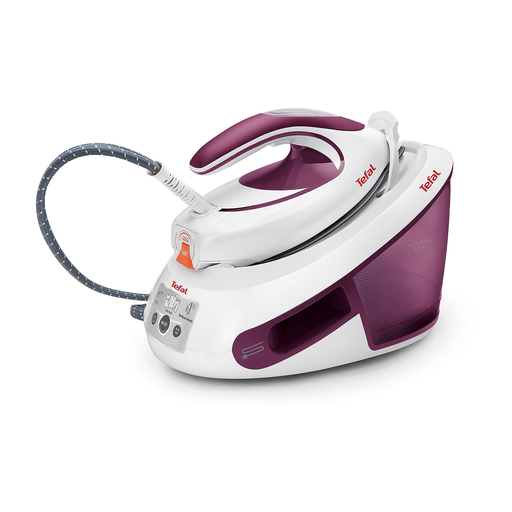
Tefal Express Anti-Calc SV8054
May suit anyone who wants to iron patches and everyday laundry with the same appliance, as long as the chosen method is suitable for the fabric and patch.
The product name lists 2800 W, a 1,8-litre tank and a Durilium soleplate. The description mentions a fabric selection dial, a precision tip and vertical steaming.
View on Joybuy
Frequently asked questions
Can I apply an iron-on patch straight after a wet ride?
Follow the instructions for the specific patch and check the garment care label before applying heat. Don’t assume there’s a set waiting time: the recommended treatment must be suitable for both the patch and the garment.
What temperature should I use for an iron-on patch?
Follow the temperature instructions on the patch packaging and stay within the limits set by the garment care label. The iFixit guide refers you to the instructions for the specific patch when preheating; there’s no one setting that works for every patch.
What product safety rule applies to an electric iron?
Electrical equipment designed for 50 to 1.000 V AC is subject to the applicable requirements of the EU Low Voltage Directive. The European Union describes the CE marking as the manufacturer’s declaration that the product meets the applicable product rules; the marking alone isn’t an independent real-world test of a specific iron.
Do I automatically get only a two-year guarantee in the Netherlands?
No. According to the Dutch government, the Netherlands has no fixed statutory guarantee period; what you can reasonably expect from a product depends on factors including the product, its price and how it’s used. If a product is faulty, contact the seller.
How do I maintain a steam iron?
Follow the instructions for your model. Tefal recommends descaling its irons regularly and says to empty the tank after use; this manufacturer advice applies to the appliances covered by those instructions.


