Which option is right for you?

If you apply a patch occasionally

You want to attach one or a few patches to suitable clothing before the working week, adjusting the heat, pressure and steam to suit the patch instructions and fabric. For the applications described, CraftKitchen recommends turning off the steam.

If you iron both patches and clothes

You want to press patches dry, while still being able to use steam on your regular laundry. Severin says the BA 3210 can be used with or without steam.

If you work with small transfers

For example, you might work around seams or buttons and want a small pressing plate. The right setting and full coverage depend on the patch and material; Cricut’s Heat Guide is intended to help you choose materials using its own product information.

What should you look for when choosing?

Dry iron

A good choice if: you only apply a patch occasionally and don’t need steam for other ironing. Severin says the BA 3211 has continuously adjustable temperature control.

Bear in mind: according to Severin, this model has no steam function. Also check that the soleplate can cover the patch fully, as directed in the instructions.

Iron with a dry setting

A good choice if: you want to press patches as well as iron everyday clothes with steam. Severin says the BA 3210 can be used with or without steam.

Bear in mind: turn off the steam if the patch instructions say to, and take the water tank and maintenance requirements into account.

Small handheld heat press

A good choice if: you work with small transfers or want to target areas around seams and buttons. Cricut describes the EasyPress Mini as suitable for small heat-transfer projects and refers to a Heat Guide for material settings.

Bear in mind: for larger patches, check carefully that the pressing plate can cover the entire adhesive area as directed. Cricut’s settings do not automatically apply to other patches.

Steam generator

A good choice if: you do a lot of ironing as well as applying patches, and often tackle stubborn creases. The Consumers’ Association cites this as a reason to consider a steam generator.

Bear in mind: for just a few patches, a larger appliance with a water tank may take up more space and need more maintenance than the job justifies.

What to consider What should you check? Who should consider this?
Heat and material Compare the patch instructions with the fabric care label and the temperature controls. If possible, test on a similar fabric. If I’m applying a patch to fabric that may be sensitive to heat, I want to make sure the instructions are compatible. Around 40% of consumers put material suitability first.
Using it for patches and clothes Check whether you can turn off the steam and adjust the temperature; for everyday ironing, also consider the tank and maintenance. If I want one appliance for both patches and everyday clothes, I’ll check that it can press dry as well as iron with steam. This is the main priority for around 30% of consumers.
Reach of the soleplate or pressing plate Compare its shape and surface area with the patch’s size and position, and follow the material instructions. If I’m working around seams or buttons, I want to reach the patch precisely without overlooking any part of the adhesive area. Around 20% of consumers prioritise precision for this kind of work.
Storage and maintenance Compare the storage space, water tank and maintenance requirements with how often you iron outside of patch projects. If I mainly use the appliance for quick jobs, I don’t want to set aside unnecessary space for a larger unit. Around 10% of consumers consider compact storage and minimal maintenance most important.

Common buying mistakes

  • Choosing the highest steam output for attaching patches

    A patch may need to be pressed dry. So more steam doesn’t mean an iron is better suited to that patch.

    First, check the patch instructions, dry setting and temperature controls. Only compare steam performance for the everyday ironing you’ll also be doing.

  • Assuming any iron or heat press will work on any fabric

    The treatment a patch needs must be suitable for the fabric; otherwise, the fabric could be damaged or the patch may not adhere properly.

    Read both the patch instructions and the care label. Don’t press if the instructions conflict; where possible, first test a suitable combination on a similar fabric.

  • Buying a steam generator for just a few patches

    The benefits of a larger water tank and more steam are mainly useful for lots of everyday ironing, not necessarily for a few patches.

    Choose this type only if your other laundry justifies it and you have space for the appliance and its maintenance.

Brands to consider

Severin

The BA 3211 is a dry iron; the BA 3210 is designed for ironing with or without steam.

  • Severin says both models have continuously adjustable temperature control.
  • The BA 3211 has no steam function; for patch work, check that the soleplate can cover the required area.

Cricut

The EasyPress Mini is a small heat press for small transfers and areas where a larger press may be less precise.

  • Cricut says it has three heat settings and a Heat Guide to help with material choices.
  • This brand’s guide does not confirm the right setting for every patch from another brand.

Tefal

The Easygliss Plus FV5736 is a conventional steam iron for those who iron everyday clothes as well as applying patches.

  • Tefal lists a 2500 W power rating and continuous steam output of 45 g/min for this model.
  • These manufacturer specifications for ironing do not prove that the heat and dry settings are suitable for your patch.

Braun

According to Braun, the TexStyle 5 SI5256BL has a manual temperature setting and a precision tip.

  • Braun lists adjustable steam and automatic shut-off for this model.
  • Check the model’s instructions and the patch and fabric guidance before choosing a setting.

Philips

The 5000 Series DST5020/30R0 is a steam iron for everyday clothing care.

  • Philips lists continuous steam output of 40 g/min and a Calc Clean function for this variant.
  • These specifications don’t tell you whether the dry operation and temperature settings match your patch instructions.

Joybuy products

This selection includes steam irons and steam generators. For each model, check whether you can iron without steam when the patch instructions require it.
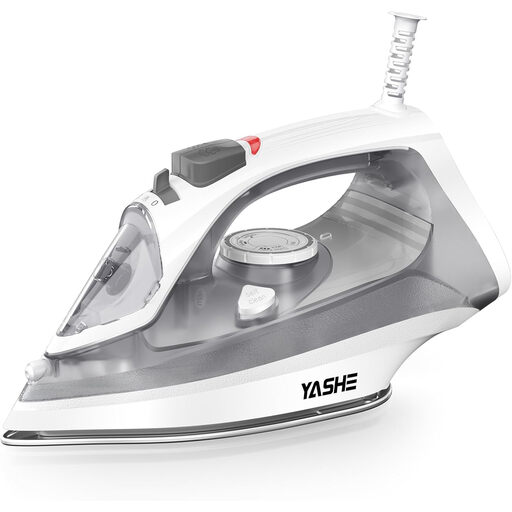
YASHE WSD-218 steam iron

YASHE WSD-218 steam iron

May suit patch work where you want to adjust the temperature and turn off the steam; follow the patch and fabric instructions.

2300 W; 300 ml water tank; continuous steam output of 25 g/min according to the product name.

View at Joybuy

Xiaomi BHR9034EU handheld steam iron

Xiaomi BHR9034EU handheld steam iron

The product description mentions both dry and steam ironing, as well as manual temperature and steam controls; check the settings for your patch.

Compact, lightweight design according to the product description; dual voltage according to the product name.

View at Joybuy

Philips 1000 Series DST1030/20 steam iron

Philips 1000 Series DST1030/20 steam iron

The product description mentions a temperature dial and a no-steam setting, which may be useful when patch instructions require dry pressing.

2000 W according to the product name; the description mentions a slim-tip soleplate.

View at Joybuy

Philips 3000 Series PSG3000/20 steam generator

Philips 3000 Series PSG3000/20 steam generator

The product description mentions fabric-specific temperature selection and a steam generator; check whether it can be used for dry pressing if your patch requires it.

2400 W; 1.4 L water tank according to the product name. The larger tank may be more than you need for just a few patches.

View at Joybuy
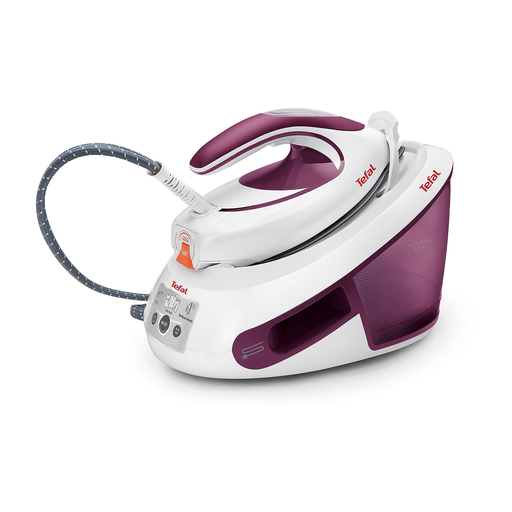
Tefal Express Anti-Calc SV8054 steam generator

Tefal Express Anti-Calc SV8054 steam generator

The product description mentions fabric-based temperature selection and a 3D precision tip. Check the model instructions to see whether you can press without steam when the patch instructions require it.

2800 W and a 1.8 L water tank according to the product name; the tank may be more than you need for just a few patches.

View at Joybuy

Frequently asked questions

Should you use steam when applying a fabric patch?

Not necessarily: in the patch instructions described, CraftKitchen says to turn off the steam. Follow the instructions for your patch and check that the fabric can withstand the required heat.

What should you do if the fabric can’t withstand the required pressing temperature?

Don’t press the patch and hope for the best. Compare the patch instructions with the care label and only use a combination that works for both; where possible, test it first on a similar fabric.

How should you prepare and check a patch before the working week?

Follow the patch instructions for preparation, pressing time and cooling. For its patches, Cricut recommends testing on an inconspicuous area and using a firm, flat surface; MrPatch recommends letting both the patch and garment cool completely before moving them. This guidance does not automatically apply to every patch.

What about the warranty on an iron in the Netherlands?

According to the Dutch government, statutory warranty in the Netherlands has no fixed time limit. If a product is faulty, the seller is responsible for providing an appropriate solution; a manufacturer’s warranty or an extended warranty is in addition to this.

What safety rules apply to an electric iron sold in the Netherlands?

According to the Netherlands Food and Consumer Product Safety Authority, the Low Voltage Directive applies to electrical equipment with a rated AC voltage of 50–1000 V. This rule on its own does not confirm that an individual model complies with it.
