
Everyday apron wearer
You want to quickly press a single apron after a wet journey and avoid putting it on while it’s still damp. The Consumers’ Association describes steaming followed by dry ironing as part of this approach.


For one or a few cotton aprons, a steam iron with adjustable steam is usually a good choice. The Consumers’ Association recommends a steam iron when you have only a small amount to iron at a time, and advises finishing without steam until the fabric is dry. A steam generator may be more practical for larger loads or thicker items, but always check the care label: the fact that a garment is made of cotton alone doesn’t tell you how well prints and other details will withstand ironing.
You want to quickly press a single apron after a wet journey and avoid putting it on while it’s still damp. The Consumers’ Association describes steaming followed by dry ironing as part of this approach.
You regularly press a pile of aprons or other thick cotton items and want to stop less often to refill the tank. The Consumers’ Association highlights the larger tank of a steam generator as a point to consider for longer ironing sessions.
Your apron may have a print or delicate features. GINETEX emphasises that the care label tells you which treatments the item can withstand; the fibre name ‘cotton’ alone isn’t decisive.
There are four things to consider: how to get a dry finish, what the care label and details allow, how much you iron in one go, and what maintenance the appliance needs.
Choose this if: you usually iron one or a few suitable aprons at a time and have limited storage space. The Consumers’ Association considers this type suitable for shorter ironing sessions.
Trade-off: the tank is built into the iron, so you may need to refill it more often during longer sessions.
Choose this if: you often iron large loads or thick fabrics and have space for a separate tank. The Consumers’ Association recommends this type for thicker items.
Trade-off: the system takes up more space, and extra steam can make your washing and ironing board damp again.
Choose this if: freshening up or reducing a few creases is enough, and you don’t need a neatly pressed cotton apron.
Trade-off: in tests by the Consumers’ Association, some steamers smoothed lightweight fabrics, but not cotton or heavier fabrics. So don’t assume they’re a reliable replacement for ironing.
| What to consider | What to look for | Who should pay particular attention? |
|---|---|---|
| Pressing the fabric smooth and dry | Check whether you can adjust the steam and then finish ironing the apron without steam. Compare continuous steam in g/min separately from a short burst of steam. | If I’m wearing an apron after a wet journey, I want it to be smooth and dry after ironing. Around 33% of consumers prioritise a dry finish. |
| Care label and details | Check the ironing symbol and look at any prints and delicate areas before choosing a temperature or steam setting. | If my apron has a print or delicate finish, I want to choose a treatment that’s suitable for the whole garment. Around 27% of consumers prioritise the care label and details. |
| Amount to iron | Compare the tank capacity and refill frequency with the length of your usual ironing session. Also consider whether you have space to store a separate tank. | When I’m ironing several aprons in a row, I want fewer interruptions to refill the tank. Around 20% of consumers prioritise the amount of washing and ironing. |
| Maintenance | Check the descaling method and water instructions for the exact model. Also see whether the tank is easy to empty. | If I use an iron regularly, I want to know what maintenance it needs to keep the steam working well. Around 20% of consumers prioritise ease of maintenance. |
A steam burst and continuous steam are different specifications. If an apron is already damp, too much steam can make the item and the ironing board wet again.
Check whether the steam is adjustable, then iron the final strokes without steam. The Consumers’ Association describes this approach to help the fabric dry after steaming.
The cotton base fabric doesn’t tell you what treatment prints, finishes or other details can withstand. According to GINETEX, the care label indicates which treatments are permitted.
Check the care label and treat delicate details separately, following the instructions provided.
According to the Consumers’ Association, limescale can interfere with the steam function and cause leaks.
Read the maintenance instructions for the exact model before buying.
Remember to allow time to empty the tank and descale the appliance as instructed in the manual.
The examples below refer to specific models; features of one version don’t necessarily apply to every appliance from the same brand.
The Express Steam FV2838E0 is a steam iron for shorter sessions. Tefal lists continuous steam of 40 g/min and a 270 ml tank for this model.
According to Braun, the TexStyle 7 Pro SI 7160 has a manual thermostat and a steam output of 50 g/min. This may suit you if you want to choose the temperature yourself.
The PerfectCare PSG7200/20 is a steam generator with a separate 1.5-litre tank. Philips lists steam output of up to 160 g/min and OptimalTEMP for this model.
Rowenta lists continuous steam of 65 g/min and a spray function for the Steamforce DW9240D1, including for dry and thick fabrics.
These irons have been selected for comparison when pressing cotton aprons. Check the listed features for each version and make sure they suit the care label and the way you plan to use it.
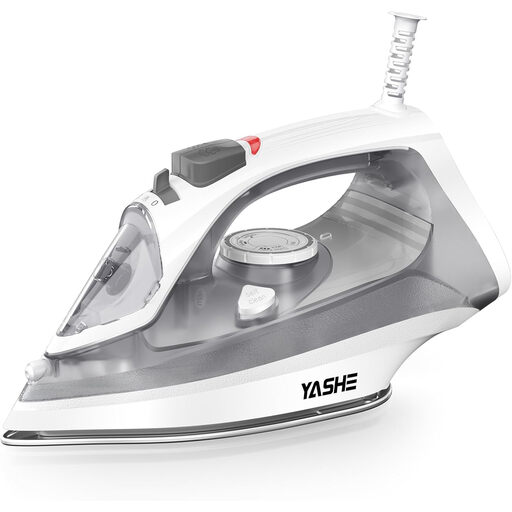 Image unavailable
A hand iron to compare if you usually iron one cotton apron at a time.
2300 W; 300 ml tank; continuous steam 25 g/min; stated steam output 150 g/min; non-stick soleplate; automatic cleaning; anti-drip system.
 Image unavailable
A handheld model to compare if you’re looking for an iron for a single cotton apron.
2400 W; non-stick soleplate; automatic cleaning function; anti-drip function.
 Image unavailable
A handheld model to consider if dual voltage is important to you.
Dual voltage; model BHR9034EU.
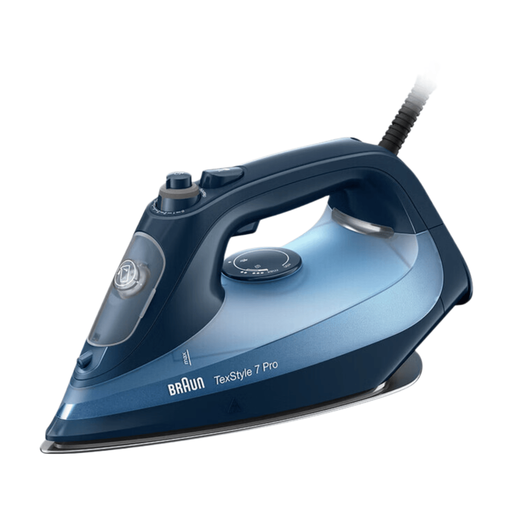 Image unavailable
A steam iron to include in your comparison if you’re looking for a specific Braun model.
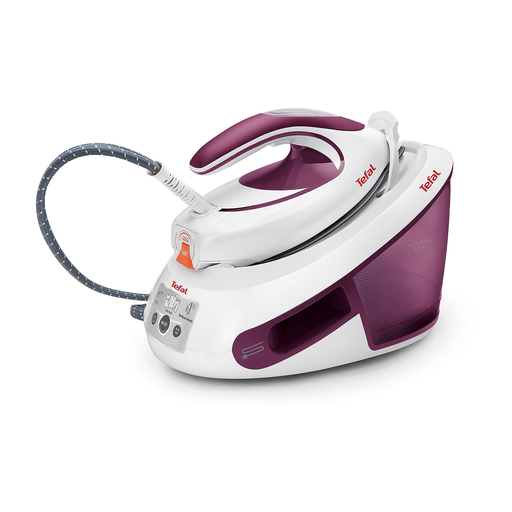 Image unavailable
A model to compare if you want to consider the stated power and capacity when making your choice.
2800 W; stated capacity 1.8 l; Durilium soleplate.
No. Don’t assume that more steam is better: extra steam can make the apron and ironing board wet again. Check the care label and let a soaking-wet apron dry sufficiently first. If needed, iron it with steam, then finish without steam until the fabric is dry, as recommended by the Consumers’ Association.
Follow the maintenance instructions for the exact model. The Consumers’ Association recommends emptying the tank after use; the manual explains how and when to descale the appliance.
For your statutory guarantee, contact the seller. According to the Dutch government, there is no fixed statutory period for this in the Netherlands. In many cases, online purchases from a business also come with a 14-day cooling-off period. The cooling-off period and a remedy for a faulty product are separate matters.
According to the Dutch government portal, suppliers of electrical equipment must meet the applicable European requirements. For equipment covered by these rules, this includes CE marking and an EU declaration of conformity; this doesn’t confirm that an individual model complies.