What should you look for when buying?
Standard steam iron
Suitable for: occasional horizontal pressing, if you have a suitable ironing surface.
Bear in mind: you still need somewhere safe to lay the waistcoat flat.
Compact iron and steamer
Suitable for: anyone who wants to freshen up clothes on a hanger and press small areas flat without storing a separate ironing board.
Bear in mind: Tefal says the JF4031 comes with an ironing mat; check the instructions for a safe ironing surface.
Handheld steamer
Suitable for: quick touch-ups on a dry garment hanging up.
Bear in mind: for a sharply pressed seam or crease, an iron soleplate in direct contact with the fabric is the more suitable choice.
Steam generator iron
Suitable for: anyone who regularly irons larger loads in one go and has room for the whole setup.
Bear in mind: the separate water tank takes up extra space; the Consumers' Association notes that these models cost more to buy than standard steam irons.
First decide what finish you need, then consider how much space you can make available for using and storing the appliance. An iron is not a way to dry clothes.
| What to consider |
What to look for |
Who this matters to |
| Crisp pressing |
Check the shape of the iron tip, the temperature and steam settings, and whether you have a suitable surface. Follow the care labels for both the outer fabric and the lining. |
If I want to finish seams and edges neatly, I need to be able to press precisely without damaging the lining. Around 36% of consumers say a crisp finish is their top priority when buying. |
| Storage |
Check the dimensions of the appliance and any mat, what comes in the box, and which surfaces the manual allows you to use. |
If I have to put everything away after use, I want to know how much space the complete solution takes up. Around 29% of consumers give storage space top priority. |
| Moisture and drying |
Check whether you can adjust the steam and where you can hang the garment to air after treatment. |
If I dry laundry indoors, I want damp clothes to be able to dry while also ventilating the room. Around 21% of consumers put moisture management first. |
| Long ironing sessions |
Compare the tank capacity with the space needed for the whole setup, and read the model-specific descaling instructions. |
If I often iron a lot of laundry in one go, I consider refilling and maintenance as well as the ironing itself. Around 14% of consumers say long ironing sessions are their top priority. |
Products at Joybuy
These products are for anyone who wants to press cotton fabrics flat, including models also described as steam appliances. You’ll need a suitable ironing surface for horizontal pressing.
 No image available
Philips 3000 Series steam iron DST3031/20
A standard steam iron for horizontal pressing; bear in mind that you’ll need a suitable ironing surface.
Steam boost: 180 g; continuous steam: 40 g/min; water tank: 300 ml.
View at Joybuy
 No image available
Russell Hobbs Steam Genie 2in1, 28370-56
The model name suggests a combination of steaming and ironing functions; check the product instructions for how to press small areas flat.
View at Joybuy
 No image available
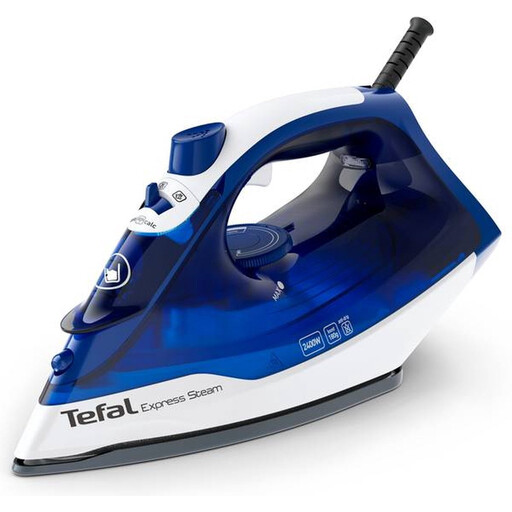
Tefal FV2838E0 steam iron
A standard steam iron for horizontal pressing; set aside a suitable place to iron.
Power: 2400 W; automatic temperature selection.
According to the product information, this model does not switch off automatically and needs constant attention.
View at Joybuy
 No image available
Xiaomi BHR9034EU handheld steam iron
The product name describes it as both an iron and a handheld model. Check which mode is suitable for pressing small areas and which surfaces are safe to use.
The product name mentions a compact design, dual voltage and fast steam generation.
View at Joybuy
 No image available
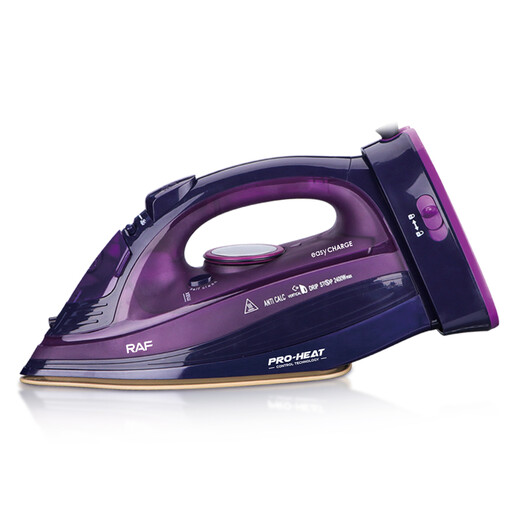
RAF R.1210B cordless steam iron, purple
A cordless steam iron for horizontal pressing; make sure you have a suitable ironing surface.
Water tank: 320 ml; ceramic soleplate; power: 2400 W; stated steam output: 15–25 g/min. The product name also mentions self-cleaning.
View at Joybuy
Frequently asked questions
Can I always use the cotton setting with steam on a cotton waistcoat?
No, follow the care label for the whole garment, even if the outer fabric is cotton. According to GINETEX, the three-dot iron symbol means a maximum temperature of 200 °C; with the one-dot symbol, you should iron without steam. Don’t automatically treat a differently labelled lining or finish as cotton.
Can I steam a waistcoat instead of drying it after washing?
No, steaming to remove creases does not replace drying. If you dry laundry indoors, Milieu Centraal recommends extra ventilation.
Do I need an ironing board for a 2-in-1 iron?
It depends on the model and what you’re doing. Tefal says the JF4031 comes with an ironing mat for horizontal use; check the manual to find out which surfaces are safe. Use the steamer function to freshen clothes on a hanger.
How do I keep a steam iron in good working order?
Follow the descaling instructions for the exact model. The Consumers' Association explains that limescale can block steam channels, reducing the iron's steam output.
Is CE marking required for an electric iron sold in the Netherlands?
Yes, the Netherlands Food and Consumer Product Safety Authority says CE marking is mandatory for electrical consumer products. The Dutch Business.gov.nl portal also outlines the applicable European safety requirements. A product listing on its own does not confirm that the individual item being sold is correctly marked.


