
For precise ironing around waistcoats
You want to iron cotton waistcoats neatly around the buttons and seams. Adjust the heat and steam according to the care label for the whole garment.


For a waistcoat and a small amount of other laundry, a steam iron with an easy-to-reach tip and adjustable steam is a practical choice. If you regularly tackle large piles, a steam generator with a larger water tank may be a better fit. A compact 2-in-1 appliance is worth considering mainly for quick, small jobs. Set the temperature for each garment according to its care label, not just the name of the fibre, and weigh the benefits of a larger tank against the storage space it needs.
You want to iron cotton waistcoats neatly around the buttons and seams. Adjust the heat and steam according to the care label for the whole garment.
You regularly iron a large, mixed load and want to refill less often during longer sessions.
You usually iron just a few garments and want an appliance that’s easy to pick up and put away.
A good fit if: you usually iron smaller loads, have limited storage space and need to work around buttons and seams.
Keep in mind: the water tank is built into the iron. A steam boost figure doesn’t tell you how much continuous steam the appliance produces throughout a whole session.
A good fit if: you regularly iron a lot of laundry in one go and would find a separate, larger water tank useful.
Keep in mind: the base unit takes up extra space. Compare continuous steam output and ease of handling for each model.
A good fit if: you mainly want to freshen up small loads quickly, but also need a flat soleplate for horizontal ironing.
Keep in mind: compare the continuous steam output with your needs for longer sessions, and check that the garment’s care label allows ironing or steaming.
| What to consider | What to look for | Who it matters most to |
|---|---|---|
| Precision and fabric care | Check the care label for the whole garment, the shape of the soleplate tip, and the temperature and steam settings. | When I’m working around buttons and seams, I want to iron the waistcoat precisely without exceeding the permitted temperature. Around 40% of consumers put precision first when ironing waistcoats. |
| Long ironing sessions | Compare tank capacity, how it is refilled and continuous steam output in g/min. Also consider how much space the base unit needs. | When I have a large weekly pile, I want to keep going without having to refill often. Around 30% of consumers give long ironing sessions top priority. |
| Mixed fabrics | Check the care label for each garment and see which temperature and steam settings are available. | When I’m ironing different fabrics one after another, I want to be able to adjust the settings for each garment. Around 20% of consumers put switching between fabrics first. |
| Quick jobs on smaller loads | Check whether you can iron horizontally, how the appliance is stored and its continuous steam output. | For a few garments, I want an appliance I can quickly pick up and put away again. Around 10% of consumers give quick, compact touch-ups top priority. |
A steam boost is brief. For a larger pile, continuous steam output while ironing also matters.
Compare continuous steam in g/min as well as the steam boost, and consider how long you usually iron for in one go.
The maximum temperature is determined by the care symbol, not just the name of the fibre. Other parts or finishes of a waistcoat may also matter.
Check the care label for the whole garment before setting the heat or steam.
Limescale can block the steam channels and reduce steam output. The Consumentenbond takes limescale into account in its durability test.
Before buying, check how to descale the exact model and follow its instruction manual.
These product ranges offer examples of different types of iron and their features. Mentioning a brand does not in itself indicate that a model is available.
The models mentioned range from the FV9851 steam iron, with its precision tip, to the SV8026 steam generator for longer sessions.
Across the product ranges mentioned, Philips offers both steam irons and models with a separate steam generator base.
The TexStyle 7 Pro SI 7181 is a steam iron worth comparing if you work around buttons and pockets.
The Autosteam DW4020D1 is an example of a standard steam iron with a precision tip.
The Joybuy products below include standard steam irons, steam generators and a compact handheld steam iron to suit different amounts of ironing.
 No image available
For longer ironing sessions where a separate base unit and larger tank suit your needs.
1.8-litre tank and 120 g/min continuous steam. The product description also lists a 380 g/min steam boost.
Bear in mind how much space the base unit takes up.
 No image available
A standard steam iron to consider for smaller ironing sessions and precise work around seams and buttons.
The product details list 20 g/min continuous steam, a 90 g/min steam boost, a slim tip and variable steam.
The title lists 2,000 W.
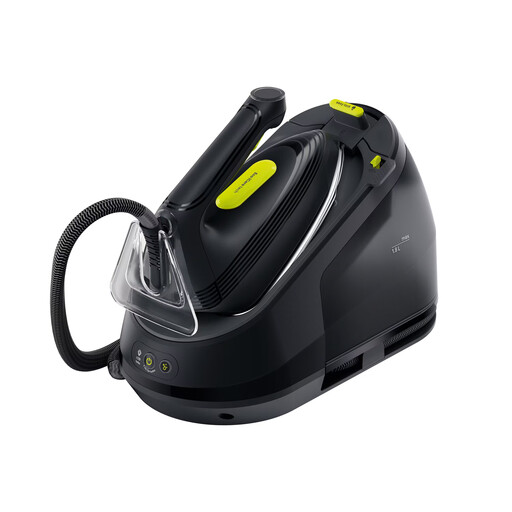 No image available
An ironing system to compare if you work around buttons, seams and pockets and also have longer sessions.
The product description lists a FreeGlide 3D soleplate, iCare, a Turbo mode and vertical steam.
The base unit needs extra storage space; the product description mentions a ComfortPro handle.
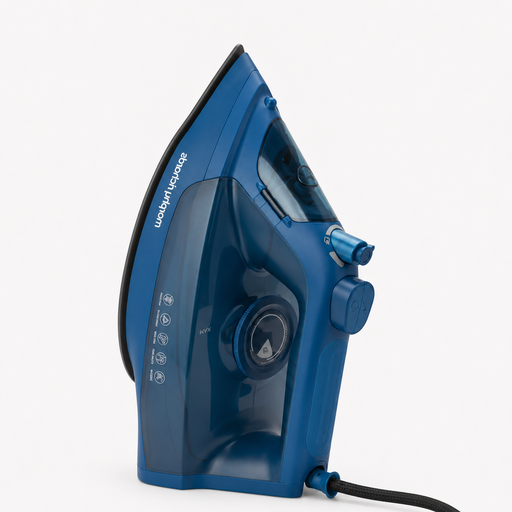 No image available
A standard steam iron to compare for precise ironing around collars and buttons.
The product details list a ceramic soleplate with a precision tip, variable steam, 50 g/min steam output and a 350 ml tank.
The title lists 2,800 W.
 No image available
For quick, small ironing jobs where a compact appliance and vertical steaming suit your needs.
The product details list dry and steam ironing, manual temperature and steam controls, 22 g/min steam output and a 0.15-litre tank.
The title mentions dual voltage. The tank is small for longer ironing sessions.
No. Set the maximum temperature according to the care symbol for the whole garment. Also check whether other parts or finishes of the waistcoat need to be taken into account.
No. According to the Consumentenbond’s buying advice, a standard steam iron suits shorter sessions and limited storage space, while a steam generator may be a better fit if you regularly iron a lot in one go. Remember to consider the base unit and the space it takes up.
Follow the descaling method for the exact model. Philips describes model-specific procedures for its steam irons and notes that harder water can lead to faster limescale build-up. Don’t apply those instructions to another brand or a steam generator without checking.
Electrical equipment within the scope of the EU Low Voltage Directive, including equipment for 50–1,000 V AC, must carry CE marking. EUR-Lex sets out this requirement for equipment placed on the EU market within that scope. A product listing alone does not confirm whether a particular appliance being offered complies.
For a typical online purchase, ACM ConsuWijzer says you have a statutory 14-day cooling-off period from delivery, subject to legal exceptions. The statutory guarantee is separate from any manufacturer’s warranty: if the product does not meet what you could reasonably expect under normal use, the seller is responsible for providing an appropriate solution.