Who is this guide for?

Quick Sunday ironer

You want to quickly smooth out a couple of pillowcases, then put the iron away. A compact steam iron could be ideal for a short ironing session like this. The Consumentenbond notes that having little to iron and limited storage space are reasons to consider a steam iron.

Ironer with large laundry piles

You iron your pillowcases along with a larger load of laundry and want to top up the water less often. A steam generator offers a different trade-off: a separate tank in exchange for needing more storage space. The Consumentenbond discusses this difference when comparing a steam iron with a steam generator.

Care-conscious ironer

You want to reduce limescale problems and stains on clean bedding. Check the cleaning method for the specific model and follow the instructions for use. The Consumentenbond recommends descaling according to the manual.

What should you look for when choosing?

Steam iron

A good fit if: you usually have a small amount of ironing and want an appliance that’s easy to put away after use.

The trade-off: the water tank is built into the iron, so you may need to refill it more often during longer sessions.

Steam generator

A good fit if: the pillowcases are part of a larger ironing session and you often tackle stubborn creases.

The trade-off: the separate tank may mean fewer refills during longer sessions, but it needs more storage space and may be too large or heavy for a standard ironing board. The Consumentenbond explains this practical trade-off.

What to consider What should you look for? Who should weigh this up most?
Smoothing out creases Compare continuous steam separately from the steam boost, and check whether the steam output is adjustable. The care label sets the maximum ironing temperature. If I want to tackle creases in pillowcases, I look at the steam settings without losing sight of the fabric care label. Around 33% of consumers put crease removal first.
Getting started quickly and putting it away Consider the size, weight and tank capacity together; a more compact set-up may mean more frequent refills than a steam generator. For a short ironing session, I want to be able to grab the appliance quickly and put it away easily afterwards. Around 27% of consumers are mainly looking for speed and compactness.
Maintenance and clean pillowcases Check how the specific model is descaled, which parts are accessible and what the manual recommends. If I want to avoid limescale residue on freshly washed bedding, a clear cleaning method matters to me. Around 20% of consumers prioritise maintenance and avoiding stains.
Size and use First decide how much laundry you iron in one go, and consider the storage space you’ll need and the ironing board you use. For just a few pillowcases, I don’t want a larger set-up than I need. Around 20% of consumers mainly weigh up cost and appliance size.

Common mistakes when choosing

  • Confusing a steam boost with continuous steam

    A steam boost and continuous steam refer to different settings. The steam boost figure alone doesn’t tell you how much steam the iron produces while you’re ironing continuously.

    When comparing different models, compare the same steam specification and check whether the continuous steam output is adjustable.

  • Choosing the temperature based only on ‘cotton’

    According to GINETEX, the fabric’s care label sets the maximum ironing temperature; the fibre name alone isn’t what determines it.

    Check the label on each pillowcase before setting the temperature and steam.

  • Choosing a large steam generator without considering the space you have

    The separate tank needs extra storage space and can make the set-up too large or heavy for a standard ironing board. The Consumentenbond highlights this as a point to consider when choosing a steam generator.

    Choose this type of set-up mainly if you have enough ironing and space to make the most of needing fewer refills.

  • Assuming anti-limescale or self-cleaning means no maintenance

    Cleaning requirements vary by model. The Consumentenbond and Tefal recommend following the manual for the descaling method for the iron in question.

    Before buying, check how to clean the model and whether the parts that need maintenance are easy to access.

Brands to consider

Philips

Philips Netherlands’ product page for the 3000 Series DST3031/20 lists a ceramic soleplate and a 300 ml water tank for smaller amounts of ironing.

  • The stated tank capacity and soleplate are model-specific details for the DST3031/20.
  • These product specifications aren’t an independent measure of how well it irons pillowcases.

Braun

Braun Household Netherlands lists a thermostat dial, self-cleaning and a 270 ml tank for the purple TexStyle 3 SI 3030.

  • For this model, Braun states 45 g/min in turbo mode and a steam boost of 140 g/min.
  • Turbo steam and steam boost are different measurements; don’t compare them as though they describe the same function.

Tefal

Tefal Netherlands lists a removable limescale collector and up to 50 g/min of continuous steam for the Ultragliss Anti-Calc Plus FV6842E0.

  • The manufacturer describes this cleaning method and steam specification for model FV6842E0.
  • Follow the manual for the exact version when descaling; these features aren’t a comparison of every model from the brand.

Steam irons at Joybuy

This product selection focuses on steam irons for smoothing pillowcases. Compare the steam settings, tank capacity and maintenance requirements with your own needs, and always follow the pillowcase care label.
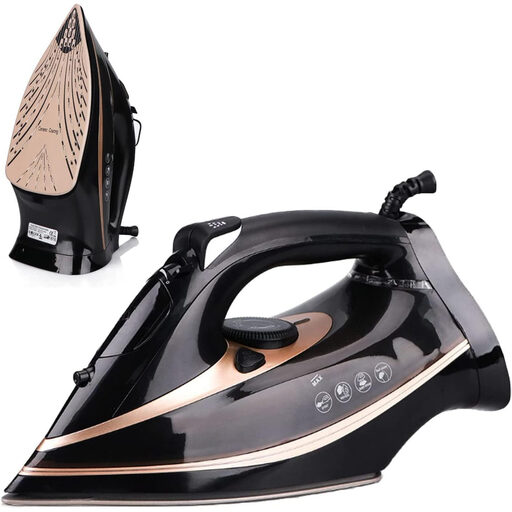
Steam iron with ceramic soleplate and 300 ml water tank

Steam iron, 2600 W, ceramic soleplate

The 300 ml water tank may be worth considering if you want to refill less often during an ironing session.

Power: 2600 W. Steam: 70 g/min. Extra steam boost: 120 g. Water tank: 300 ml. Self-cleaning function.

View at Joybuy

2400 W handheld steam iron with non-stick soleplate

Handheld steam iron, 2400 W

The stated settings and cleaning function are worth considering if you want to factor in temperature control and maintenance.

Power: 2400 W. Non-stick soleplate. Five temperature settings. Steam boost: 180 g/min. Continuous steam: 50 g/min. Water tank: 350 ml. Automatic cleaning and anti-drip function.

View at Joybuy

Philips 3000 Series DST3031/20 steam iron in blue

Philips 3000 Series DST3031/20

The tank capacity may suit an ironing session with a few pillowcases; set the temperature according to the care label.

Continuous steam: 40 g/min. Steam boost: 180 g. Water tank: 300 ml. Anti-drip. Philips’ Dutch product page lists a ceramic soleplate for this model.

View at Joybuy

Xiaomi BHR9034EU handheld steam iron

Xiaomi BHR9034EU handheld steam iron

Manual temperature and steam controls are useful if you want to adjust the settings to suit the care label.

Steam: 22 g/min. Water tank: 0,15 L. Manual temperature and steam control. Suitable for steam ironing and dry ironing. Dual voltage.

View at Joybuy
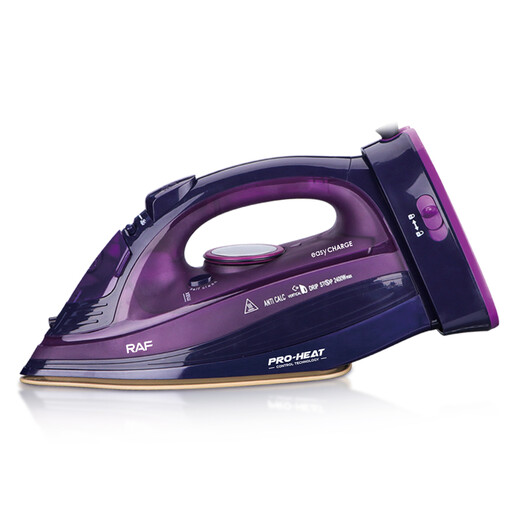
Purple RAF R.1210B cordless steam iron

RAF R.1210B, purple

The stated steam output and self-cleaning function may be worth considering when choosing and maintaining an iron.

Cordless. Ceramic soleplate. Steam output: 15–25 g/min. Water tank: 320 ml. Self-cleaning function.

View at Joybuy

Frequently asked questions

What temperature should you use for a cotton pillowcase?

Follow the care label on the pillowcase. According to GINETEX, the label sets the maximum ironing temperature, not just the fibre name. An ironing symbol allowing a maximum of 200 °C means you can use that upper limit; follow a lower setting if shown.

Do you need a steam generator for a couple of pillowcases?

Usually not. The Consumentenbond says a steam iron is a good fit if you have little to iron or limited storage space. A steam generator is mainly worth considering for larger loads and stubborn creases. If you choose one, also check that your ironing board can accommodate the larger set-up.

How can you prevent limescale residue on clean pillowcases?

Descale the iron according to the manual for the exact model. The Consumentenbond recommends ironing an old cloth first after descaling, as loose limescale particles may come out. Tefal notes that the descaling method can vary by model.

Is a CE mark enough to prove that an iron is safe and good quality?

No. Dutch government information explains that the CE mark is the manufacturer’s declaration that the product meets the relevant EU requirements, not an independent quality mark. When buying, check the product documentation and marking for the exact version.

Who should you contact if an iron develops a fault during normal use?

Report the problem to the retailer. The Netherlands Authority for Consumers and Markets (ACM) says the retailer is responsible for the statutory guarantee and must provide an appropriate solution for a faulty product. Any manufacturer’s guarantee does not replace these rights.
