
If you have limited storage space
You iron cotton handkerchiefs and want to be able to put the appliance away easily afterwards. The Dutch Consumers’ Association lists limited storage space as a reason to consider a standard steam iron.


For a few cotton handkerchiefs at a time, a standard steam iron is the obvious choice. It usually takes up less storage space than a steam generator, while heat and moisture can help smooth cotton. The Dutch Consumers’ Association recommends a standard steam iron if you have little ironing to do or limited storage space. A steam generator is worth considering if you regularly iron larger loads and have room for the whole appliance.
You iron cotton handkerchiefs and want to be able to put the appliance away easily afterwards. The Dutch Consumers’ Association lists limited storage space as a reason to consider a standard steam iron.
You want your handkerchiefs to lie flat and look smooth, and you’d like to control the steam. The Dutch Consumers’ Association notes that heat and moisture can help when ironing cotton.
You usually have only a small amount to iron and don’t want to set up a larger appliance every time. The Dutch Consumers’ Association recommends a standard steam iron for smaller ironing loads.
Best for: short ironing sessions, limited storage space and handkerchiefs you want to smooth out.
Consider: the tank is smaller than a steam generator’s, so you may need to refill it more often when ironing larger loads.
Best for: handkerchiefs that are part of regular, larger ironing loads. The Dutch Consumers’ Association highlights the larger tank and higher steam output as features of this type of appliance.
Consider: the complete appliance takes up more space. Also check that your ironing board is suitable.
Best for: freshening clothes or reducing creases when getting a handkerchief flat and smooth is less important.
Consider: in its garment steamer test, the Dutch Consumers’ Association found that steamers did not smooth cotton. So a compact design alone does not make a steamer an equivalent alternative for this ironing task.
Start by considering your available storage space and the finish you want. Then decide how much steam control and tank capacity you need for your short ironing sessions.
| What to consider | What to look for | Who is this important to? |
|---|---|---|
| Storage space | Compare the dimensions of the whole appliance with your cupboard and work area. If you’re considering a steam generator, allow for the space it needs beside the iron, too. | If I have limited cupboard space, I want to be able to put the appliance away easily after use. Around 36% of consumers prioritise storage space. |
| Smoothing cotton | Check whether you can adjust or switch off the steam, and follow the care label. After steaming, continue ironing without steam if the fabric is still damp. | I want my cotton handkerchiefs to lie flat without leaving them unnecessarily wet. Around 29% of consumers prioritise a smooth finish on cotton. |
| Short ironing session | Compare the tank capacity and how easy it is to fill for the exact model. Manufacturer claims about heat-up time don’t tell you how long your ironing session will take. | If I’m only ironing a few handkerchiefs, I want to be able to pick up and use the appliance easily. Around 21% of consumers prioritise convenience for short sessions. |
| Maintenance and safe use | Read the instructions for your specific model on water, descaling and cooling. Check that the appliance on offer has the required CE marking. | I want to know how to maintain the appliance and what to bear in mind to use it safely. Around 14% of consumers prioritise maintenance and safe use. |
A compact appliance won’t necessarily give you the smooth finish on cotton you’re looking for. In its garment steamer test, the Dutch Consumers’ Association found that garment steamers did not smooth cotton.
Choose based on the finish you want first. Consider a garment steamer only if freshening clothes or reducing creases is enough for you.
A steam boost and continuous steam output are two different product specifications. On small items, a constant, high volume of steam can make the fabric and ironing board wet.
Compare the figures separately and check whether you can adjust or switch off the steam.
The separate tank makes a steam generator larger overall. The Dutch Consumers’ Association notes that this type of appliance may be too large or heavy for a standard ironing board.
Measure the space available for ironing and storage beforehand, and check that your ironing board is suitable.
Your statutory rights exist alongside any commercial warranty. So a short manufacturer’s warranty does not, by itself, determine what rights you have.
Compare any additional cover with your statutory rights against the seller. ACM ConsuWijzer explains that statutory rights exist alongside the seller’s warranty.
Philips lists a ceramic soleplate and a 300 ml water tank for the DST3031/20 steam iron. The brand also offers the PSG3000/20 steam generator.
Tefal lists a continuous steam output of up to 40 g/min for the Express Steam FV2838.
Braun’s Dutch catalogue lists both TexStyle steam irons and CareStyle steam generators. The TexStyle 1 SI 1019 is a specific model to compare with other types.
These product picks focus on standard steam irons and compact ironing options for small amounts of cotton. For each model, check the steam settings, tank capacity and storage space it needs to make sure it suits your situation.
 No image available
A standard steam iron to consider if you iron small amounts of cotton and want to be able to control the steam.
Product information lists a ceramic soleplate, adjustable steam, a spray function, a 300 ml water tank and a 35-second heat-up time.
 No image available
A standard steam iron option to compare if you want adjustable steam for smaller ironing sessions.
Product information lists a ceramic soleplate, adjustable steam, a steam boost, automatic shut-off, a 200 ml tank and a 30-second heat-up time.
 No image available
A 2-in-1 option to compare if you’re looking for a compact appliance with both steaming and ironing functions.
Product information lists a heated ceramic soleplate, a steam output of 20 g/min, an approximate 60-second heat-up time and an integrated cord storage system.
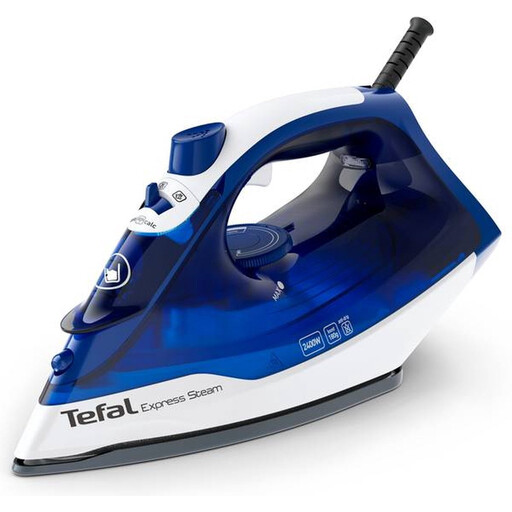 No image available
A standard steam iron to consider if you want to adjust the steam output when ironing small items.
Product information lists a ceramic soleplate, adjustable steam output, a 0.27-litre tank and a 15-second heat-up time. The product name lists 2400 W and automatic temperature selection.
 No image available
A handy iron to compare if you have limited storage space and want to iron both dry and with steam.
Product information lists a 0.15-litre tank, manual temperature and steam controls, and dimensions of 25 × 7,5 × 13,5 cm. The product name lists dual voltage.
Follow the handkerchief’s care label; the material alone doesn’t determine the permitted temperature. The Dutch Consumers’ Association lists ironing symbols for a maximum of 110 °C, 150 °C and 200 °C.
Use only as much steam as you need, then continue ironing without steam until the fabric is dry. Leave it to cool while dry. The Dutch Consumers’ Association recommends following the care label.
Don’t assume this is suitable for every model: Tefal advises against using vinegar and descaler for the tank cleaning method it describes. Descaling methods vary by model, so follow the instructions for your iron.
No, you don’t need additional cover to have statutory rights. ACM ConsuWijzer clarifies that statutory rights exist alongside the seller’s warranty. The appropriate solution if something goes wrong depends on the circumstances.
Yes, the Netherlands Food and Consumer Product Safety Authority states that CE marking is compulsory for electrical products. Check the marking on the specific appliance being offered to you; the model name alone does not confirm it.