
Student with limited storage space
Do you iron a dress now and then and want to put your appliance away easily afterwards? The Consumers' Association says a steam iron is suitable if you don’t iron often or have limited space.


If you only iron a cotton dress now and then and have limited storage space, start by comparing compact steam irons and always follow the garment’s care label. The Consumers' Association says a steam generator may suit you if you iron a lot of cotton or deal with stubborn creases, provided you have room for the larger appliance and a suitable ironing board. A handheld steamer is better for a quick freshen-up on a hanger. Philips notes that a steam iron is often quicker for thick cotton, but this isn’t an independent comparison of models.
Do you iron a dress now and then and want to put your appliance away easily afterwards? The Consumers' Association says a steam iron is suitable if you don’t iron often or have limited space.
If you want smooth cotton, check the ironing results, steam settings and garment care label. The Consumers' Association notes that cotton is harder to iron smooth than lightweight synthetic fabrics.
If you share an ironing area with housemates, think about where the hot appliance can be placed safely while it cools down. The Fire Service offers advice on using electrical appliances and cable reels safely.
Best for: A few dresses per ironing session, access to an ironing board and limited storage space.
Keep in mind: The appliance itself is heavier than a handheld steamer, and a smaller tank may need refilling sooner. The Consumers' Association says this type is suitable for smaller ironing loads.
Best for: Anyone who regularly irons lots of cotton or stubborn creases and has room for a separate tank.
Keep in mind: This larger appliance needs extra storage space and a suitable ironing board, so check before you choose one.
Best for: Freshening up a dress on a hanger without using an ironing board, as long as the garment care label allows steaming.
Keep in mind: Philips says a steam iron is often quicker for thick cotton. This is the manufacturer’s advice, not an independent comparison.
| What to consider | What to look for | Who should pay extra attention? |
|---|---|---|
| Smoothing cotton | Check the temperature control and steam settings, and follow the garment care label. | If I want to smooth a cotton dress without damaging the fabric, I check both the settings and the care label. Around 36% of consumers say ironing results on cotton are their main concern. |
| Space and size | Compare how much space each appliance takes up. A steam generator has a separate tank. | If I have limited cupboard space and only iron small loads, I focus on the appliance’s size and how often the tank needs refilling. Around 29% of consumers say space and appliance choice are their main considerations. |
| Shared use | Check whether the model switches off automatically and where it can be placed safely while it cools down. | In a shared ironing area, I want to know where a hot iron can be placed safely and how the power connection is used. Around 21% of consumers prioritise safe use in a shared space. |
| Limescale and maintenance | Read the model’s descaling instructions and check whether it uses anti-scale cartridges. | If I want to keep maintenance simple, I check in advance how to descale and empty the appliance. Around 14% of consumers prioritise ease of maintenance. |
A handheld steamer can freshen up a dress on a hanger, but Philips says a steam iron is often quicker for heavier cotton. That’s the manufacturer’s advice, not an independent comparison.
Decide whether you mainly want to freshen up the dress or press it smooth, and follow the garment care label.
If a quick freshen-up isn’t enough, you may still need an iron and ironing board to press the dress smooth.
The separate tank takes up more space, and you may need a suitable ironing board too.
Measure your available storage space and check that your ironing board is suitable before choosing this type.
Allow extra space for the tank and possibly a different ironing board.
Anti-scale systems slow the build-up of limescale, but maintenance is still needed, according to the Consumers' Association.
Follow the descaling instructions in the manual for the exact model and check whether it uses replaceable cartridges.
Models with replaceable anti-scale cartridges need them changed periodically.
An iron with automatic shut-off still gets hot during use. The Fire Service also warns against using cable reels and extension leads incorrectly.
Don’t leave a plugged-in iron unattended. Switch it off, let it cool in a safe place and fully unwind any cable reel you use.
The Philips 3000 Series DST3031/20 is a steam iron for smaller loads.
The Easygliss Plus FV5736 is a steam iron with adjustable steam and automatic shut-off, according to the manufacturer.
The TexStyle 3 SI 3030 Purple is a steam iron with manual temperature control.
This Joybuy selection features steam irons for pressing cotton dresses with a soleplate, including compact and cordless models. Follow the garment care label for each model and check which settings and maintenance features matter to you.
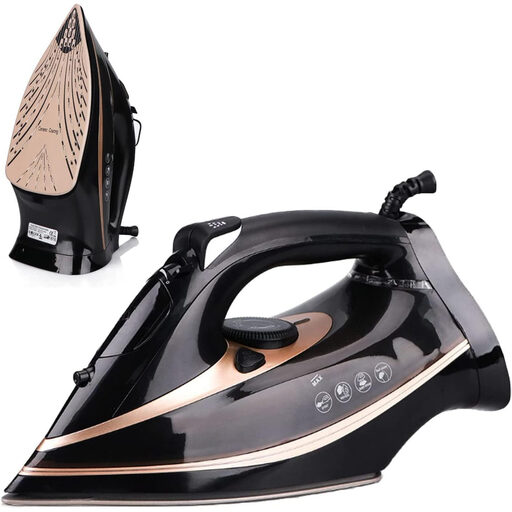 Image unavailable
A standard steam iron for anyone who wants to press dresses with a soleplate.
The product description lists 70 g/min steam, a 120 g steam boost and a 300 ml water tank. A self-cleaning function is also mentioned.
 Image unavailable
A model to compare if you want to adjust the temperature to suit your dress fabric.
The description lists five temperature settings, a spray function, continuous steam and a 180 g steam boost. An automatic cleaning function and an anti-drip system are also mentioned.
 Image unavailable
A compact model to compare if you want to put your appliance away after smaller ironing sessions.
The description lists manual temperature and steam controls, steam output of up to 22 g/min and a removable 0,15 l tank. Vertical steaming is also mentioned.
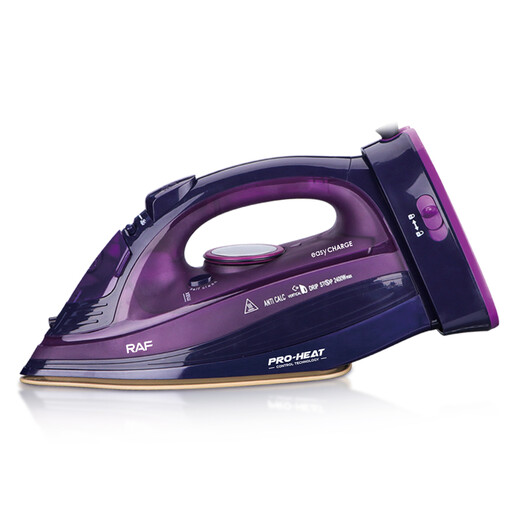 Image unavailable
A cordless model to compare if you don’t want to use a cable while ironing.
The description lists a power rating of 2400 W, a 320 ml tank and steam output of 15–25 g/min. The instructions say the iron needs to be placed on the 360° base to heat up.
 Image unavailable
A steam iron to compare if you want to adjust the temperature and steam to suit the garment care label.
The product name lists 2000 W. The description mentions variable steam, a 90 g/min steam boost and Calc-Clean maintenance.
Follow the ironing symbol on the dress’s care label. The lining, embellishments or a blended fabric may affect how the dress should be treated. The Consumers' Association lists maximum temperatures of 110 °C, 150 °C and 200 °C on garment care labels. Don’t iron the dress if the label says not to.
According to the Consumers' Association, steam irons are generally designed to use tap water. Empty the tank after use and follow the instructions for your specific model when descaling. Check the manual before using a different type of water or a descaling product too.
Not automatically. In the Netherlands, you have statutory rights if a product is faulty and should generally contact the retailer. According to the Dutch Government, there is no fixed statutory warranty period of two years. Check whether paid-for extra cover actually gives you additional rights.
Businesses that put electrical appliances on the Dutch market or sell them must ensure they comply with the relevant European rules. According to Business.gov.nl, when an appliance meets the applicable requirements, the manufacturer must provide CE marking and an EU declaration of conformity, among other things.