For a few dresses and smaller ironing loads, a steam iron is an obvious choice. For long sessions with lots of stubborn creases, a steam generator is worth considering. The Dutch Consumers’ Association highlights the trade-off: a larger tank means fewer refills, but you’ll need more room for the complete set-up. When ironing mixed fabrics, always check the care label. Manual temperature controls let you stay in control, while a single setting can make it easier to switch between fabrics that can be ironed.
Who is this choice relevant to?
If you wear cotton dresses
If you mainly iron cotton dresses as well as your regular weekly laundry, compare how each model tackles creases, how much control you have over the steam and whether you can reach seams easily. The Dutch Consumers’ Association recommends considering how well an iron smooths cotton when comparing models.
If you often switch between fabrics
When you’re dealing with a mix of fabrics, follow the care instructions. GINETEX symbols distinguish between maximum ironing temperatures and garments that must not be ironed.
If you iron large loads of laundry
If you often get through a big pile in one session, weigh fewer refills against the space needed for a steam generator and its set-up. The Dutch Consumers’ Association discusses this trade-off between a steam iron and a steam generator.
What should you look for when choosing?
First decide whether you mainly iron small loads or have longer sessions. Then consider whether you want to set the temperature yourself or prefer an easier way to switch between fabrics that can be ironed.
| What to consider |
What should you check? |
Who should weigh this more heavily? |
| Smoothing cotton dresses |
Compare continuous steam, the steam boost and the precision tip separately; these are different features. |
If cotton dresses are your main priority, you’ll want to tackle creases without confusing the different steam figures. Around 33% of consumers prioritise smoothing cotton. |
| Switching between fabrics |
Read the care label and check whether the model has temperature controls or a single setting for fabrics that can be ironed. |
For clothes with different care instructions, you’ll want to be able to select the right permitted setting or avoid having to switch settings as often. Around 25% of consumers prioritise switching safely between fabrics. |
| Long ironing sessions |
Compare the tank, how often you’ll need to refill it and how much room the complete set-up takes up. |
If you iron a large weekly load in one go, you’ll want to minimise interruptions to refill the tank. Around 25% of consumers prioritise getting through large loads without stopping. |
| Compact storage |
Measure your available storage space and compare an integrated tank with a separate steam generator base. |
A larger base may be inconvenient if you iron smaller loads or have limited storage space. Around 17% of consumers prioritise compact storage. |
Common buying mistakes
-
Confusing the steam boost with continuous steam
A steam boost and steam produced during continuous ironing are different functions. A single high figure on its own doesn’t tell you how well the iron will smooth a cotton dress.
Compare both figures separately and follow the care instructions. Use steam where it’s needed and avoid soaking the fabric.
-
Taking ‘suitable for all fabrics’ to mean you can iron any garment
A setting designed for fabrics that can be ironed doesn’t override a care label that says not to iron the garment or sets a lower temperature limit.
Check the care instructions for each dress before choosing the temperature or steam setting.
-
Focusing only on the larger tank of a steam generator
Fewer refills can mean needing more room for the complete set-up. For small loads, a compact iron may be more practical.
Think about how much you iron in each session and how much room you have for the base and ironing board.
A steam generator base takes up extra room and may require a suitable ironing board.
-
Putting off maintenance or using perfumed water
Limescale and water additives can affect the steam function and your clothes.
Follow the instructions for water and descaling for your model, and don’t use perfumed ironing water.
Brands to consider
Philips
The Azur 8000 DST8070/80 is a steam iron with a setting that Philips says is designed for fabrics that can be ironed.
- Philips lists OptimalTEMP and 110 g/min of continuous steam for this model. These are manufacturer specifications, not an independent comparison of ironing results on cotton dresses.
- A setting for fabrics that can be ironed doesn’t mean you can iron clothes whose care label says not to.
Braun
The TexStyle 5 SI 5277 has manual temperature controls, while the CareStyle 7 IS 7262 is a separate steam generator option.
- Braun lists adjustable steam, a precision tip and 50 g/min of continuous steam for the SI 5277. For the IS 7262, Braun lists 150 g/min and Eco, iCare and Turbo settings.
- These specifications apply to the models mentioned and don’t prove that all Braun models perform the same on cotton.
Tefal
The Ultimate Power Pro FV9E50 and Duo Power JF4031 offer different types of appliance for ironing and steaming.
- According to Tefal, the FV9E50 has five fabric settings, 85 g/min of continuous steam and a 350 ml tank. The JF4031 combines horizontal ironing with vertical touch-ups and has a precision tip.
- Tefal lists 25 g/min of continuous steam for the JF4031. The figures given are manufacturer specifications, not an independent performance test or comparison of ironing results.
Products at Joybuy
The models below range from portable handheld steamers for shorter sessions to steam generators for longer ones. For cotton dresses and other mixed fabrics, always follow the care label.
 No image available
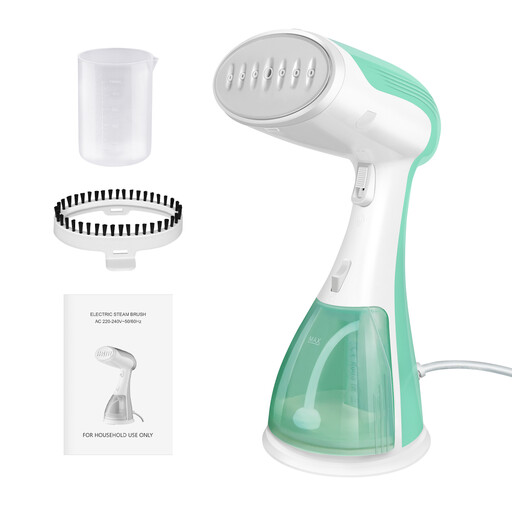
Portable handheld steam iron, 1500 W
A portable option for shorter sessions, whether you’re steaming hanging clothes or ironing on a flat surface. The product information states that it can steam continuously for up to 20 minutes per fill.
View at Joybuy
 No image available
Handheld steam iron, 2400 W
An option if you want to control the temperature yourself when switching between different fabrics. Check the care label for each dress before choosing a setting.
View at Joybuy
 No image available
Philips 3000 Series PSG3000/20 steam generator, 2400 W
A steam generator option for longer sessions. The product name lists a 1,4 l tank and a 350 g steam boost; follow the care label for the correct temperature.
View at Joybuy
 No image available
Philips PerfectCare Compact Essential GC6842/30
This steam generator is an option if you regularly switch between different fabrics that can be ironed. The product information describes OptimalTEMP as ironing without a temperature dial; this doesn’t apply to clothes whose care label says not to iron them.
View at Joybuy
 No image available
Tefal SV8026 steam generator
A steam generator for larger ironing sessions. The product warnings mention hot surfaces and steam; don’t leave the appliance unattended while it’s heating up.
View at Joybuy
Frequently asked questions
Can you always iron a cotton dress on the hottest setting?
No. The dress’s care instructions set the maximum ironing temperature; the word ‘cotton’ alone doesn’t. GINETEX labels indicate maximum temperatures such as 110 °C, 150 °C or 200 °C, or state that the garment must not be ironed.
What water should you use, and how do you keep the steam function working well?
Dutch tap water is generally suitable for steam irons and steam generators, but follow the water and descaling instructions for your model. Don’t use perfumed ironing water, and ideally empty the tank after use.
Should you buy extra cover when shopping online?
No, you don’t need an extended warranty to have your statutory rights. According to ACM ConsuWijzer, the seller is responsible for providing a statutory remedy if a product breaks too soon during normal use; an extended warranty has its own terms and conditions. For a typical online consumer purchase in the Netherlands, the cooling-off period usually ends 14 days after delivery, subject to statutory exceptions.
What product regulations apply to an electric iron in the Netherlands?
For mains-powered electrical equipment with a rated voltage of 50 to 1.000 V AC that falls under the EU Low Voltage Directive, conformity obligations apply and CE marking is required before the product is placed on the EU market. Check the markings and product information for the specific appliance.


