Who is this relevant for?

People with limited storage space

If you only iron a few covers from time to time, it’s worth considering how easy it is to put away the iron and ironing board afterwards. The Consumers’ Association lists limited storage space as a reason to consider a standard steam iron.

Anyone who likes neatly pressed cotton

If a smooth finish matters to you, weigh up ironing directly with a soleplate against the space required and the need to refill the tank. Philips says a garment steamer won’t give the same result as an iron, particularly on thick cotton.

Anyone ironing covers with seams and corners

Zips, stitching and corners call for careful positioning of the soleplate. Philips describes the DST3030/70 as having a tapered tip, while Braun describes the SI 3055 as having a FreeGlide 3D soleplate.

What should you look for when buying?

Standard steam iron

Choose this if: you occasionally iron a few cotton covers and have limited storage space.

The trade-off: according to the Consumers’ Association, it’s more compact than a steam generator, but has a smaller water tank.

Steam generator

Choose this if: you also regularly iron larger loads and want to minimise how often you refill the tank.

The trade-off: the Consumers’ Association describes a larger tank and greater steam capacity, but also a larger unit that may not fit securely on a standard ironing board.

Handheld garment steamer

Choose this if: having less space taken up by an ironing board matters more than getting a crisp, pressed finish.

The trade-off: Philips says a garment steamer won’t give the same result as an iron, particularly on thick cotton.

Concern What to look for when buying Who is this most relevant to?
Storage and set-up Compare the dimensions and cord storage; with a steam generator, also check that your ironing board can support the whole unit. If I have to put everything away again after ironing a few covers, a compact set-up matters more to me than a large tank. Around 36% of consumers say storage and set-up are their top priority.
A smooth finish Compare continuous steam and the steam boost as separate features, and follow the care label’s guidance on heat and steam. If I want to press the cotton panels neatly, I look for a soleplate and check which treatments the cover’s care label allows. Around 29% of consumers prioritise a smooth finish.
Control around seams and corners Look at the shape of the tip and soleplate; consider the weight of the exact model when filled and ready to use. When I’m ironing around zips, stitching and corners, I want to position the soleplate precisely. Around 21% of consumers particularly value control around details.
Refilling and maintenance Check the tank capacity and follow the exact model’s instructions for water and descaling. If I’m ironing several covers in a row, I want to know how often I’ll need to refill the tank and what maintenance is required. Around 14% of consumers give the greatest weight to ease of use and maintenance.

Common mistakes

  • Assuming a garment steamer will give you crisp cotton

    Philips says a garment steamer won’t give the same result as an iron, particularly on thick cotton.

    Choose a handheld steamer only if light de-wrinkling is enough. If you want a cover pressed flat, compare appliances with a soleplate instead.

    If light de-wrinkling isn’t enough, you may still need an iron and a suitable place to iron.

  • Choosing a steam generator without considering where you’ll use it

    According to the Consumers’ Association, a steam generator may be too large or heavy for a standard ironing board.

    Measure your storage space in advance and check your ironing board’s dimensions and weight capacity.

    Allow for space to store the appliance and, potentially, a suitable ironing board.

  • Ignoring the cover’s care label

    The label tells you which ironing temperature and steam settings are suitable for that cover.

    Read the label before ironing and don’t automatically start on the hottest setting.

Brands to consider

Philips

The 3000 Series DST3030/70 is a steam iron with a tapered tip and a 300 ml tank. These are features worth considering if you mainly iron a few covers and detailed areas.

  • Philips quotes up to 40 g/min of continuous steam and a steam boost of up to 180 g for the DST3030/70.
  • These are Philips’ own specifications, not independent tests on cushion covers. Check whether the tank capacity suits your ironing needs.

Braun

Braun describes the TexStyle 3 SI 3055 as a steam iron with a FreeGlide 3D soleplate. It’s worth considering if you iron around seams and other obstacles.

  • The soleplate shape is a design feature that Braun attributes to this model.
  • The brand’s description doesn’t prove that this model performs better than other irons. Check the exact version and its product information.

Tefal

The Easygliss Plus FV5718E0 is a steam iron with a Durilium Airglide soleplate, making it an option to consider if you’re looking for an iron that presses directly onto the fabric.

  • Tefal quotes 45 g/min of continuous steam and a steam boost of 195 g/min for this model.
  • The steam figures and claims about smooth gliding and removing creases come from the manufacturer; they aren’t an independent comparison.

Irons at Joybuy

This selection features standard steam irons for pressing cotton covers directly with a soleplate. Before buying, check the exact model’s documentation for electrical compliance. When using it, follow the care label and the model-specific instructions.

Xiaomi BHR9034EU compact steam iron

Xiaomi BHR9034EU steam iron, dual voltage

An option to consider if you’re looking for a standard iron for flat cotton fabrics and have limited storage space.

Joybuy’s product information lists manual temperature and steam controls, dry and steam functions, a 0.15 l tank and a weight of 0.77 kg.

View at Joybuy
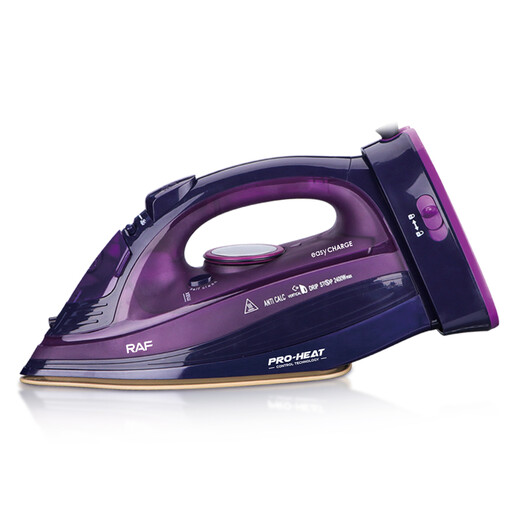
RAF R.1210B purple cordless steam iron

RAF R.1210B cordless steam iron, purple

The cordless design may be useful if freedom of movement matters to you when ironing.

Joybuy’s product information lists 2400 W, a 320 ml capacity, a steam output of 15–25 g/min and a ceramic soleplate.

View at Joybuy
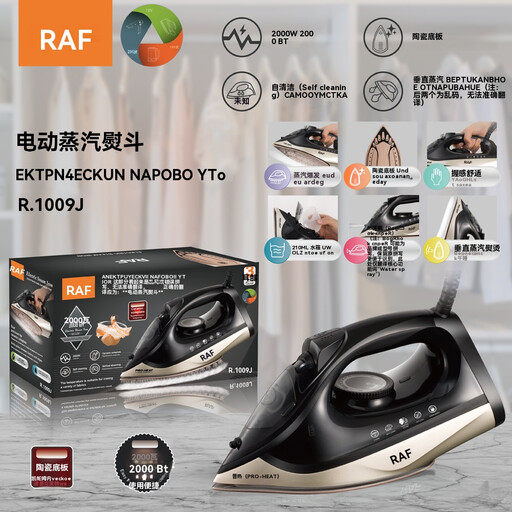
RAF 2000W electric steam iron with ceramic soleplate

RAF 2000W electric steam iron

An option to compare if you want to iron cotton covers with a soleplate.

Joybuy’s product information lists a ceramic soleplate, a 210 ml tank, vertical steam and a steam boost.

View at Joybuy

Braun FreeStyle 5 SI5037 steam iron, violet

Braun FreeStyle 5 SI5037 steam iron, violet

A model to consider if you’re looking for a soleplate and control around seams and hard-to-reach areas.

Joybuy’s product information lists a FreeGlide 3D SuperCeramic soleplate, a precision tip, a 300 ml tank and automatic shut-off.

View at Joybuy
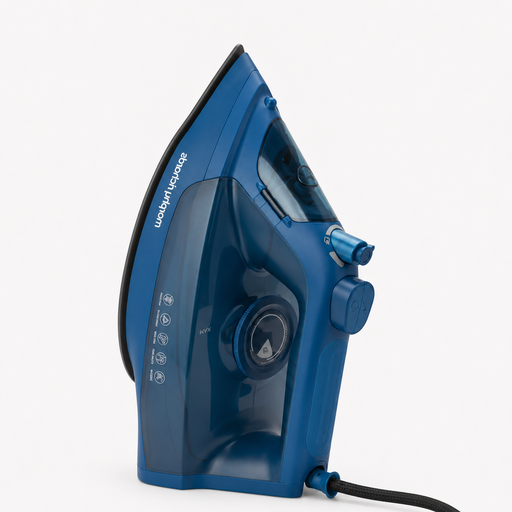
Morphy Richards Crystal Clear MDH-IRK4V steam iron

Morphy Richards Crystal Clear MDH-IRK4V, blue

An option to compare if you want a standard soleplate with a precision tip for seams and details.

Joybuy’s product information lists 2800 W, a ceramic soleplate, a 350 ml tank and a 2 m cord.

View at Joybuy

Frequently asked questions

Can I iron every cotton cushion cover on the hottest setting?

No. Follow the care label on the specific cover. GINETEX specifies, among other things, maximum soleplate temperatures of 200 °C and 150 °C, as well as a 110 °C setting without steam. The permitted treatment depends on the label, not just the name of the fibre.

How do I descale a steam iron?

Find the full model number and follow the instructions for that model. Philips notes that the descaling procedure for its steam irons doesn’t automatically apply to steam generators.

Am I always entitled to just a two-year guarantee in the Netherlands?

No. According to ACM ConsuWijzer, your statutory guarantee depends on what you could reasonably expect from the product with normal use. If a fault develops too soon, the retailer is responsible for providing an appropriate solution; a manufacturer’s guarantee doesn’t replace your statutory rights.

Can a new electric iron be sold in the Netherlands without a CE mark?

For electrical equipment covered by the relevant EU requirements, Business.gov.nl describes CE marking and an EU Declaration of Conformity as requirements that must be met before the product can be sold. The manufacturer draws up the declaration; check the documentation for the exact model.

Do I have a cooling-off period for an iron bought online?

For a standard online consumer purchase, you’re generally entitled to a statutory cooling-off period of up to 14 days after delivery. ACM ConsuWijzer also explains that there are exceptions; check the returns policy and any costs too.
