
Occasional apron ironer
You want to press a few cotton aprons neatly, but have little room to store equipment. The Consumers' Association lists a steam iron as a possible choice if you only iron a few items at a time or have limited storage space.


If you only have a few cotton aprons to press, a compact steam iron is a sensible place to start, provided you have a stable, heat-resistant surface to iron on and somewhere to store it. A handheld garment steamer can remove creases without an ironing board, but Philips says it won’t give the same results as an iron, particularly on thick cotton. A steam generator is worth considering if you have lots of aprons to iron in one go, as long as you also have room for the base unit and a suitable ironing surface.
You want to press a few cotton aprons neatly, but have little room to store equipment. The Consumers' Association lists a steam iron as a possible choice if you only iron a few items at a time or have limited storage space.
You can barely fit an ironing board and are weighing up a smaller appliance against a less crisp finish on thick cotton. Philips says a garment steamer won’t give the same results as an iron, particularly on thick cotton.
You iron several aprons in a row and want to refill the water less often, provided you have room for a base unit. The Consumers' Association highlights the larger tank of a steam generator as one difference from a standard steam iron.
Right for you if: you want to press a few aprons at a time and have a stable surface to iron on.
The trade-off: it takes up less storage space than a generator, but has a smaller tank and the iron may feel heavier in your hand.
Right for you if: an ironing board won’t fit and quick crease removal matters more than a crisply pressed apron. A hybrid with a horizontal ironing function is another option.
The trade-off: Philips says a standard garment steamer won’t give the same results as an iron, particularly on thick cotton. For a hybrid, check what surface and accessories you need for horizontal ironing.
Right for you if: you often iron lots of cotton aprons in a row and have room for the base unit and ironing surface.
The trade-off: the larger tank means fewer refills and the hand iron is lighter, but the whole appliance takes up more space. Even a compact model has a separate base unit.
| What to consider | What should you check? | Who is this important for? |
|---|---|---|
| Smooth finish on cotton | Check whether the model has a soleplate and adjustable continuous steam; look for a separate steam boost specification, if available. | If I want to press cotton aprons really neatly, quick crease removal alone isn’t enough. Around 33% of consumers say the pressing result is their top buying priority. |
| Storage and ironing space | Measure the space for the appliance, any base unit and a safe place for the hot soleplate. For a hybrid, check what’s needed for horizontal use. | When I have little cupboard space and nowhere to keep an ironing board set up, there needs to be room for both the appliance and the ironing surface. Around 27% of consumers rank storage space as their top priority. |
| Short ironing sessions | Compare the time and effort needed to set up and put away the appliance with its weight in your hand and any pauses to refill the water. | For a few aprons, I want to be able to grab the appliance easily and put it away again afterwards. Around 20% of consumers prioritise convenience for short ironing sessions. |
| Long sessions | Compare the tank capacity and the weight of the hand iron; also check that your ironing surface is suitable for the complete appliance. | If I’m ironing several aprons in a row, I want to refill less often without bringing an oversized appliance into my home. Around 13% of consumers say convenience during long sessions is their top priority. |
| Limescale maintenance | Read the manual for the exact model and check what cleaning it requires, including whether it uses cartridges. | If easy maintenance is my main concern, I need to know what the appliance requires after use. Around 7% of consumers rank ease of maintenance as their top priority. |
The Consumers' Association gives a tank of around 0.3 litres for a steam iron and around 1.5 litres or more for a steam generator as typical examples; these aren’t requirements for every model. A larger tank may mean fewer refills during longer sessions, but you’ll need room for the separate base unit.
A steam boost and continuous steam are different product specifications. A high steam boost doesn’t mean that amount of steam is available continuously.
Compare figures that use the same definition, and look at both the continuous steam output and the separate steam boost.
Even a compact steam generator has a separate base unit. The Consumers' Association points out that a generator may be too large or heavy for a standard ironing board.
Measure your storage and working space, and check whether your ironing board can support the complete appliance.
You may also need a larger or suitable ironing board.
An anti-limescale system doesn’t eliminate the need for maintenance. The right cleaning method varies from one appliance to another.
Read the manual for the exact model before cleaning the tank. Tefal warns that vinegar or descaling products in the steam tank can cause damage.
Models with replaceable cartridges may involve ongoing costs.
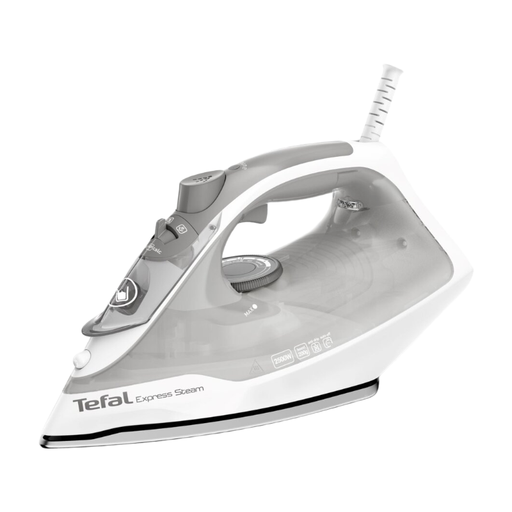
The Express Steam FV2838E0 is an example of a steam iron without a separate base unit.
Philips offers standard steam irons in its 3000 Series and also describes the OneTurn GC215/20 as a hybrid option.
TexStyle 3 includes standard steam irons; CareStyle Compact is a generator option for anyone who values longer sessions more than the extra storage space required.
These Joybuy products include steam irons and appliances with both steaming and ironing functions for anyone who wants to iron cotton aprons horizontally. There are options for limited storage space and different ironing sessions.
 No image available
The combination of steaming and a heated soleplate gives you the option of ironing cotton aprons horizontally.
The product description lists a ceramic soleplate, a steam output of 20 g/min, a compact design and cord storage.
The soleplate and steam get hot; don’t leave the appliance unattended while it’s in use.
 No image available
A steam iron with a soleplate is an option if you want to press cotton aprons horizontally.
The product description lists a ceramic soleplate, 30 g/min continuous steam, a separate steam boost and a 270 ml tank. It also mentions vertical steaming and automatic shut-off.
The soleplate and steam get hot; don’t leave the appliance unattended while it’s in use.
 No image available
According to the product description, this compact appliance combines dry and steam ironing. It’s for anyone who wants to iron horizontally while keeping storage space to a minimum.
The description lists a 0.15 l tank, a weight of 0.77 kg, a removable tank and manual temperature and steam controls.
The steam and soleplate get hot. Don’t use the appliance on clothes while someone is wearing them.
 No image available
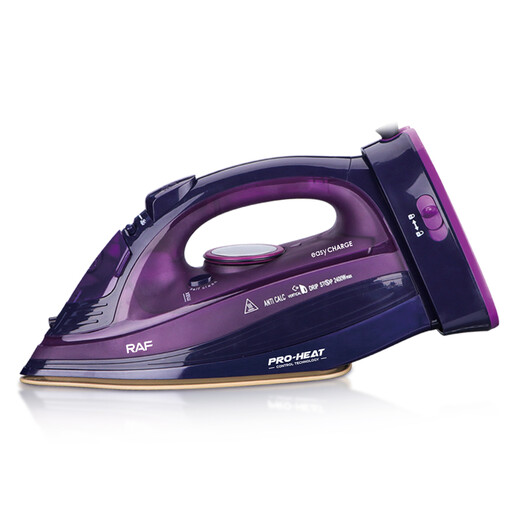
The cordless design may suit you if you want more freedom of movement while ironing and have room to set up a base.
The product name lists 2400 W, a 320 ml tank and a steam output of 15–25 g/min. The description mentions a ceramic soleplate, self-cleaning and a 360° charging base.
The soleplate stays hot after use. Don’t refill the tank while the appliance is plugged in.
 No image available
This steam iron is an option if you want to iron cotton aprons horizontally and compare continuous steam with a separate steam boost.
The product description lists a ceramic soleplate, a 300 ml tank and automatic shut-off. It also mentions an ergonomic open handle and a precision tip.
The soleplate and steam get hot; don’t leave the appliance unattended while it’s in use.
A handheld garment steamer can remove creases from an apron without a board, but Philips says a garment steamer won’t give the same results as an iron, particularly on thick cotton. If a crisp finish matters, check whether your chosen appliance can iron horizontally and what suitable surface you’ll need.
Follow the manual for the exact model, as anti-limescale rods, rinsing functions and cartridges all work differently. The Consumers' Association advises against using water with perfume or other additives. Tefal warns that vinegar or descaling products in the steam tank can cause damage.
According to ACM ConsuWijzer, the seller is responsible if a product doesn’t meet what you could reasonably expect from it during normal use. This statutory right is separate from any manufacturer’s guarantee; the Netherlands Authority for Consumers and Markets says there is no fixed statutory guarantee period for all irons.
For electrical appliances covered by the relevant EU rules, the manufacturer must meet the applicable conformity requirements and apply the required CE marking. The Low Voltage Directive applies, among other things, to equipment rated for AC voltages between 50 V and 1,000 V. Check the details for the specific product; a CE marking doesn’t tell you how well it irons cotton.