
Vandaag of morgen in huis

Kwaliteit gegarandeerd

Welkomstaanbiedingen ontgrendelen: GRATIS bezorging | Tot 80% korting | Gratis 30 dagen JoyPlus-proefperiode
Download de app
An IP44 outdoor light may seem straightforward to choose on paper. Yet many people end up buying a model that is unsuitable for its location, the desired brightness or the way they intend to use it. A light for a sheltered front door has different requirements from garden lighting along an exposed path.
The main pitfalls:
The IP code consists of two digits. The first digit indicates protection against solid particles; the second digit relates to water.
In practice, IP44 means:
A water-resistant outdoor light with IP44 is suitable, for example, for a façade, balcony, patio or covered entrance. Install the light according to the instructions and check that seals, covers and the lamp compartment close properly. For a fixed 230-volt connection, the installation must comply with local electrical regulations. Switch off the power and have any uncertain points checked by a qualified installer.
An integrated LED outdoor light already has its light source built in. This makes installation simple, but the LED is not always replaceable. With a fitting that uses an outdoor light with an E27 fitting or GU10 fitting, you can choose the colour temperature, brightness and sometimes the dimming function yourself.
Bear in mind:
Measure the available space before ordering. A wall light beside a door must not touch the door frame, drainpipe or canopy. Also check where the cable emerges from the wall and whether the mounting plate will fit around it.
Stability is important for balcony and garden lighting. A freestanding light should be placed on a flat, solid surface. With a solar outdoor light, the panel needs an unobstructed view of the sky and should be cleaned regularly.
An outdoor light with a motion sensor is useful by a front door, shed or side path. A dusk sensor switches the light on when it gets dark. With solar models, it is worth checking whether there are several settings, such as automatic or continuous operation.
Also think about maintenance. Dust, leaves and damp deposits can reduce the light output and affect charging performance in solar lighting. When cleaning, use a soft, dry cloth unless the instructions state otherwise.
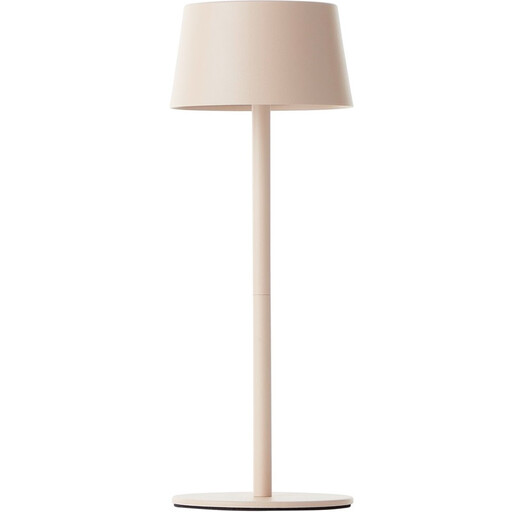
Why it suits this profile: This freestanding light runs on solar power or via USB and does not require fixed wiring. That makes it practical for a balcony, patio or small garden.
The specifications state IP44 and warn that the model is splash-proof, but not waterproof. This makes it clear that it needs to be placed on a sheltered surface.
170 lumens, warm white light at 3000K, three dimming settings and two charging methods: solar and USB.
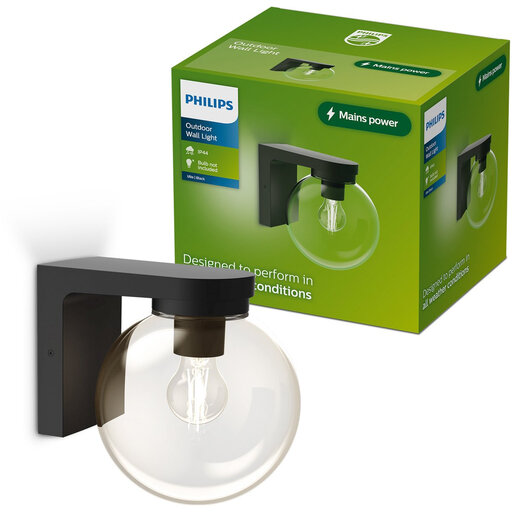
Why it suits this profile: If you are looking for a fixed outdoor wall light with a replaceable light source, this fitting allows you to choose the E27 LED bulb you prefer.
The fitting is clearly an E27 fitting and the light source is not included. This means you can factor in the additional purchase beforehand.
Aluminium and glass, one light source, diffuse light distribution and IP44 for outdoor use.

Why it suits this profile: This solar wall light is designed to provide automatic lighting at an entrance, shed or side path where no power cable is available.
The product information explicitly mentions a motion sensor, two light settings and IP44. Direct sunlight is still essential for charging.
Integrated LED, 400 lumens per light source, warm white light and no mains connection required.
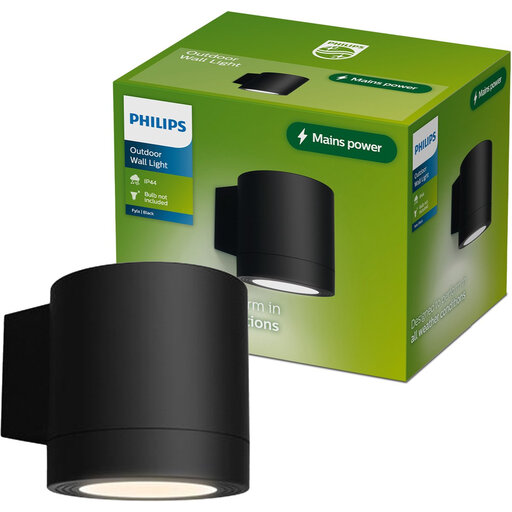
Why it suits this profile: This compact outdoor wall light is suitable for façades, balconies and smaller entrances where focused downlighting is preferred.
The GU10 fitting and the absence of a light source are clearly stated. You can therefore choose a suitable LED spotlight in advance and check the maximum wattage.
Aluminium housing, one GU10 light source, compact dimensions of 8.9 × 11.6 × 9 cm and IP44.
Not every light with IP44 is automatically suitable for outdoor use. The Aigostar LED Ultrathin Ceiling Light 24W RGB+CCT has IP44, 2700 lumens and adjustable light from 3000K to 6500K, but the product specification states indoor use. This model may therefore be interesting for a damp indoor space, but not as a standard outdoor light for an exposed façade or garden.
Always check the stated usage environment rather than filtering by the IP code alone. This prevents you from buying a product that is not technically intended for the location you have in mind.
We have put together a complete, up-to-date list of products that fully meet these strict selection criteria and the applicable European safety regulations.
An IP44 light is protected against splashing water, but not against immersion or powerful water jets. Ideally, place the light in a sheltered position and prevent water from collecting around the fitting. Correct installation and a properly sealed enclosure are essential.
Lifespan varies depending on the model and operating conditions. The product information for some Philips models states a lifespan of up to 50,000 operating hours; this is a stated product specification and not a guarantee of a particular service life in every situation. With an integrated LED, you generally cannot replace just a separate bulb.
A solar outdoor light does not use mains electricity while it is lit. However, its integrated battery must be charged during the day via the solar panel. The actual operating time depends, among other things, on sunlight, the season, temperature, charge level and the selected light setting. So do not look only at the term “solar”; also check the charging method, sensor and battery specifications.
