
Vandaag of morgen in huis

Kwaliteit gegarandeerd

Welkomstaanbiedingen ontgrendelen: GRATIS bezorging | Tot 80% korting | Gratis 30 dagen JoyPlus-proefperiode
Download de app
An ionic hair dryer can be a practical choice if you want to dry your hair faster and reduce static or frizz. However, a high ion count on the packaging does not tell you everything. Motor power, temperature control, weight and attachments also determine how well a hair dryer fits into your daily routine.
As a Joybuy Product Recommendation Officer, I focus mainly on verifiable product specifications and the purpose for which you use a hair dryer. This helps you avoid paying for features that do not suit your hair or circumstances.
Brands sometimes advertise impressive numbers of negative or plasma ions. According to the brand’s own research or product information, these may help reduce static and frizz. However, this does not guarantee the same results for every hair type. Good air distribution, the right temperature and the way you use the hair dryer are at least as important.
Treat the ion count as additional information, rather than your only purchasing criterion.
A motor running at 110.000 RPM sounds powerful, but RPM alone does not indicate exactly how much air the hair dryer moves. Also check the wind speed, power rating and any available airflow data. A compact fast-drying hair dryer with an efficient motor can be comfortable to use in practice, while a heavier model with a high wattage may feel less convenient.
A lot of heat can make the surface of your hair feel dry more quickly, but prolonged use at the highest setting is not suitable for every user. Choose a hair dryer with temperature control, keep a sufficient distance and keep the airflow moving. A cool-air button is useful for briefly finishing a style, but it does not replace a suitable heat setting.
For home use, the stated power of many models is around 1.600 to 1.900 watts. A powerful hair dryer can dry thick or long hair more quickly, but a higher wattage does not automatically mean better results. Also look out for:
For example, the ochama Ultra-Light lists 1.600-1.800 watts, approximately 20.000 RPM and a weight of around 480 grams. This is a well-balanced combination for everyday use at home or in a student room.
For straight, fine or fragile hair, a low or moderate heat setting is often more practical than relying on a single powerful blast of hot air. Thick, long hair generally needs greater air movement. Curly hair benefits from a gentle, consistent airflow and a suitable diffuser.
When comparing models, look for:
According to the product information, the MOVA Tech Turbo has two speeds and four temperature settings, plus a cool-air function. The manufacturer also states a wind speed of 65 m/s and a noise level of 58 dB.
A lightweight hair dryer is convenient when drying long hair or carrying out several styling steps. Models weighing less than approximately 600 grams are often easier to use with one hand, but always check whether the stated weight refers to the device itself or the packaging.
A removable filter makes maintenance easier. Regularly remove dust and hair, as a blocked air inlet can restrict airflow and cause overheating. For styling, a concentrator nozzle, diffuser or curling attachment can be useful:
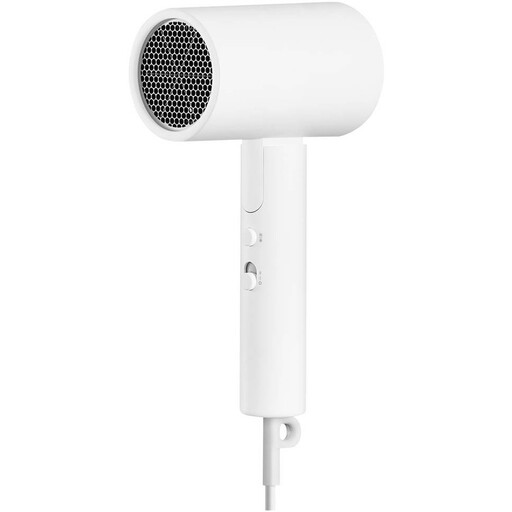
Why it suits this profile: This compact ionic hair dryer is suitable for anyone looking for a simple model for everyday use and who has limited storage space.
The choice is not based solely on ionic technology: the model has two speeds, two heat settings and overheating protection.
1.600 watts, approximately 433 grams, folding design and a 360° rotating concentrator nozzle.
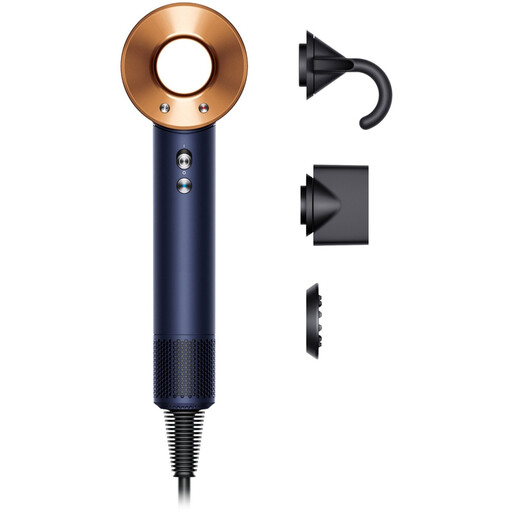
Why it suits this profile: This model is ideal for users who value targeted styling, multiple settings and a well-known digital motor system.
The temperature and speed selection is more extensive than on simpler models, so you are less reliant on a single hot setting.
110.000 RPM, three speeds, four heat settings, cool-air function and a styling concentrator.

Why it suits this profile: With a diffuser and multiple settings, this model is designed for long, thick or curly hair and regular styling.
The diffuser supports even air distribution; three speeds and four heat settings reduce the need to keep using maximum heat.
1.900 watts, 110.000 RPM, airflow of 23 m/s, approximately 570 grams and three magnetic attachments.
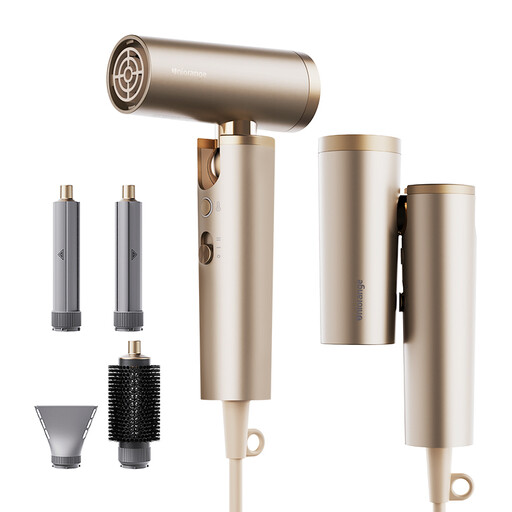
Why it suits this profile: Its folding design and stated dual voltage make this model an interesting option for frequent travellers.
As well as ionic technology, the product information lists a removable filter and a reverse airflow function for maintenance.
110.000 RPM, folding design, dual voltage from 100-240 V and four included attachments.
We have put together a complete, up-to-date list of products that fully meet these strict selection criteria and the applicable European safety regulations.
An ionic hair dryer is not a substitute for careful use. Even a model with temperature control can become hot around the nozzle. Do not use electrical appliances near water, and check that the plug is suitable for a UK socket.
It can be, particularly when the model has a diffuser, low speed and several heat settings. For curls, a diffuser is more important than simply having a high ion count. Start with a low airflow and allow your hair to air-dry partially if that better suits your routine.
Consumption depends on the wattage and how long you use the appliance. A 1.800-watt hair dryer theoretically uses a maximum of 0,9 kWh in thirty minutes when running continuously at full power. In practice, consumption is often lower because of pauses and lower settings. A fast-drying hair dryer may reduce the operating time, but always compare the power rating with the drying time.
Its lifespan depends on the motor, build quality, cleaning and frequency of use. Keep the air inlet clear, do not pull on the cable and do not use the appliance if it is damaged or becomes unusually hot. Also check the warranty terms and the availability of servicing before you buy.
