
Vandaag of morgen in huis

Kwaliteit gegarandeerd

Welkomstaanbiedingen ontgrendelen: GRATIS bezorging | Tot 80% korting | Gratis 30 dagen JoyPlus-proefperiode
Download de app
An ionic hair dryer can help reduce static and frizz while you dry your hair. However, the term ‘ionic’ doesn’t tell you everything about how a hair dryer performs in practice. Even a hair dryer that produces plenty of ions may be awkward to use if it’s heavy, has a weak airflow or gets too hot.
So look beyond the marketing claims. Read on to find out which specifications matter, which pitfalls to avoid and what type of hair dryer might suit your needs.
Some brands quote millions or billions of negative ions. That sounds impressive, but a higher number doesn’t automatically mean your hair will dry faster or that the hair dryer will be more comfortable to use. According to product information from various brands, ions can help reduce static and frizz. Consider this as one factor in your decision, not a guarantee of performance in itself.
Also look at the airflow, temperature settings, speed settings and nozzle. These features help determine how precisely you can dry your hair.
A powerful 2,400-watt hair dryer uses more power than a 1,400- or 1,600-watt model, but wattage isn’t a direct measure of drying time. An efficient brushless motor can still deliver strong airflow at a lower wattage.
Where available, check the information on motor type, RPM and air speed. Claims such as ‘five times faster’ or ‘dries in a third of the time’ come from the brand’s product description. Your actual experience will also depend on your hair’s length, thickness and dampness, as well as the temperature you choose.
‘Low noise’ or ‘quiet’ doesn’t always come with a measured value. A product described as under 65 dB gives you more to go on than a general claim that a hair dryer is quiet. Bear in mind that noise measurements can vary depending on the conditions.
If you’re using a hair dryer in an apartment, early in the morning or in the evening, a low noise level, a lower speed setting and even heat distribution matter more than a high RPM alone.
According to the product description, a hair dryer with ionic technology uses negative ions to help reduce static and frizz. This can be particularly useful for dry, long, thick or frizzy hair. It’s not a substitute for conditioner or heat protection.
Look for:
For best results, use a diffuser at a moderate temperature. A high heat setting and prolonged direct contact with your scalp can become uncomfortable.
A hair dryer with a brushless motor has no traditional carbon brushes. Product descriptions for these models often mention lower noise, a long service life and high motor speeds. Treat these as product specifications or brand claims, rather than guaranteed results.
For everyday use, 1,400 to 1,800 watts is often a practical range. According to its product information, a professional hair dryer such as the Remington PROluxe AC9140 has an AC motor rated at 2,400 watts, three heat settings and two speed settings. It weighs 945 grams, though, which may be comfortable for a powerful blow-dry but less so during longer styling sessions.
A lightweight hair dryer isn’t just useful for travel. If you have long hair, a lighter model can also reduce strain on your wrist and arm. Check the following, too:
A compact travel hair dryer is only truly practical if it suits both your sockets and your destination. For example, the Uniorange H16 product description specifies dual voltage of 100–240 V. Always check the switch and the type of plug you’ll need before use.
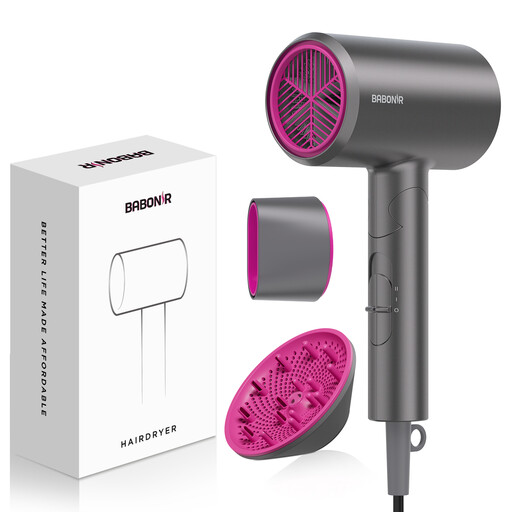
Why it suits this type of user: This model combines 1,800 W of power with a folding handle and a stated weight of 330 grams. That makes it suitable for everyday use and short trips.
You don’t have to rely on the ion count alone: the product information also lists three temperature settings, two speeds, a diffuser and a concentrator.
330 g, folding design, 1,800 W, 20,000 RPM according to the product details, and attachments for precise drying and curls.
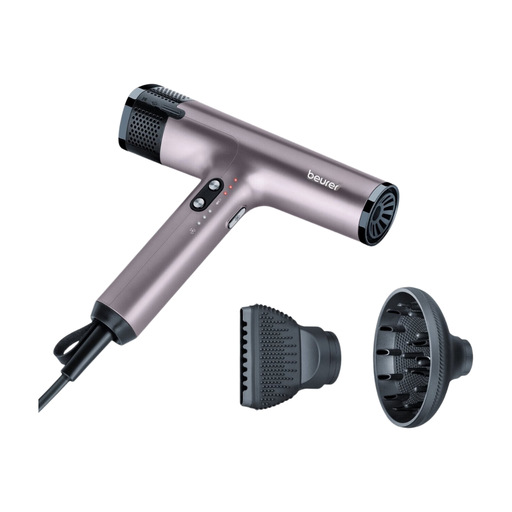
Why it suits this type of user: The combination of a brushless motor, ionic function, diffuser, magnetic styling nozzle and 2.80-metre cord makes this a good choice if you want to dry and style your hair precisely at home.
As well as the ionic function, the product description lists four temperature and airflow settings, plus a filter-cleaning indicator.
1,700 W brushless motor, diffuser, styling nozzle, memory function and automatic filter maintenance alert, according to the product information.
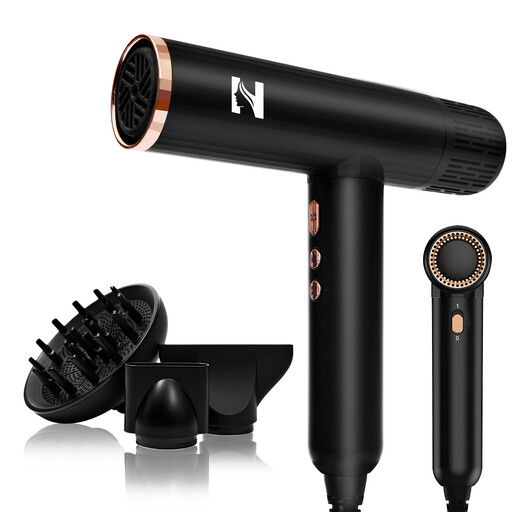
Why it suits this type of user: Designed with long or curly hair in mind, this model combines a diffuser with two concentrators, four temperature settings and three speeds.
It’s not just about ions or wattage: the stated noise level is under 65 dB, and the hair dryer weighs 0.57 kg.
1,900 W, 110,000 RPM brushless motor, 23 m/s airflow according to the product description, a diffuser and a 2-metre cord.
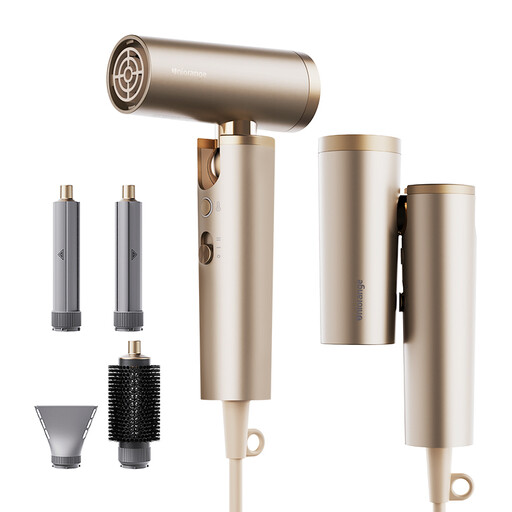
Why it suits this type of user: The folding design, dual voltage and four styling attachments make this model suitable for suitcases, weekend bags and use in different locations.
The product information lists more than just ionic technology: it also features a folding design, dual voltage, a removable filter and a self-cleaning function.
Dual voltage of 100–240 V, four attachments, folding design and reverse airflow for filter maintenance, according to the product description.
We’ve put together a complete, up-to-date list of products that meet these strict selection criteria and current European safety regulations.
It can be, particularly if the model has a diffuser and offers several low-temperature and speed settings. A diffuser spreads the airflow more widely, helping you dry your curls with greater precision. Use a moderate temperature and avoid drying one spot for too long.
Its lifespan depends on how you use it, how well you maintain it and how the motor is built. Keep hair and dust away from the air intake filter, don’t block the air outlet and let the appliance cool down after use. Product information often links brushless motors to a longer lifespan, but this remains a product specification or brand claim, not a guaranteed service life.
Energy use depends on the wattage and how long you use the hair dryer. In theory, an 1,800-watt model uses more power per hour than a 1,400-watt model. A shorter drying time may help limit the difference in use. So compare more than just the wattage: consider the airflow, drying time in practice and the heat setting you choose.
