
Presenter in a reverberant room
You want to record one clear voice and can position the microphone close to the speaker. Shure and RØDE highlight the importance of microphone placement for capturing the direct voice clearly.


When recording an interview introduction in an untreated room, microphone placement is crucial: position it close to the speaker, as a recorder can’t remove room reflections once they’ve been captured. A compact handheld recorder may be enough for one speaker who is sitting still; a lapel microphone may be more practical for someone who’s moving, while separate microphone inputs are useful if you want to record two voices independently. Also check which microphones, cables, power supply and storage your setup requires.
You want to record one clear voice and can position the microphone close to the speaker. Shure and RØDE highlight the importance of microphone placement for capturing the direct voice clearly.
You want to position the interviewer and guest separately, and may want to edit their voices independently. Zoom’s H4essential has two XLR/TRS inputs for external microphones.
You want to get started quickly or record a speaker who’s moving. Models with built-in microphones or a lapel-mic setup offer different ways to position the microphone close to the voice.
First, work out how to position the microphone close to each important voice. Then choose a recorder, inputs and file options to suit that setup.
| What to consider | What to look for when buying | Who is this important for? |
|---|---|---|
| Clear speech | Think about how you’ll position the microphone close to the speaker, and make a short test recording on location. Shure and RØDE emphasise the importance of getting the distance right. | If I mainly want a clear introduction and the room is reverberant, I prioritise intelligibility; around 36% of consumers in this buying context have the same top priority. |
| Two separate voices | Check that there are enough microphone inputs and recording channels, and find out which external microphones and cables you’ll need. The Zoom H4essential has two XLR/TRS inputs. | If I want to record the interviewer and guest separately, I look at the connections and equipment needed; around 29% of consumers in this buying context prioritise recording two voices separately. |
| Quick, mobile recording | Compare built-in microphones with a lapel-mic setup, and check how you’ll keep the microphone close to a speaker who’s moving. The Zoom H1essential and Tascam DR-05XP have built-in microphones; the Tascam DR-10L Pro is described as coming with a lapel microphone. | If I want to start quickly on location or the speaker is moving, a simple setup matters a lot; around 21% of consumers in this buying context prioritise mobile recording. |
| Files and power | Check your preferred file format, storage and how you’ll transfer files. Sony lists 4 GB of internal memory and linear PCM or MP3 recording for the ICD-UX570; Philips lists 8 GB of internal storage and MP3 and PCM recording for the VoiceTracer DVT4115. | If I want to listen back to files, transfer them and continue editing, I check the format and storage; around 14% of consumers in this buying context prioritise that workflow. |
A recording feature for managing levels won’t change the room’s acoustics. Once reflections have been recorded, the recorder can’t remove them from the room.
First decide how to position the microphone close to the voice, then consider the recording features.
A microphone placed further away may pick up more room reflections relative to the direct voice, so placement matters.
Make a short test recording with both speakers. If one shared setup doesn’t work, check whether you need separate microphones and inputs.
For the Philips VoiceTracer DVT4115, the stated maximum recording time depends on the format and settings.
Compare recording times using the file format you actually plan to use.
The H1essential is a compact handheld recorder; the H4essential is designed for a setup with external XLR/TRS microphones.
The DR-05XP has built-in microphones; the DR-10L Pro combines a personal recorder with a lapel microphone.
The ICD-UX570 is a voice-focused recorder for anyone looking for internal storage, playback and USB charging.
The DVT4115 is a voice-focused recorder with internal storage and a choice of MP3 or PCM recording.
These Joybuy products are voice-focused recorders. Compare the listed storage and controls, and above all, check whether the microphone setup is suitable for a reverberant room.
 No image available
A portable voice recorder for anyone looking to record speech; position the microphone close to the speaker to reduce room reflections.
The product name lists 128GB of storage.
 No image available
The product name may appeal if you’re looking for a digital voice recorder with one-touch controls; microphone placement still matters in a reverberant room.
The product name lists 64GB of storage and One-Touch Recording.
 No image available
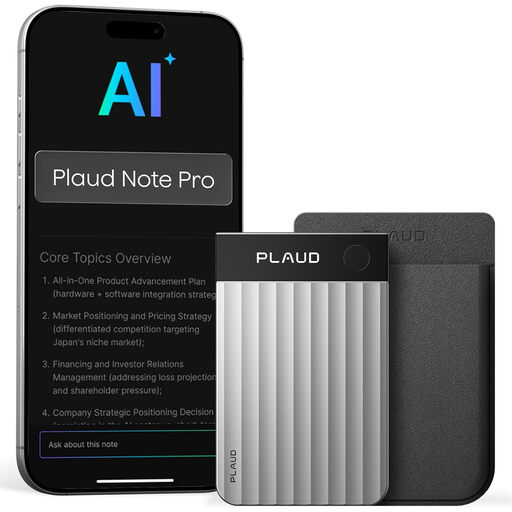
An AI voice recorder for anyone looking to process a recorded conversation using its listed note-taking and summarising features; check that the workflow suits you.
The product name lists AI Notes & Summary and the colour Silver.
 No image available
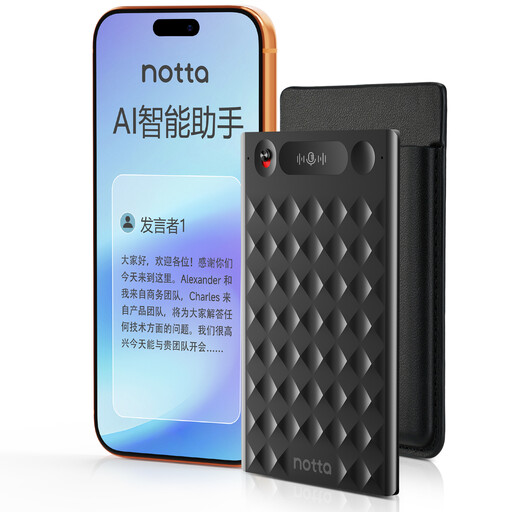
The listed features may suit anyone looking to process a recording using transcription and summarising tools; check that they fit the way you work.
The product name lists 32GB, 2000h Storage, 30h Battery and One-Press Recording.
No. 32-bit float recording doesn’t change the acoustics or remove room reflections that have already been recorded. Start by positioning the microphone close to the speaker.
Position the microphone close to the speaker and make a test recording to assess the distance, reflections and background noise. Adjust the setup before recording the final introduction; with a lapel microphone, where you attach it also matters.
Check whether your setup requires external microphones, cables, a memory card or a suitable power supply. The Zoom H4essential has connections for external microphones, but that doesn’t mean the microphones are included.
Treat recording and publishing as separate issues. According to the Dutch Data Protection Authority, identifiable audio recordings may be personal data; processing them requires an applicable legal basis under the GDPR. The Dutch Data Protection Authority states that consent is required in most cases to publish personal data online. The assessment depends on the purpose and use; a local rule or an example involving a conversation with a doctor doesn’t provide general permission to record every interview.