
Practising alone
You mainly record your own answers in one place and want to listen back straight away. Being able to position the microphone and connect it to your computer are important considerations.


If you’ll mainly be recording your own answers on a computer, start with a wired headset that has a compatible connection and a microphone you can position easily. If you also want to record your interviewer’s voice, don’t assume that one headset will capture both voices separately: check that your setup supports two microphones and suitable recording channels. If you’ll be practising regularly, make a test recording and consider comfort and controls too.
You mainly record your own answers in one place and want to listen back straight away. Being able to position the microphone and connect it to your computer are important considerations.
You want to be able to hear both questions and answers clearly when you listen back. So, before choosing a headset, decide how you’ll record both voices.
You make longer recordings regularly, so comfort, controls and a practical permanent setup are all worth considering.
A good fit if: you mainly want to record and listen back to your own answers on a computer in one place.
Bear in mind: check that you’ve chosen the right USB version. One headset is not a proven solution for recording two voices separately.
A good fit if: you want the recording to include both your questions and your partner’s answers.
Bear in mind: you’ll need a second microphone and a recording device or programme that can handle both inputs.
A good fit if: you don’t want to wear a headset and can position the microphone where you usually sit.
Bear in mind: positioning takes some preparation, and one separate microphone won’t automatically capture two voices individually.
| What to consider | What to look for | Who should consider this? |
|---|---|---|
| Your own voice | Choose a microphone you can position near your mouth, then listen back to a test recording. | If you want to compare your own answers from one place, clear audio matters most; around 33% of consumers say this is their main need. |
| Two voices | Check that your equipment and programme can actually process two microphones and separate recording channels. | If you want to listen back to both questions and answers, check in advance how each voice will be recorded; around 27% of consumers prioritise capturing both voices. |
| Connection | Check whether your device has a USB-A or USB-C port, and confirm the exact version of the headset. | If you want to connect the headset to your existing computer, this will help you avoid a mismatch; around 20% of consumers prioritise a compatible connection. |
| Comfort and controls | Compare the headband and ear cushions, and check where the mute control is located. | Comfort and easy muting can matter when you practise regularly or for longer periods; around 20% of consumers consider this their main priority. |
Jabra describes two microphones in one headset range for capturing the wearer’s voice and analysing background noise. That doesn’t mean every person you’re speaking to gets their own microphone.
First decide whether you want to listen back to just your own answers or to both voices. To record two separate voices, check that your complete recording setup is suitable.
Recording two voices may still require a second microphone and a suitable recording input.
Headsets and recording setups can use different connections. A connection that doesn’t fit won’t necessarily work with the recording inputs you need.
Check the exact version, your device’s ports and whether your recording programme can use the microphone or microphones you need.
You may need a compatible adapter or a different audio interface, so check before choosing your setup.
Manufacturers’ specifications and descriptions can’t replace a test recording in your own space. Microphone position can also affect what you hear when you listen back.
Make a short test recording from your usual seat and listen back to it. If your practice involves a partner, test their voice too.
The H340 and H390 are wired computer headsets worth considering if you mainly want to record your own voice over USB. For the H390, check which USB version you’re choosing.
The Evolve2 30 SE is a business headset range worth comparing if calls, listening and comfort matter to you. Check the specific version.
The Blackwire 3200 series includes wired business headsets in a range of wearing styles and connection options.
The ADAPT 160 USB II is an on-ear USB headset for business calls. Compare its fit and controls with other versions.
This selection includes wired headsets for recording in one place. Check the connection for each model and whether you want to record just your own voice or your partner’s as well.
 No image available
A good fit if you mainly want to record your own voice on a computer; check that the USB connection is compatible with your device.
Wired USB headset.
 No image available
A wired USB headset to consider if you want to listen back to your own answers on a computer; check that the connection is compatible with your device.
The product name specifies USB.
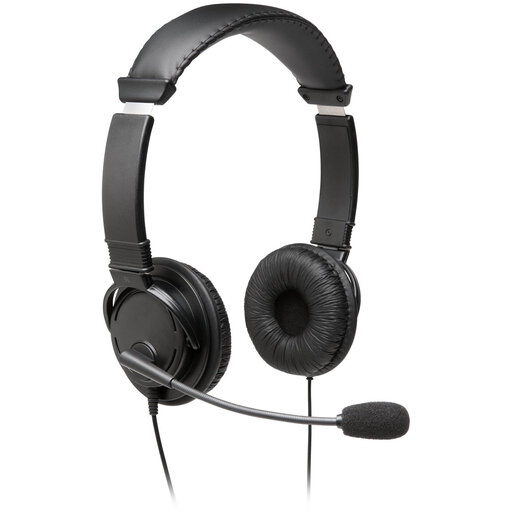 No image available
The product name describes USB headphones with a microphone; check that the connection and intended use are compatible with your recording device.
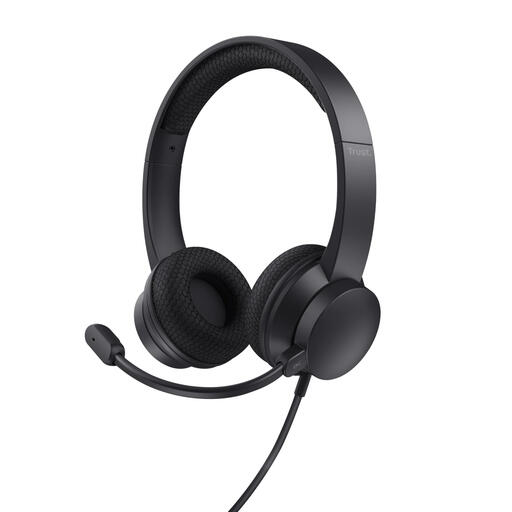 No image available
The product name specifies a wired headset with USB Type-A; check that your device has this connection before choosing it.
Noise-Cancelling appears in the product name and is not, by itself, a guarantee of recording quality in your space.
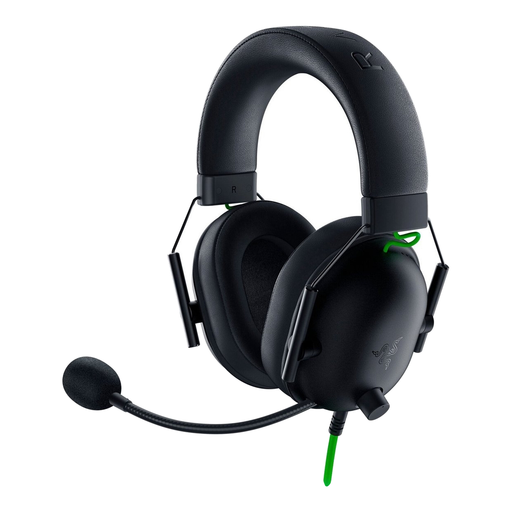 No image available
The wired version may suit a permanent recording setup; check that it connects to your computer and that your recording programme can select its microphone.
The product information specifies a 3.5 mm connection. A splitter cable is mentioned for computers with separate microphone and headphone ports; check your device’s connections.
Don’t assume so. For two voices that can be edited separately, RØDE describes a setup with two microphones and suitable input channels. Check whether your recording device or programme can actually process both sources.
Connect the right USB version, select the headset as the microphone in your recording programme and position the microphone boom near your mouth. Make a short recording and listen back; also check that the microphone isn’t muted. Logitech and Jabra offer guidance on connections and microphone positioning, but this doesn’t guarantee how a recording will sound in your space.
For online consumer purchases, you generally have a 14-day cooling-off period after delivery; check which exceptions apply to your purchase. A product must also meet the standard you could reasonably expect when used normally. ACM ConsuWijzer explains that you can contact the seller about your statutory guarantee.
This depends on how the recording is used and the circumstances in which it’s made. The Dutch Data Protection Authority distinguishes between use solely for personal or household purposes and processing covered by the GDPR; if the GDPR applies, you need a valid legal basis. Tell your practice partner that you’re recording and explain what you’ll use the recording for. Different circumstances may apply if you share the recording or use it in a professional context.