
Practising on your own
You record questions and your own answers in short takes, and want to listen back quickly. So check the recording input and how clearly your voice comes through before weighing up extra features.


If you’re mainly recording your own voice, choose a headset with a connection that suits your computer and a microphone you can position properly. Check the sound with a test recording. If you also want to listen back to your interviewer’s voice, a headset designed for one speaker won’t necessarily be enough. Decide how you’ll record that second voice, and test whether your software can handle the audio sources you need.
You record questions and your own answers in short takes, and want to listen back quickly. So check the recording input and how clearly your voice comes through before weighing up extra features.
You want to keep both the questions and the answers. Check how the second voice will be recorded: a microphone positioned near your mouth won’t automatically pick up someone further away clearly.
You want to reduce background noise or move around while practising. Assess the recording with a test take and check the connection, rather than relying only on a mention of ANC or microphone noise reduction.
| What to consider | What to look for | Who should pay particular attention? |
|---|---|---|
| Recording your own voice clearly | Check whether you can position the microphone and whether the recording input is set up correctly. Make a test recording at your normal speaking volume. | When I listen back to my answers, I want to be able to assess my voice clearly. Around 26% of consumers put voice clarity first. |
| Recording your interviewer too | Test a take where you both speak. Find out whether you need a second recording source and suitable software or equipment. | When I want to listen back to both questions and answers, I check how the other voice will be captured in the recording. Around 26% of consumers prioritise recording both voices. |
| Making several short takes | Check the connection and mute control, and make sure the right microphone is selected as the recording input. After muting, test again to check that sound is being recorded. | When I want to move quickly between short takes, I want to be able to check easily that the microphone is active. Around 21% of consumers prioritise being able to restart quickly. |
| Background noise in the recording | Make a test recording in your own space and listen back to it. ANC for what you hear is not the same as microphone noise reduction in the recording. | When practising somewhere that isn’t very quiet, I want to be able to listen back to my voice clearly. Around 16% of consumers focus on background noise in the recording. |
| Comfort during repeated practice | Look for adjustability and, where available, a choice between mono and stereo. Also consider the cable and where you’ll be practising. | When I have several practice sessions, I want a fit that feels comfortable for me. Around 11% of consumers prioritise comfort. |
A headset microphone sits close to the wearer. This means your interviewer’s voice may be missing or difficult to hear when you listen back. In Audacity, an additional solution is needed to record two separate audio devices at the same time.
Make a test recording where you both speak, then decide how you’ll record the second voice.
You may need a second suitable recording source or an audio interface for the other speaker.
Active noise cancellation for what you hear and microphone noise reduction are different features. So an ANC label doesn’t prove that background noise will be reduced in your recording.
Check which feature applies to the microphone, and listen to a test recording in the room where you’ll be practising.
Trust Ayda versions can have different connections. A USB version and a version with a 3.5mm connection are not interchangeable without checking first.
Before buying, check the full product version and connection. Also find out whether your computer needs a suitable adapter.
A different connection may mean you need a suitable adapter or another version of the headset.
The Dutch government explains that the Netherlands does not have a fixed statutory guarantee period of two years. A manufacturer’s guarantee is separate from your rights with the seller. What you can expect from a product depends partly on the product and the circumstances.
Keep your proof of purchase and contact the seller if something goes wrong. Consider the cost of an extended guarantee only after checking which rights apply to your situation.
The H340 is a wired USB-A headset for computer use; the Zone Wireless is a wireless option if you want more freedom to move around.
The Ayda USB-ENC is worth considering if you’re looking for a USB connection and a microphone mute control.
The Evolve2 30 SE is a wired series designed for calls; check which mono or stereo version and connection you’re choosing.
The wired Blackwire 3200 series includes mono and stereo versions, so you can assess the wearing style and connection for each version.
These product picks focus on wired headsets for recording your own voice on a computer. If you also need your interviewer on the recording, decide separately how you’ll capture their voice.
 No image available
A wired USB headset to consider if you want to record your own voice on a computer.
Check that the USB connection is compatible with your computer.
 No image available
A wired USB headset for recording your own voice on a computer.
Check that your computer has a suitable USB connection.
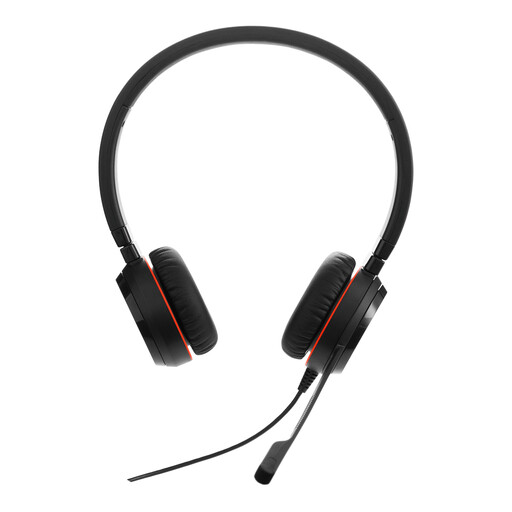 No image available
A wired stereo headset to consider if you want to record your own voice on a computer.
This version has a 3.5mm connection; the listed LINK MS controller is needed for USB. Check which connection you want to use.
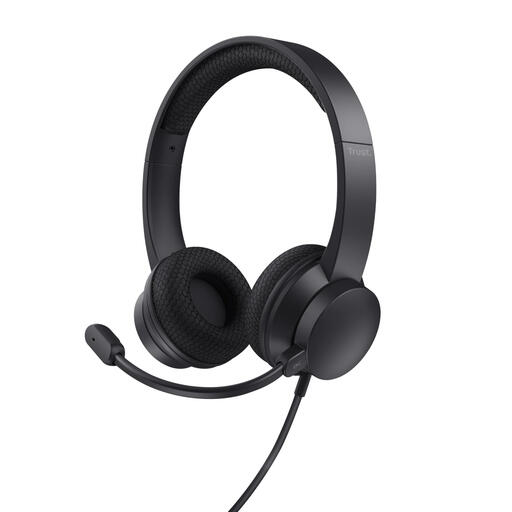 No image available
A wired headset to consider if you want to record your own voice on a computer.
The product name specifies USB Type-A; an adapter cable is listed for USB-C. Check which connection is right for your computer.
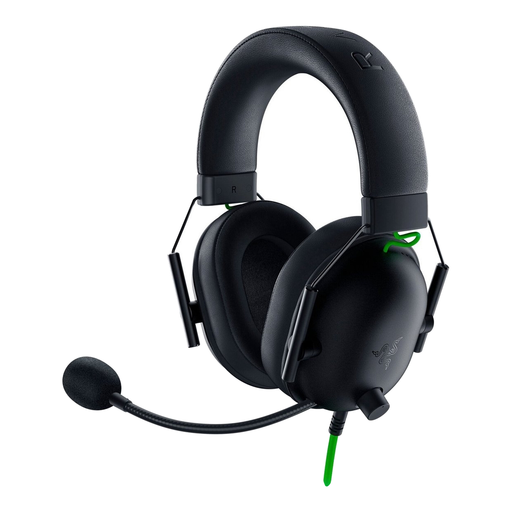 No image available
A wired headset to compare if you want to record your own voice and are looking for a headset listed with 7.1 sound.
This version uses a 3.5mm connection. A splitter cable is listed for computers with separate audio and microphone ports; check that it’s compatible with your connection.
Don’t assume it can without making a test recording: the headset microphone sits close to the wearer. If you want to use two separate microphones, check your equipment and software too. The Audacity guide explains that an additional solution is needed to record two audio devices at the same time.
Select the right microphone in your recording software and make a test recording at your normal speaking volume. The Audacity guide recommends setting peaks between −18 and −6 dB and warns that 0 dB causes clipping. After muting, check that audio is coming through again on your next take.
It depends on the connection on your computer and the headset plug. The Audacity guide points out that you may need an adapter to use a separate microphone plug with a combined headset port. Check the connections on both devices before choosing.
If there’s a fault, you can contact the seller and ask for an appropriate solution. According to the Dutch government, the Netherlands has no fixed statutory guarantee period of two years. What you can expect from the product depends on the product and the circumstances.
According to the Dutch Data Protection Authority, strictly personal or household use is exempt from the GDPR. If an identifiable voice is processed as personal data outside that context, the GDPR may require a lawful basis; consent is one possible basis. This is not blanket permission to record or publish every conversation, so make the purpose and intended use clear to your practice partner beforehand.