
Vandaag of morgen in huis

Kwaliteit gegarandeerd

Welkomstaanbiedingen ontgrendelen: GRATIS bezorging | Tot 80% korting | Gratis 30 dagen JoyPlus-proefperiode
Download de app
A smoke detector going off in the attic is useless if you're in the living room and can't hear it. This is the main reason why more and more Dutch households are switching to interlinked smoke detectors. When one detector senses smoke, all connected detectors in the house sound the alarm. This provides peace of mind, especially in a multi-story home.
But the market is flooded with options and marketing promises. Before you make a purchase, it's crucial to understand a few common pitfalls that could cost you money and compromise your safety.
To avoid a bad purchase, focus on a few objective specifications. These determine the reliability and ease of use of your home fire alarm.
The way smoke detectors communicate with each other is crucial.
There are two things you should never ignore:
Not every smoke detector fits every situation. Below are a few options, matched to specific residential profiles.
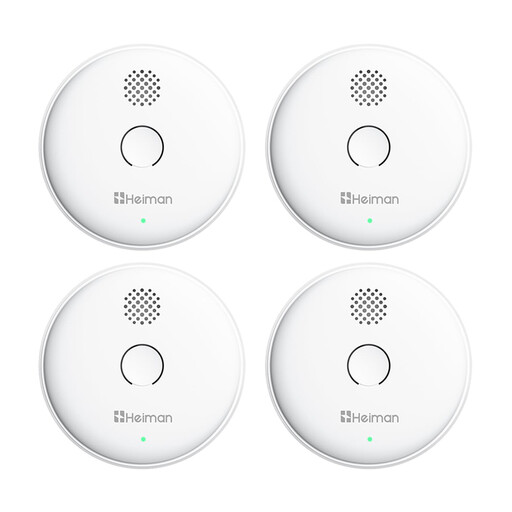
Why This Fits Their Persona: Ideal for those seeking a complete, reliable solution for a multi-story family home. No fuss with apps or hubs—just install and you're set.
This set uses a direct RF link, independent of Wi-Fi. The sealed 10-year battery and EN 14604 certification provide security without hidden drawbacks.
A complete smoke detector set for an entire house. Simple linking and installation with no extra costs for an electrician or hub.
![Aqara Smoke Detector [EU] Offline, SD-S01D](https://images4.joy-sourcing.com/product/s512x512_jfsintlpro-000-product/t1/4294967296/4718592/6109836064365/241379/69704519Edcd2852d/42b10752b5083d5e.png)
Why This Fits Their Persona: Perfect for those who already have a smart home system (or plan to build one) and want to integrate their smoke detectors for remote notifications and automations.
Although this model is "smart," its local alarm function remains operational even if the internet connection is lost. It is not entirely dependent on the cloud for its primary task.
Integration with a smart home ecosystem via Zigbee. Provides app notifications and the ability to trigger other actions (e.g., turning on lights). Also features a 10-year battery and EN 14604 certification.
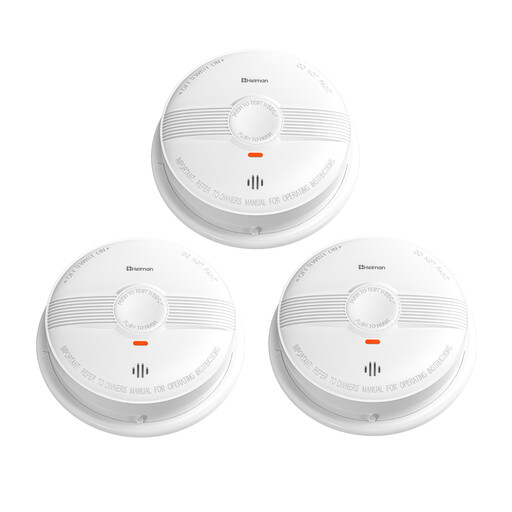
Why This Fits Their Persona: Perfect for those who want to start by securing the main floors and possibly expand later. This Heiman smoke detector set provides a solid foundation.
This system is modular. You can start with this set and add individual, compatible RF detectors later. You are not locked into an unnecessarily large or complex system.
Flexibility and scalability. Offers the same reliable RF technology, 10-year battery, and certification as the larger sets, but in a smaller package.
We have compiled a complete, up-to-date list of products that fully meet these strict selection criteria and Dutch safety regulations.
According to Dutch law, at least one smoke detector is required on each floor of a residence. For optimal safety, it is recommended to also place detectors in escape routes, such as hallways or landings, and near bedrooms. In a system with interlinked smoke detectors, it is especially important that every separate area where a fire could start (like a laundry room with a dryer) and every floor is covered.
No, this is generally a simple job you can do yourself. The steps are usually:
Most smoke detectors sold for home use today are optical (also called photoelectric). These are most effective at detecting slow, smouldering fires, which are common in homes and produce a lot of smoke before flames appear. Ionization detectors react faster to open, fast-flaming fires but are more prone to false alarms from things like cooking fumes. For residential homes, an optical detector, like the models mentioned above, is typically the recommended choice.
