
Vandaag of morgen in huis

Kwaliteit gegarandeerd

Welkomstaanbiedingen ontgrendelen: GRATIS bezorging | Tot 80% korting | Gratis 30 dagen JoyPlus-proefperiode
Download de app
A pet may enthusiastically welcome a toy, only to ignore it for weeks afterwards. Or a dog may destroy a rope within minutes, while a cat is only interested in the box it came in. If you are looking for interactive pet toys, you are not just looking to buy something colourful. You want a product that suits your pet, their play style and your home.
A sturdy appearance says little about how long a toy will last. Pay attention to the material, dimensions and warnings about intensive chewing. A toy suitable for puppies or small dogs is not automatically suitable for a medium-sized dog with a strong urge to chew.
Also check whether loose parts, filling, feathers or a sound module could come away. Durable pet toys should feature not only strong materials, but also a design suited to how they will be used.
An electronic bouncing ball can encourage movement, but it requires space, charging and supervision. A snuffle mat, on the other hand, calls for calm and guidance. Toys containing catnip or silvervine will not work in the same way for every cat, either.
So first decide what type of play you want to encourage:
A funny shape or striking colour can grab your pet’s attention, but it does not tell you how much stimulation the toy provides. Look for verifiable details such as dimensions, material, power supply, replaceable parts and cleaning method.
The size should suit your pet’s mouth, paws and weight. Toys for puppies and toys for small dogs are often more compact than toys for medium-sized dogs. A product that is too small could be swallowed, while one that is too large may be difficult to pick up.
Supervision is important when using chew toys. Inspect the product regularly and replace it if you notice tears, deep grooves, loose parts or exposed filling. No toy is suitable for every chewer.
Commonly used materials include nylon, TPR, rubber, fabric, sisal and polyester. TPR and rubber are flexible, while fabric and fleece often feel softer. Products containing fabric, rope or filling require extra checks for fraying and loose parts.
Also check the cleaning instructions. Some products may only be wiped with a damp cloth. Others can be cleaned with warm water. Electronic toys must not be submerged and should be kept dry around the charging port.
Interactive dog toys only work well when your dog understands what to do. Start with a simple setting or hide an easy-to-find reward. Only increase the difficulty once your pet has understood the game.
An automatic toy is not a replacement for shared exercise. Use it as an addition to walks, playing fetch or short play sessions. When using a snuffle mat, it is best to use suitable dry treats and remove any leftovers afterwards.
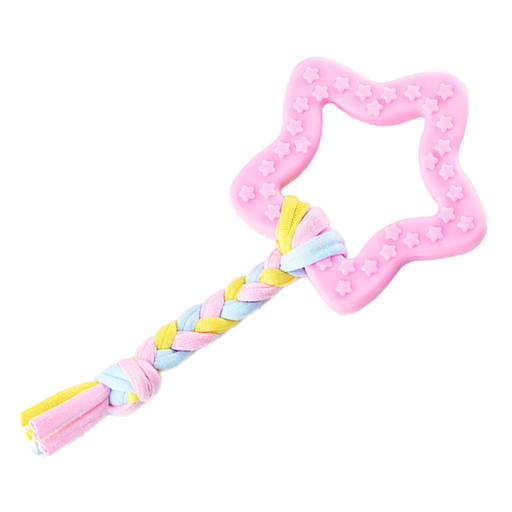
Why it suits this profile: A straightforward toy for puppies and small dogs that enjoy tugging, throwing and chewing with their owner.
The 16.5 × 8 cm size and intended users are clearly stated. According to the description, the product is not designed for aggressive chewers or larger breeds.
TPR and fabric combine tugging and chewing; suitable for interactive play under supervision.
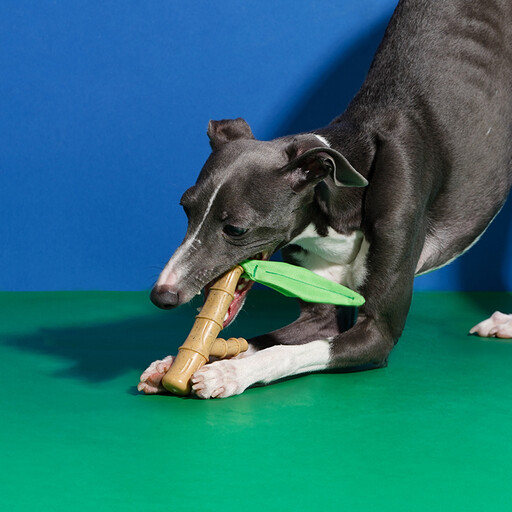
Why it suits this profile: For dogs that enjoy combining chewing with fetching or throwing games.
The product description lists nylon, wood fibres and Oxford fabric, along with clear instructions for inspection and replacement. There is no need to rely solely on the word “natural”.
Dimensions of 12 × 5.5 × 2.5 cm excluding the leaves; a shape designed for chewing and games of fetch.
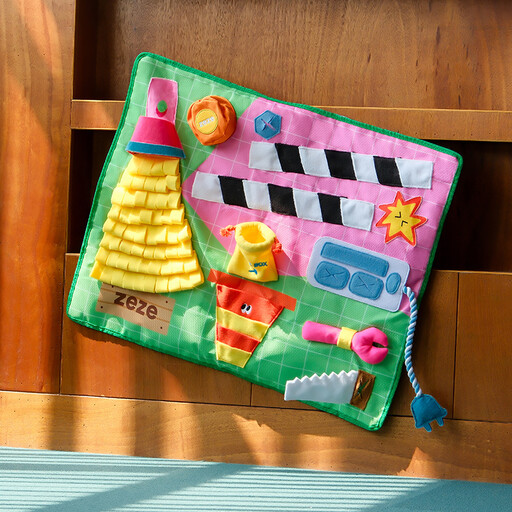
Why it suits this profile: For dogs that enjoy searching and sniffing rather than simply chasing a ball.
At 70 × 57 cm and with multiple compartments, its purpose is clear: hide dry treats for your dog to find. The mat is not intended for dogs that try to eat fabric or plastic.
Different textures and hiding places; clean with a vacuum cleaner or spot-clean with a damp cloth.
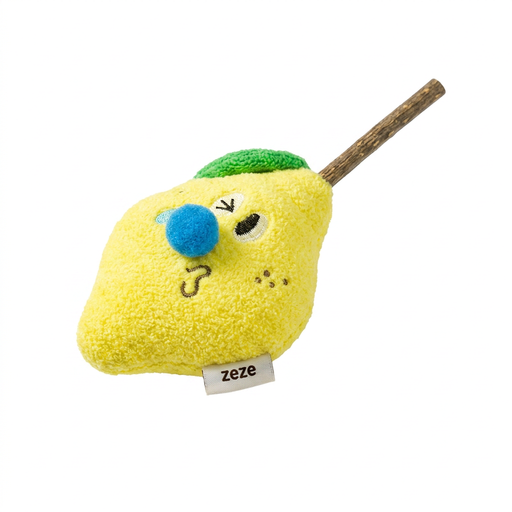
Why it suits this profile: For cats that respond to scents, sounds and soft chewing materials.
The materials listed are fleece, silvervine, catnip and polyester fibre. Check the fabric regularly and remove the toy as soon as the filling becomes visible.
Compact size of 90 × 100 mm; a combination of scent and crinkle paper for multiple forms of stimulation.
We have put together a complete, up-to-date list of products that fully meet these strict selection criteria and the applicable European safety regulations.
A good purchase still depends on everyday use. Follow this routine:
Product claims about tooth cleaning, stress reduction or durability, for example, come from the brand’s product description. Do not regard them as a guarantee for every pet. If you are concerned about swallowing, chewing behaviour or a reaction to catnip and silvervine, contact a vet.
Start with a simple game and short sessions. First let your dog sniff a treat ball or hide a single treat in an easy-to-reach place on the snuffle mat. With cats, you can slowly roll a ball away from them or use a teaser wand. Reward calm behaviour and stop when your pet loses interest.
It depends on the material, playing time and chewing strength. Fabric can wear out more quickly with an intensive chewer, while electronic toys are particularly vulnerable to moisture and hard bites. Check the toy regularly; its condition is more important than any general claim about product life.
The main recurring task is charging. Models with a USB-C battery should be charged according to the instructions and kept dry. A simple toy without electronics has no charging costs, but may need to be replaced sooner if your dog chews a lot. So do not compare only the purchase price. Also consider maintenance, replaceable parts and whether the toy is suitable for the way it will be used.
