
Vandaag of morgen in huis

Kwaliteit gegarandeerd

Welkomstaanbiedingen ontgrendelen: GRATIS bezorging | Tot 80% korting | Gratis 30 dagen JoyPlus-proefperiode
Download de app
A toy can look sturdy and still tear quickly, turn out to be too small or barely interest your pet. So when choosing interactive pet toys, it’s not just about the colour or a fun design. Focus on your pet’s play habits, the material, the size and how you’ll use the toy.
There are three common pitfalls for dog and cat owners in the UK:
Check that the toy’s material is clearly stated. Dog chew toys, for example, may be made from nylon, rubber, fabric or a combination of materials. Look out for seams, loose cords, filling and sound modules. A complex design may offer more stimulation, but it also means there are more parts that could come loose.
Fleece, sisal, feathers and polyester are common materials in cat toys. They suit different types of play, but feathers can come loose and fabric toys can tear. Always consider product information alongside supervision and regular checks.
Compare the stated size with your pet’s. A 15 or 18 cm ball won’t automatically be suitable for every dog. Also check the guidance for small, medium or large dogs. For cats, lightweight toys such as teaser wands or balls may be better suited to batting, hunting and chasing.
Extra supervision is sensible with puppies and kittens. Their play habits can change quickly, and they may be more likely to chew fabric, filling or small parts. A product that’s suitable for adult pets won’t necessarily be right for young animals.
First, decide which behaviour you want to encourage:
For electronic models, also consider charging, cable safety, space to move and supervision. An automatic or smart dog toy is no substitute for spending time playing together.
The selection below is based on verifiable product details such as material, size, type of play and usage guidance. Claims about dental care, stress reduction or long-lasting performance come from the brand’s product description and shouldn’t be treated as medical guarantees.

Why it suits this profile: A compact cat toy made with fleece, silvervine and catnip, for independent play and gentle chewing.
The dimensions are listed as approximately 90 × 100 mm. Check the fabric and filling regularly for damage.
Silvervine and catnip; suitable for cats; clean with a dry cloth or soft brush.
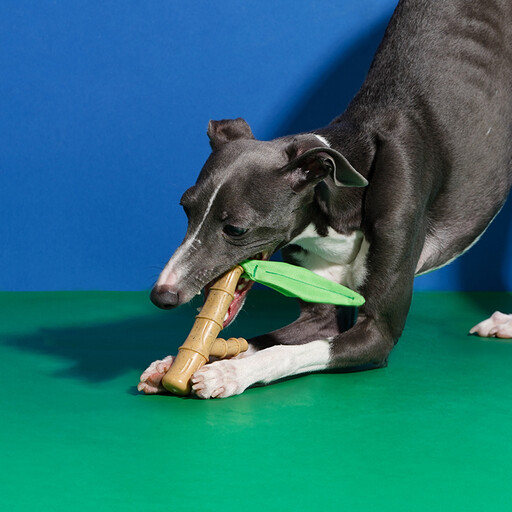
Why it suits this profile: For dogs that enjoy chewing and the occasional game of fetch. The model measures 12 × 5,5 × 2,5 cm without the leaves and 22 × 5,5 × 2,5 cm with them.
The product description specifies a nylon and wood-fibre construction that won’t splinter. Even so, check the toy before and after use.
Suitable for chewing and fetching; wipe clean with a damp cloth; store in a dry place.
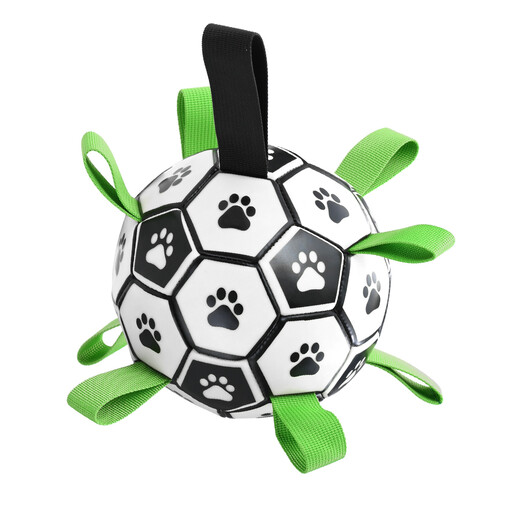
Why it suits this profile: For dogs that love to run, chase and fetch. The inflatable ball has a diameter of around 18 cm and is designed for supervised play.
The ball can be deflated for storage, but according to the product information it isn’t designed for aggressive chewers.
Lightweight design; suitable for chasing and fetching; compact to store.
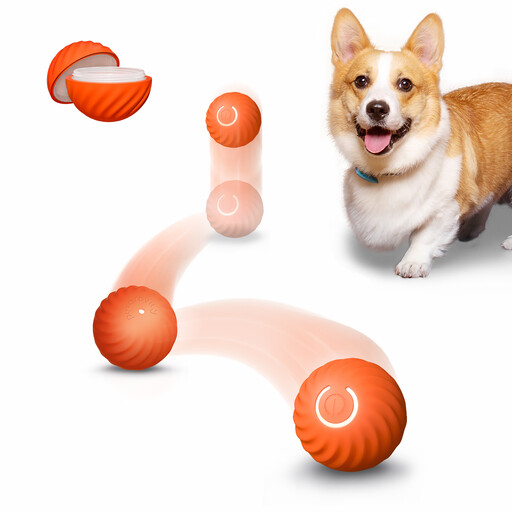
Why it suits this profile: For smaller dogs that respond to movement. The ball has two play modes, a USB-C rechargeable battery and a removable plush cover.
The product information clearly states that this model isn’t suitable for aggressive chewers. Supervision and regular checks are still needed.
Unpredictable movement according to the product description; rechargeable via USB-C; removable cover.
We’ve put together a complete, up-to-date list of products that meet these strict selection criteria and the applicable European safety requirements.
It depends on the material, your pet’s bite strength and how long they play. Check fabric, seams, rubber, plastic and sound modules regularly. Replace the toy if you notice tears, deep grooves, loose parts, exposed filling or a damaged battery compartment. It’s therefore not possible to give a reliable estimate of its lifespan in advance.
Lightweight toys, cat balls, teaser wands and compact moving balls are practical for indoor play. Make sure there’s enough clear space, and avoid models with hard parts on delicate flooring. Keep electronic toys and their charging cables out of your pet’s reach.
Mechanical toys usually have no ongoing energy costs. Electronic models need charging and may eventually require a replacement cover or battery. For toys containing catnip or silvervine, proper storage is especially important; follow the instructions on the packaging.
