
Vandaag of morgen in huis

Kwaliteit gegarandeerd

Welkomstaanbiedingen ontgrendelen: GRATIS bezorging | Tot 80% korting | Gratis 30 dagen JoyPlus-proefperiode
Download de app
A dog may greet a new toy with enthusiasm, only to lose interest within a few days. That is not always down to your dog. With interactive dog toys, the material, size and type of play determine whether the product suits your pet’s everyday behaviour.
Puppies, dogs with a strong need to chew and active breeds are particularly prone to a few common buying pitfalls. By checking the key details in advance, you can avoid a poor purchase and choose toys that are better suited to chewing, tugging, fetching or mental stimulation.
A product may be described as hard-wearing or chew-resistant, but that does not mean it is indestructible. A dog that chews hard and for long periods has different requirements from a calm puppy.
Pay attention to:
A toy for dogs with strong chewing habits should also be checked more often than a toy used only for gentle fetching.
A product that is too small could be swallowed or become lodged at the back of the mouth. A toy that is too large can be difficult to pick up, particularly for small dogs and puppies. Check the dimensions and compare them with your dog’s mouth size and weight.
With a dog ball, the diameter is not the only important factor. Also consider its firmness, weight and how the ball will be used: indoors, on grass, on the pavement or during energetic games of fetch.
A product description may mention dental cleaning, relaxation or mental stimulation. Treat these as stated product features, not guaranteed results. According to a brand’s own product description, chewing may help loosen plaque, for example, but dog toys are no substitute for a veterinary check-up or professional care.
Choose based on verifiable information such as the material, dimensions, usage instructions and safety warnings.
For dog chew toys, nylon and natural rubber are widely used materials. Nylon is generally sturdy and suitable for dogs that enjoy biting and chewing. Natural rubber can offer a more flexible feel and, in some models, can be used to hide kibble or treats.
Rope toys can be well suited to tug-of-war and fetching, but check them regularly for loose fibres. Plush materials, crepe paper and squeakers provide extra stimulation, but are less suitable for dogs that pull toys apart or swallow pieces.
Always check the stated measurements. Examples:
These specifications are useful for an initial selection, but you should also observe how your dog picks up and carries the toy.
A snuffle mat for dogs encourages different behaviour from a dog ball. With sniffing games, your dog searches for hidden dry treats. Fetch toys are all about running, picking up and bringing the toy back. A rope may be suitable for gentle tug-of-war, while a nylon chew toy is more likely to be intended for independent chewing.
Use each product according to the instructions and supervise your dog during the first use. Replace the toy if you notice cracks, deep grooves, loose parts or structural damage.
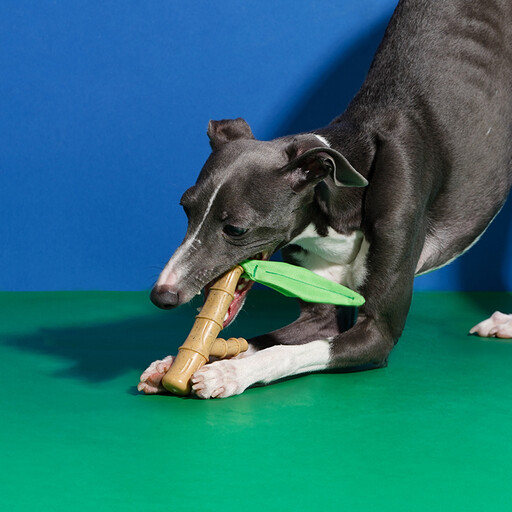
Why it suits this profile: Its shape is designed for chewing and it can also be used for fetching or throwing. This makes it a practical choice for a puppy or adult dog that enjoys a variety of games.
The product information states that it has a nylon and wood-fibre construction and advises replacing the toy if cracks or deep grooves appear. It is therefore not a product to give to a heavy chewer without regular checks.
Bamboo-inspired shape, compact size and suitable for chewing and fetching. According to the product description, the material is designed not to splinter.

Why it suits this profile: This natural rubber toy combines rolling, bouncing and hiding treats. It is well suited to owners who want to combine chewing with exercise and a simple mental challenge.
The construction does not include a stated loose paper or plush outer layer. Supervision is still required, particularly if your dog chews the rubber intensively.
Natural rubber, unpredictable rolling and bouncing, plus space for kibble or xylitol-free peanut butter according to the product information. It can be cleaned with warm water and a soft brush.
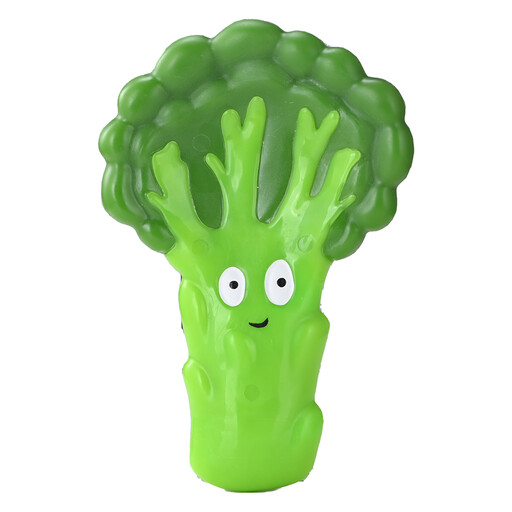
Why it suits this profile: According to the product description, the nylon broccoli shape is intended for medium to strong chewers and can also be thrown and retrieved.
The material and dimensions are clearly stated. The manufacturer recommends supervising play and replacing the toy immediately if it shows heavy wear or damage.
Nylon construction, dimensions of 11 × 3.5 × 16.5 cm and suitable for chewing, throwing and fetching. The dental-care effect is a product claim; do not treat it as a replacement for dental care.
A snuffle mat can be useful indoors, for example on a rainy day. Hide dry kibble or treats in the sections and let your dog search at their own pace. The zeze Mechanic Snuffle Mat Toy measures 70 × 57 cm. According to the product information, this model is not intended for dogs that try to eat fabric or plastic.
For a quieter play area, you can also look at unfilled quiet dog toys. Unfilled toys do not contain treats, making them easier to store. However, always check the seams, rope and any squeakers.
We have put together a complete, up-to-date list of products that fully meet these strict selection criteria and the applicable European safety regulations.
Choose a size that your puppy can hold comfortably and avoid small loose parts. Soft rope toys or a suitably sized rubber toy may be suitable for supervised play. Check the product more frequently as your puppy’s teeth and chewing behaviour change.
Lifespan depends on the material, bite strength and usage. A nylon chew toy may last longer for one dog than for another. Do not rely solely on the “durable” claim: replace the product as soon as damage or loose parts appear.
No. Even toys described as being intended for strong chewers must be checked. No toy is suitable for prolonged unsupervised use if your dog bites off or swallows pieces.
