
Vandaag of morgen in huis

Kwaliteit gegarandeerd

Welkomstaanbiedingen ontgrendelen: GRATIS bezorging | Tot 80% korting | Gratis 30 dagen JoyPlus-proefperiode
Download de app
A dog might receive a toy with great enthusiasm, only to abandon it a few days later. That isn’t always the dog’s fault. With interactive dog toys, the wrong size, fragile parts, or an unsuitable play style often lead to disappointment.
Pay particular attention to these three common pitfalls:
Choose the material based on your dog’s behaviour. A dog that mainly retrieves needs different features from one that chews for long periods.
According to the manufacturers’ product descriptions, various models are suitable for chewing or gum massage. This is not a substitute for dental care and should not be regarded as having a medical effect.
A toy for small dogs is not automatically suitable for medium-sized dogs. Look at the diameter and shape, not just the label on the packaging.
A good test at home: your dog should be able to pick up the toy without it going too far back into the mouth. If in doubt, choose a different size and ask your vet or a canine behaviour professional for advice.
A durable dog toy only remains usable if you look after it properly. Washable parts are practical for daily use, while electronic models require extra attention.
Check before and after play:
With electronic toys, only use the USB-C cable supplied or recommended by the manufacturer. Do not let your dog chew on a charging cable. Stop using the toy immediately if parts come loose or if your dog tries to swallow pieces.
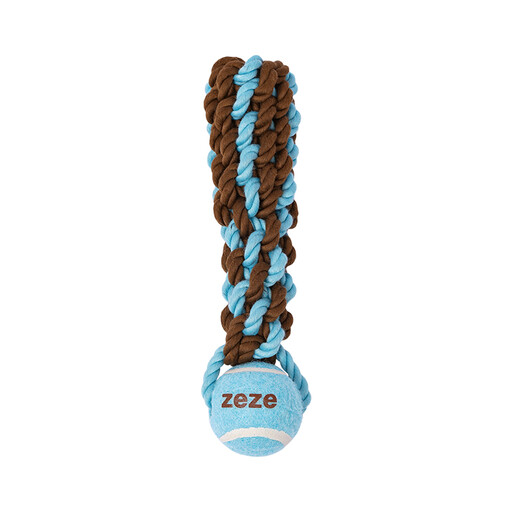
Why this fits the profile: This combination of a tennis ball and braided rope is suitable for simple fetching and gentle tugging, with no battery or settings to worry about.
The play style is clear, and there are no electronic parts that need charging or keeping dry.
Braided rope, tennis ball, and a length of around 26 cm; suitable for fetching and controlled tugging.
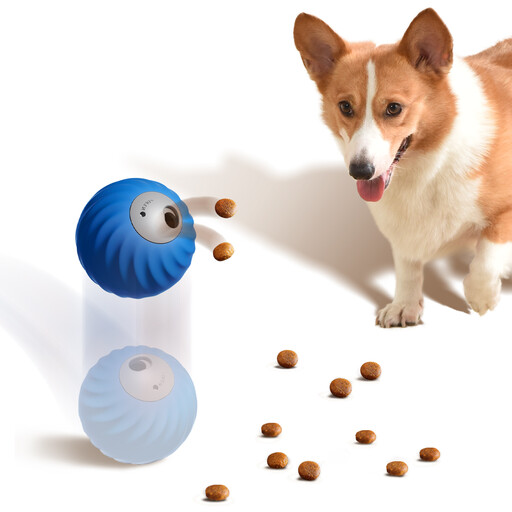
Why this fits the profile: For dogs that love to search and move, this model combines a feeding opening with two play modes and a rechargeable battery.
The replaceable plush cover can be removed. This makes cleaning and checking the hard core much easier.
USB-C rechargeable, treat dispenser, and two play modes; use only under supervision.
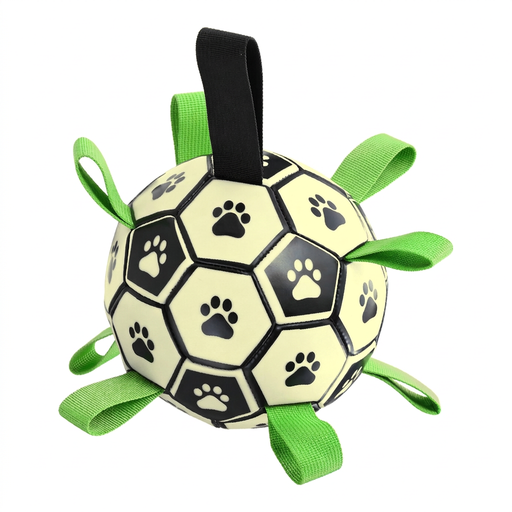
Why this fits the profile: This outdoor dog toy is designed for running, tugging, and fetching on grass or in shallow water.
The product information states a diameter of around 15 cm and a nylon handle. Still, check whether it suits your dog.
Design for land and water, fluorescent effect in low light, and a handle for throwing or tugging.

Why this fits the profile: The unpredictable rolling and bouncing movements, plus the option to hide treats, suit dogs that enjoy searching and chewing.
The shape offers more than just chewing: you can place kibble or suitable peanut butter in the recesses. Always start under supervision.
Natural rubber, suitable for small and medium-sized dogs up to around 15 kg according to the product information, and can be cleaned with warm soapy water.
Alternate active play with rest. A squeaky dog toy can quickly grab attention, but the noise isn’t suitable for every household or every dog. So try a squeaky ball briefly first and see how your dog reacts.
For treat-dispensing dog toys:
A rope ball, rubber roller, or interactive dog ball can help combat boredom by encouraging movement and activity. However, a toy is not a proven solution for separation anxiety. If stress persists, guidance from a vet or behaviour professional is wiser.
We’ve put together a full, up-to-date list of products that fully meet these strict selection criteria and comply with current European safety regulations.
Choose a toy with variety, such as a treat dispenser, unpredictable rolling movements, or multiple play modes. Rotate toys rather than making them all available at once. This keeps the activity manageable and makes it easier to check for wear and tear.
That depends on the material, your dog’s bite strength, and how it’s used. Check the toy regularly and replace it if there are cracks, loose threads, an exposed core, or loose parts. “Durable” does not mean a product can withstand unlimited powerful chewing.
A non-electronic ball or rope toy has no charging costs. Electronic models usually work with a rechargeable battery, but they do require maintenance and care around water. With a treat dispenser, the snacks or kibble you use are the ongoing cost.
