
Vandaag of morgen in huis

Kwaliteit gegarandeerd

Welkomstaanbiedingen ontgrendelen: GRATIS bezorging | Tot 80% korting | Gratis 30 dagen JoyPlus-proefperiode
Download de app
A dog may greet a toy enthusiastically, only to abandon it within a few days. That is not always down to boredom. Often, the size, material or type of play simply does not suit the dog. With interactive dog toys, you also want to avoid a loose seam, chewed-off part or flat battery bringing playtime to an early end.
A squeaky dog toy may grab attention at first, but not every dog enjoys noise. Some dogs mainly want to fetch, while others prefer chewing independently or looking for a toy that can hold treats. So focus on the specific function: squeaking, bouncing, tugging, rolling or releasing food.
Words such as bite-resistant and hard-wearing are no guarantee that a toy is suitable for a powerful chewer. A fabric toy with a squeaker may become damaged more quickly with an enthusiastic chewer than a solid nylon or rubber model. Check the toy before and after use, and replace it if you find tears, loose threads, exposed parts or deep grooves.
A toy that is too small could be swallowed, while one that is too large may be difficult to grip. Consider both the dimensions and the way your dog plays. A 15 cm ball may be described in the product information as suitable for small and medium-sized dogs, but that does not automatically make it right for every dog. Extra supervision is advisable for puppies, as their chewing behaviour can change quickly.
Use the recommended dog size as a starting point, but also consider your dog’s mouth and playing technique.
The choice of material determines what the toy is suitable for. TPR and latex are flexible and are often used for gentle chewing or squeaking. Nylon and sturdy rubber are generally intended for more intensive chewing, but these materials can also wear out.
Also check:
A claim about dental care should be interpreted in practical terms. According to the product description, textures may move along the teeth or gums during chewing. This does not replace normal oral care or advice from a vet.
For fetching, bounce height, weight and grip are important. A dog toy for fetching should be easy to throw and pick up. For tug-of-war, a sturdy rope and handle are useful. If you play outdoors, you may want to look for water resistance or buoyancy. Electronic or interactive dog toys also require charging, supervision and a safe area where cables are out of reach.
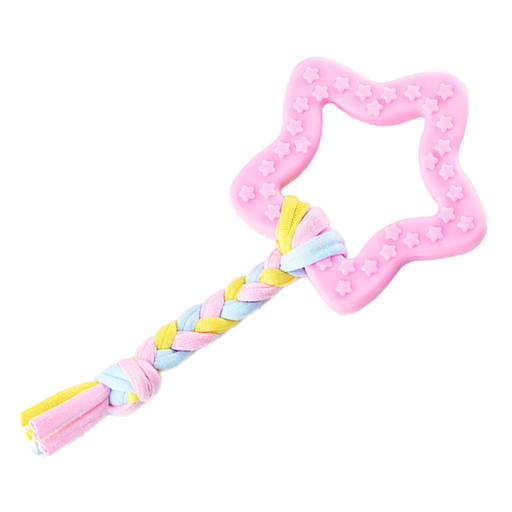
Why it suits this profile: The combination of TPR and fabric is designed for puppies and small dogs that enjoy both chewing and playing together.
The stated size of 16.5 × 8 cm and the intended audience make the fit clearer than a general claim for all dogs.
TPR and fabric; suitable for chewing, tugging, fetching and simple interactive play.

Why it suits this profile: This model combines natural rubber with a shape that moves less predictably when rolling and bouncing.
The product information specifies the material, treat opening and supervised use, allowing you to base your choice on practical features.
Natural rubber; suitable for treats or xylitol-free peanut butter; clean according to the product information.
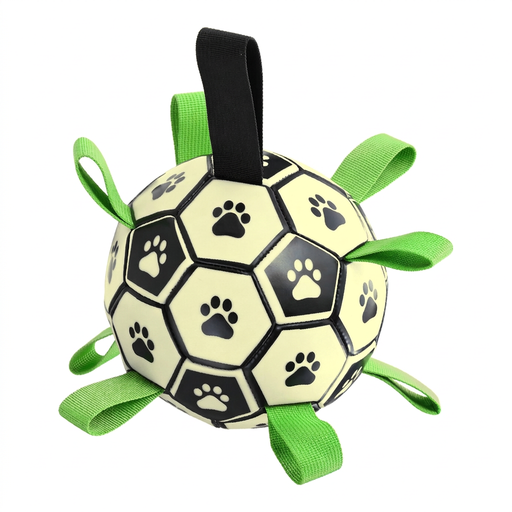
Why it suits this profile: The ball is designed for outdoor play, fetching and tug-of-war, with a nylon handle and a diameter of approximately 15 cm.
The usage guidelines are specific: according to the product information, the ball is intended for small and medium-sized dogs, and you should check it for wear.
Suitable for use in water and on land; glow-in-the-dark effect; nylon handle for throwing and tug-of-war.
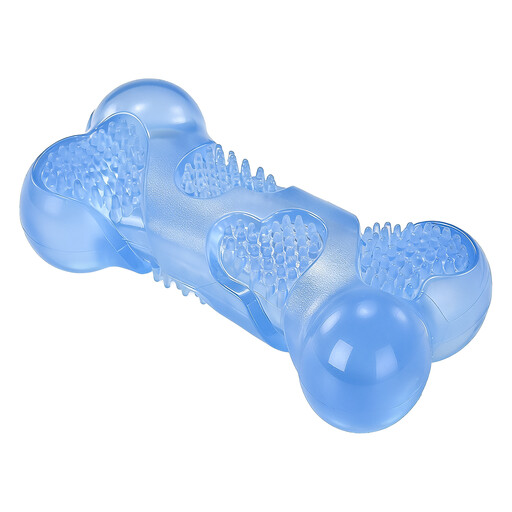
Why it suits this profile: According to the product description, the soft latex bone shape and internal squeaker are designed for puppies and small dogs.
The product information clearly states that supervision is required and that you should replace the toy as soon as the squeaker is exposed or the material becomes damaged.
Latex; squeaky design; bone shape that is easy to grip.
We have put together a complete, up-to-date list of products that fully meet these strict selection criteria and the applicable European safety regulations.
Choose a size that your puppy can hold easily and a material that is not too hard for their playing style. A squeaky latex toy or a TPR and fabric tug toy may be suitable when you supervise them. Check the toy regularly, as puppies quickly become stronger chewers.
Lifespan depends on bite strength, playtime, the surface and the material. A nylon chew toy may wear differently from a fabric squeaky toy. There is therefore no fixed usage period. Replace the product as soon as cracks, fraying, loose parts or deep damage appear.
Mechanical toys that use treats mainly involve the cost of food or rewards. An electronic bouncing ball needs to be charged and may eventually require maintenance to its cover or battery. Before buying, check the charging method, play modes, cleaning instructions and warnings. This will help you avoid finding that an appealing toy is impractical in everyday use.
