
Vandaag of morgen in huis

Kwaliteit gegarandeerd

Welkomstaanbiedingen ontgrendelen: GRATIS bezorging | Tot 80% korting | Gratis 30 dagen JoyPlus-proefperiode
Download de app
A dog that quickly loses interest, a puppy that chews the furniture or an owner with little time after a long working day: interactive dog toys can help make play more varied in these situations. But not every toy is right for every dog. The wrong size, fragile material or unclear safety information can quickly leave a purchase unused in the cupboard.
As a Joybuy Product Recommendation Officer, I filter product information by specific features. Below, you’ll find what to look for in smart dog toys, chew toys, fetch toys and toys for independent play.
A bright colour, sound or moving feature often grabs attention straight away. However, a toy that makes a noise is not automatically suitable for your dog. Some dogs quickly become overstimulated by a squeaker, while others are only interested in something that moves or contains food.
So, start by checking:
Product descriptions regularly use terms such as sturdy, bite-resistant or durable dog toy. These are not guarantees for every dog. A toy suitable for normal chewing may become damaged by a dog that chews intensely or aggressively.
Check the toy before and after use. Look for cracks, loose threads, exposed squeakers, detached parts and deep grooves. Replace it immediately if your dog can pull off or swallow pieces.
A toy that is too small may be unsuitable for a medium-sized or large dog. A toy that is too large can be difficult for a puppy or small dog to pick up. Don’t just look at the length; also consider the diameter, weight and shape.
For dog toys for small dogs, a good grip and low weight are important. For dog toys for medium-sized dogs, you can often choose a larger ball or sturdier tug toy, provided the manufacturer recommends it.
Many interactive toys are made from latex, TPR, nylon, natural rubber, fabric or a combination of these materials. Each material has a different use profile:
Pay attention to the exact product information. A brand’s claim about “dental care” or “reducing anxiety” should not be interpreted as a guaranteed result. According to the product descriptions of some brands, textures may help clean the surface of the teeth while chewing, but dog toys do not replace daily care or advice from a vet.
Choose a function that suits your dog’s behaviour:
Always use food according to the instructions. With a snuffle mat, dry food is more practical than wet fillings, as leftover food can become mouldy.
Washable toys are convenient for everyday use. Check whether the product can be fully submerged or should only be cleaned with a damp cloth. Electronic models must be completely dry before charging. Keep a USB-C cable out of your dog’s reach and only charge the device with the supplied or recommended cable.
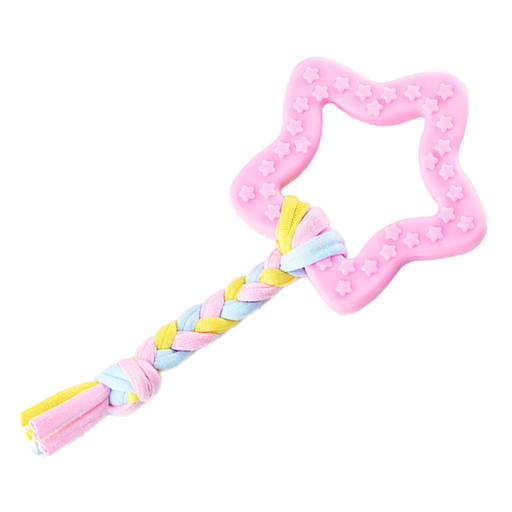
Why it suits this profile: The combination of TPR and fabric is aimed at puppies and small dogs. The toy can be used for tugging, fetching and gentle chewing.
The 16.5 × 8 cm size is clearly stated, and the product warning excludes aggressive chewers and larger breeds.
TPR and fabric; suitable for tugging and fetching; explicitly intended for puppies and small dogs.

Why it suits this profile: This natural rubber toy is designed for small and medium-sized dogs weighing up to approximately 15 kg and can be filled with treats or xylitol-free peanut butter.
The target audience and material are clearly described. However, check during first use that your dog’s chewing behaviour is suitable.
Natural rubber; unpredictable rolling and bouncing according to the product description; suitable for treats.
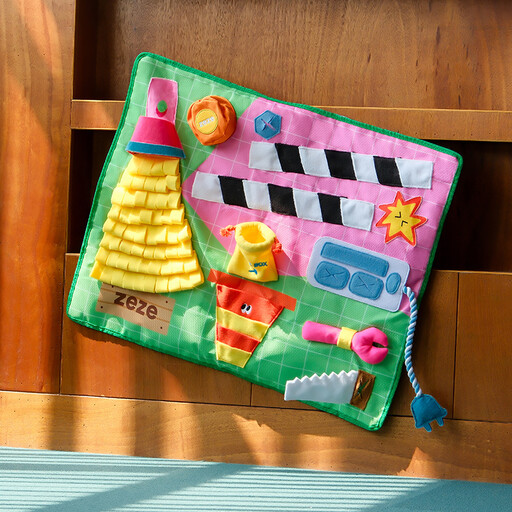
Why it suits this profile: Measuring 70 × 57 cm, the mat features various compartments, folds and textures where you can hide dry kibble or treats.
The usage limitation is clear: it is not suitable for dogs that try to eat fabric or plastic. Supervision is still required.
Searching game with dry treats; large surface area; various compartments; care with a vacuum cleaner or damp cloth.
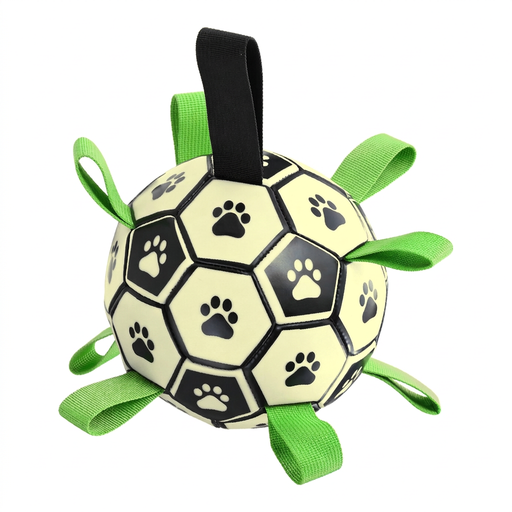
Why it suits this profile: Measuring approximately 15 cm, the ball has a nylon handle for throwing and tugging and is described as suitable for small and medium-sized dogs.
The size and target audience are stated. Check the nylon strap regularly and do not use the toy with dogs that swallow pieces.
Suitable for land and shallow water according to the product information; glow-in-the-dark effect; handle for tugging and fetching.
Let your dog sniff new toys calmly before playing with them. With electronic toys, place the device in an open space and supervise your dog. With a squeaker, ball or rope, pay particular attention to the seams, sound component and loose fibres.
A toy will last longer if you rotate it rather than leaving it available all day. Keep it clean and dry. Washable latex balls can be cleaned with water according to the product information; plush toys, snuffle mats and electronic components often require a more limited cleaning method.
Claims such as “helps prevent boredom” or “supports dental care” come from brands’ product descriptions. Treat them as possible design features, not as medical effects. If you have concerns about chewing, teeth or behaviour, a vet or animal behaviourist is the right person to consult.
We’ve compiled a complete, up-to-date list of products that fully meet these strict selection criteria and the applicable European safety regulations.
Choose a toy in a suitable size, made from soft yet sturdy materials and with clear warnings. TPR or latex toys for puppies may be suitable, but check them regularly while your puppy is teething. Avoid models with small, detachable parts.
That depends on the material, how intensively the toy is used and your dog’s chewing behaviour. A toy ball for gentle fetching may last longer than a soft toy used for daily chewing. There is no fixed lifespan: replace the product as soon as it becomes damaged, cracked or loose.
Electronic models with a built-in rechargeable battery do not require disposable batteries. The running costs mainly consist of charging and possibly replacing a cover or component. Keep the charging port dry and never let your dog chew the cable.
