
Vandaag of morgen in huis

Kwaliteit gegarandeerd

Welkomstaanbiedingen ontgrendelen: GRATIS bezorging | Tot 80% korting | Gratis 30 dagen JoyPlus-proefperiode
Download de app
A dog toy can look sturdy and versatile on screen, but in practice it might tear quickly, turn out to be too small, or simply make a lot of noise. If you’re looking for interactive dog toys, you probably want more than just entertainment: you want movement, chewing options, mental stimulation and shared playtime.
So don’t just focus on a flashy design or terms like “indestructible”. Instead, check the material, the dimensions and the way your dog plays. That way you’ll avoid a bad purchase and make a more informed choice from chew toys for dogs, fetch toys and intelligent dog toys.
A dog that chews gently has different needs from a dog that pulls a toy apart in minutes. A rope ball, plush toy or electronic toy can wear down from sharp teeth and strong pulling. What’s more, product information about wear resistance is a description from the manufacturer, not a guarantee for every play style.
So choose a product that matches your dog’s chewing behaviour, bite strength and weight. Check the toy before and after use, and replace it as soon as seams come loose, material breaks off or an internal part becomes visible.
A dog toy with a squeaker can grab attention, but some dogs quickly lose interest in noise. Electronic toys also need charging, a dry charging port and supervision. For a dog that likes to chew on hard parts, a moving ball isn’t necessarily a suitable choice.
So look at the play routine: does your dog mainly want to fetch, tug, search for food or play independently?
A toy needs to be easy to grip without your dog being able to swallow it easily. A ball for a small dog isn’t automatically suitable for a medium or large dog. Conversely, a large toy can be difficult for a puppy to carry.
Pay attention to the stated dimensions and the target audience. “For all breeds” says less than a specific size, material description and usage warning.
For puppies and small dogs, a combination of TPR and fabric can be a practical choice for chewing and tugging. TPR is flexible, but supervision is still needed here. For chew toys for dogs, nylon, natural rubber, cotton cord and woven textiles are also used.
Check:
Terms like “dental care” or “cleans teeth” should be seen as a product claim. According to the product information from some brands, a texture can move along teeth and gums during chewing. This does not replace regular dental checks or care.
For dog toys for small dogs and puppies, a manageable size and low weight are important. The Blinkit Pink Star, for example, measures 16.5 × 8 cm and, according to the product information, is recommended for puppies and small dogs.
For medium-sized dogs, larger balls and sturdier constructions are often more logical. The Petgravity Smart Bouncing Ball for medium dogs is, according to the description, intended for this group. Use electronic balls indoors or outdoors only under supervision and on a clear surface.
A dog rope with a ball is mainly suitable for joint tugging and fetch games. A treat ball for dogs or a rubber toy with a snack opening adds a searching element. Moving toys can be interesting for dogs that like to chase something, but they do have a battery and need maintenance.
For separation anxiety or boredom, you can offer interactive toys as part of a wider routine. According to product descriptions, some toys can help to redirect attention or encourage independent play. This is not a guaranteed effect and does not replace appropriate support for ongoing stress.
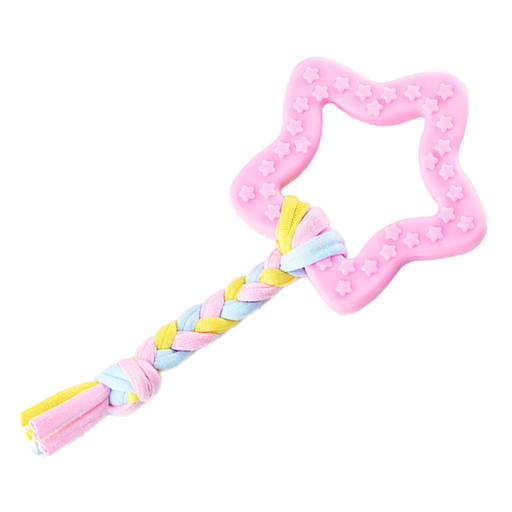
Why this fits the profile: A compact toy for puppies and small dogs that want to chew, tug and fetch without electronic parts.
The size and target group are clearly stated. It is not intended for medium or large dogs, nor for aggressive chewers.
TPR and fabric; suitable for chewing, tugging and interactive training; dimensions 16.5 × 8 cm.

Why this fits the profile: Suitable for owners who want to combine mental challenge with rolling, bouncing and searching for treats.
The shape and natural rubber construction are clearly described. Still, use the product under supervision and stop if it tears or becomes damaged.
Natural rubber; unpredictable rolling and bouncing; suitable for treats or xylitol-free peanut butter; dishwasher-safe according to the product information.

Why this fits the profile: For medium-sized dogs that like to chase moving toys and need extra activity indoors or outdoors under supervision.
The design is specifically linked to medium-sized dogs. The ball is not intended for aggressive chewers and requires checking the core and loose parts.
Two play modes; USB-C rechargeable battery; replaceable plush outer layer; moving ball for active play.
We’ve put together a full, up-to-date list of products that fully meet these strict selection criteria and comply with current European safety regulations.
Choose a size that the puppy can hold easily and avoid toys with small loose parts. A soft rope toy with TPR, like the Blinkit Pink Star, is, according to the product information, intended for puppies and small dogs. Supervision remains necessary, even with soft material.
The lifespan depends on bite strength, play duration, material and maintenance. There is no fixed period that applies to every dog. A rubber treat or snack ball can last longer with a gentle chewer, while a plush toy wears out faster with intensive tugging. Check the product regularly instead of relying solely on a marketing claim.
Electronic intelligent dog toys with a USB-C battery need to be charged. The actual usage time depends on the play mode and frequency of use. A rope ball or rubber treat ball doesn’t need power, but does require supervision and cleaning. That means simple interactive toys can be more practical for daily use.
