
Vandaag of morgen in huis

Kwaliteit gegarandeerd

Welkomstaanbiedingen ontgrendelen: GRATIS bezorging | Tot 80% korting | Gratis 30 dagen JoyPlus-proefperiode
Download de app
A dog might greet a toy enthusiastically, then ignore it for weeks. That’s not always your dog’s fault. With interactive dog toys, size, material and play style all matter. A ball that’s comfortable for a large dog might be too big for a puppy. A soft toy might be suitable for gentle tugging, but less so for a dog that chews vigorously.
When shopping, don’t focus only on a fun shape or a promising product name. Read on to discover common pitfalls, which specifications to check and which dog toys suit different dogs.
A product description might mention a bite- or wear-resistant material. That doesn’t mean the toy is suitable for every dog that chews. A dog that chews hard and for long periods will put different demands on nylon or rubber than a puppy that mostly nibbles gently.
So check:
Supervision is still important when your dog is playing with a chew toy. Replace it as soon as you notice cracks, sharp edges, loose threads or exposed parts.
A squeaky dog toy can spark curiosity, but noise doesn’t guarantee lasting play. Some dogs quickly lose interest in a single squeaker. Others will try to get at the sound mechanism.
Interactive toys usually work better when you rotate activities: a short game of fetch, followed by some chewing and then independent play. This helps your dog associate the toy with different activities, rather than just one sound effect.
A 18 cm dog ball might be described as suitable for dogs of different sizes, but how it fits in your dog’s mouth still matters. A toy shouldn’t be so small that your dog could swallow it whole. At the same time, a toy that’s too large might be difficult for a small dog to grip.
Always check the dimensions as well as how your dog plays. Puppies, small dogs, medium-sized dogs and large dogs don’t automatically have the same needs.
TPR, latex, natural rubber, nylon and woven fabric are common materials for gentle chewing and tugging. Each has different properties:
The material alone won’t tell you how long a toy will last. Your dog’s play style is what matters.
Check at least the length, width, diameter and weight. Your dog should be able to grip the toy comfortably without putting unnecessary strain on their mouth or teeth. Compact models are usually more practical for puppies and small dogs. Medium-sized and larger dogs may benefit from a larger dog ball or sturdier dog fetch toy.
Think about where your dog will play, too. A lightweight toy is handy indoors, while a heavier model is less likely to be blown around outside. In a flat, a soft toy may also be a better choice than a hard toy that bounces off the floor.
A toy that gets plenty of use should be easy to clean. Check whether it:
Electronic interactive dog toys, such as an automatic bouncing ball, need extra attention. Keep charging cables out of reach and don’t use the toy if the casing, cover or battery compartment is damaged.
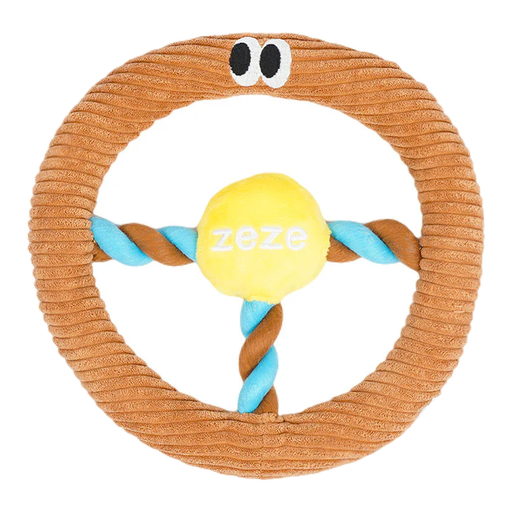
Why it suits this profile: The combination of chewing, sound and interactive play offers an easy introduction to different types of play. According to the product information, its 23 × 23 × 3,5 cm size is designed for small to medium-sized dogs.
The recommended dog size is clearly stated. The integrated squeaker means you don’t need to attach a separate sound accessory, but check the sound mechanism regularly.
Steering wheel shape, built-in squeaker, fabric surface, and a combination of chewing and playing together.

Why it suits this profile: This rubber toy is designed for small and medium-sized dogs weighing up to around 15 kg. According to the product description, you can add treats or xylitol-free peanut butter to the openings to keep your dog occupied.
The dimensions are matched to a maximum dog weight. This makes it easier to judge the size than a general claim that it’s suitable for all dogs.
Natural rubber, unpredictable rolling and bouncing, and suitable for treats. According to the product description, it’s dishwasher-safe on the top rack.
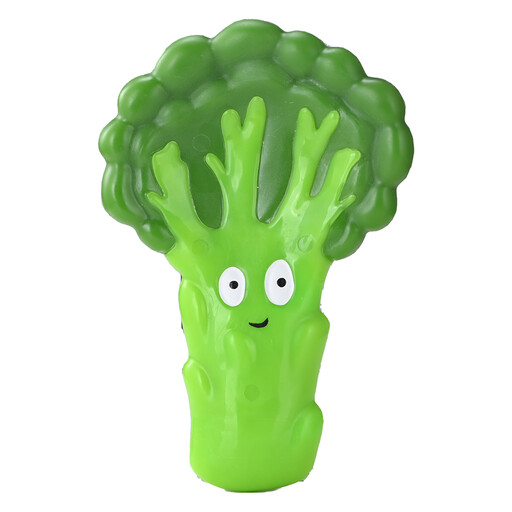
Why it suits this profile: The product description lists nylon and dimensions of 11 × 3,5 × 16,5 cm. According to the description, the toy is designed for moderate to strong chewers and can also be used for throwing and fetch.
The intended dog size and material are described more specifically than for toys that are simply labelled “for all dogs”. Still check for wear if your dog chews forcefully.
Nylon material, broccoli shape for an easy grip, and suitable for chewing, throwing and fetch.
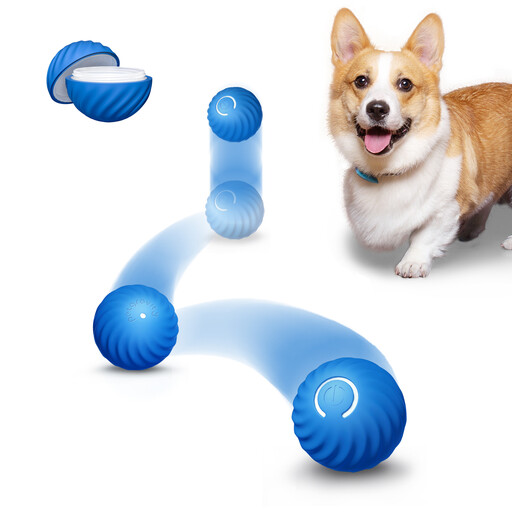
Why it suits this profile: According to the product description, the ball bounces unpredictably and has two play modes. This could be handy indoors when your dog needs movement and variety.
This model is specifically described as being for smaller dogs. Its rechargeable battery means you won’t need disposable batteries, but supervision and checks of the casing are still essential.
Two play modes, USB-C charging, a replaceable plush cover and a rubber core, according to the product information.
We’ve put together a complete, up-to-date list of products that meet these strict selection criteria and current European safety regulations.
When you introduce a new dog toy, play with your dog first. This lets you see how they bite, tug, throw or try to open it. Keep the following points in mind:
A toy to keep your dog entertained doesn’t replace a walk, training or time together. It can still be a practical addition, especially for short play sessions indoors.
Choose a size your puppy can grip comfortably and avoid hard toys, small parts or anything that can come loose easily. TPR, soft latex or fabric puppy toys may be suitable for gentle chewing. Supervision is especially important when your puppy is teething. Stop using the toy if the material splits or the squeaker becomes visible.
It depends on the material, size and your dog’s chewing habits. A dog that mostly plays fetch may put a toy under different strain from one that chews for long periods. Check the product regularly and replace it based on visible wear, rather than relying on an expected lifespan.
Mechanical toys, such as a rubber ball you can fill with treats, don’t need power. Electronic models usually run on a rechargeable battery. The main running costs are then charging and, if needed, replacing a cover or part. Follow the charging and care instructions for the specific product.
