
Vandaag of morgen in huis

Kwaliteit gegarandeerd

Welkomstaanbiedingen ontgrendelen: GRATIS bezorging | Tot 80% korting | Gratis 30 dagen JoyPlus-proefperiode
Download de app
Interactive dog toys can help keep your dog busy while fetching, tugging, chewing or playing independently. However, not every toy is suitable for every dog. A small dog needs a different size from a medium-sized or large dog, while a keen chewer needs tougher materials and construction.
Be wary of marketing terms, too. “Bite-resistant”, “teeth-cleaning” and “for all breeds” don’t tell you much on their own. Always check the material, dimensions, usage advice and warnings on the product page.
A ball measuring 15 to 18 cm may suit a range of dogs, but that doesn’t automatically mean every dog can pick it up safely. A large toy may be awkward for a small dog. A large dog, on the other hand, may damage or swallow a small toy more easily.
So check the diameter, shape and grip. A nylon handle, ridges or a woven outer layer can make a toy easier to pick up. Also check whether the manufacturer gives a specific size category, such as small or medium-sized dogs.
A bite-resistant dog toy isn’t the same as a toy that will never get damaged. Products made with latex, rubber, nylon or a woven structure can wear out with vigorous chewing. Even a strong dog can damage seams, straps or an inner ball.
Always supervise your dog while they play, and check toys regularly. Stop using a toy straight away if it has tears, loose parts, an exposed inner structure or a damaged squeaker. No toy is automatically suitable for aggressive chewers without regular checks.
A smart dog ball with electronic movement can be entertaining, but it also contains a battery and electronic components and may need charging. A squeaky dog toy often grabs your dog’s attention, but the noise can be disruptive at home. A toy used in water should be dried thoroughly afterwards to help prevent dirt and odours.
Think about where you’ll actually use the toy: in the living room, on grass, on a walk or in shallow water. That way, you won’t pay for features your dog is unlikely to use.
For fetching and tugging, a woven outer layer, nylon strap or sturdy rubber are practical features. Nylon or natural rubber is often used for chew toys. According to the product description, a textured surface on some chew toys may help clean teeth. This is no substitute for regular dental care or check-ups with a vet.
Soft latex can feel comfortable for dogs who enjoy biting and fetching, but it isn’t automatically suitable for heavy chewers. So always consider bite-resistant dog toys in relation to your dog’s behaviour.
When choosing dog toys for small dogs, look for a size that’s easy to pick up and has no small detachable parts. A ball of around 15 cm may suit a medium-sized dog, depending on their jaw size and play style.
Even a product described as suitable for all breeds, such as an 18 cm inflatable ball, still needs to be checked. The product description says the size suits different dogs, but also recommends supervision and replacement when the toy shows signs of wear.
For outdoor dog toys, visibility, portability and ease of cleaning are important. An inflatable ball can be deflated and stored compactly. A glow-in-the-dark design may be easier to see at dusk, but check first that the product is genuinely suitable for where you plan to play.
“Water-resistant” or “water-safe” doesn’t always mean an electronic toy can be submerged. If a product has a battery or motor, follow the instructions for use. Similarly, a ball described as floating on water isn’t automatically suitable for deep water or unsupervised play.
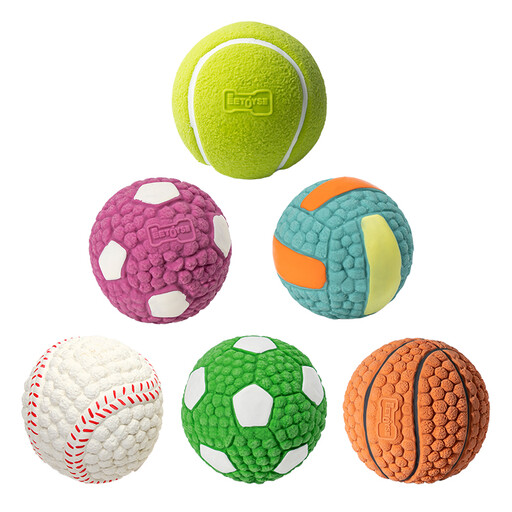
Why it suits this profile: A set of six soft latex balls offers variety for fetching, indoor play and short training sessions. The different shapes make it easy to find out what your dog responds to.
The product description specifies that there are six balls, that they’re washable and that supervision is still needed. This makes it clearer when to clean or replace them.
Soft latex, squeaky sound, washable construction and balls measuring around 6 to 7.5 cm.
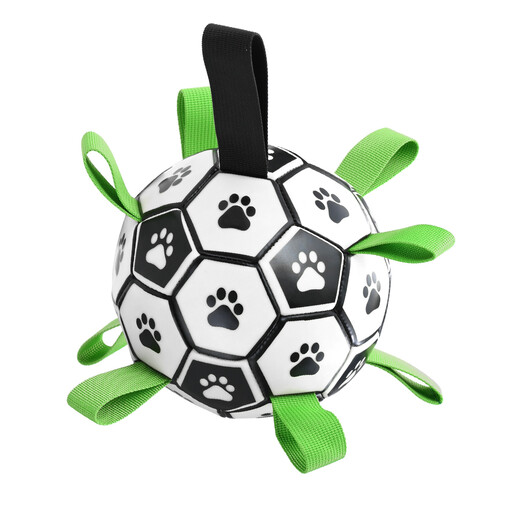
Why it suits this profile: This inflatable ball is designed for chasing, kicking and fetching. It can be deflated for easy packing on walks or holidays.
The product information specifies a woven outer layer and an 18cm size, but also says it isn’t designed for aggressive chewers. So you’ll know when extra care is needed.
18cm diameter, lightweight construction, high elasticity according to the product description and compact storage.
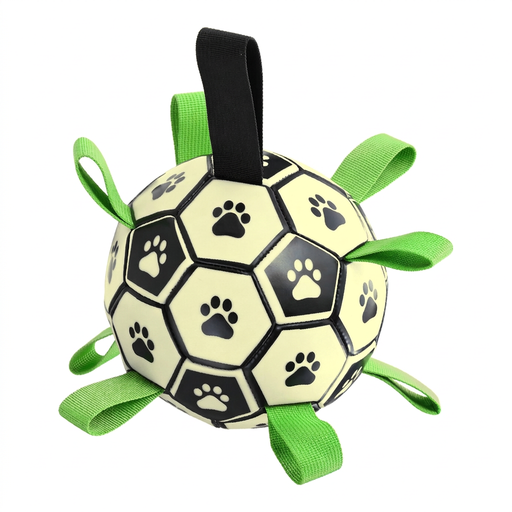
Why it suits this profile: For dog owners who want to play outdoors, at dusk or in shallow water. The nylon strap makes it easier to throw, tug and practise fetching.
The instructions recommend checking the ball and nylon strap before and after use. They also state that the size, at around 15 cm, is mainly intended for small and medium-sized dogs.
Around 15 cm, glow-in-the-dark effect according to the product description, nylon handle and suitable for use on land and in water.
We’ve put together a complete, up-to-date list of products that meet these strict selection criteria and the applicable European safety regulations.
Choose a size your dog can pick up easily, and avoid toys with small parts that could come loose. Check the recommended dog size, diameter and material. A smaller smart dog ball may be suitable for independent play, but supervise your dog if they like chewing soft covers or loose parts.
It depends on the material, how long your dog plays with it and their chewing habits. Nylon and rubber can last longer with normal use, but these materials still need regular checks. Replace a toy as soon as it tears, develops sharp edges or starts to come apart. The manufacturer’s product description is a guide, not a guarantee of a set lifespan.
For an electronic ball, charging, maintenance and any replaceable covers are the main things to consider. According to the product information, Petgravity balls use a built-in rechargeable battery and a USB-C cable. Use them only as instructed, keep the cable out of your dog’s reach and store the toy somewhere dry when it’s not in use.
