
Vandaag of morgen in huis

Kwaliteit gegarandeerd

Welkomstaanbiedingen ontgrendelen: GRATIS bezorging | Tot 80% korting | Gratis 30 dagen JoyPlus-proefperiode
Download de app
A dog may get excited about a new toy, but that doesn’t automatically mean it will last or suit their play style. Interactive dog toys are particularly easy to get wrong if they’re too small, have loose parts or are made from materials that aren’t suitable for vigorous chewing.
So don’t just look at the colour and shape. Check the dimensions, material, intended use and manufacturer’s warnings. That way, you can make a more informed choice between a dog rope toy, tug toy, fetch toy or puppy toy.
Words such as “strong”, “bite-resistant” and “durable dog toy” often appear in product descriptions. A brand’s product description may say that a sturdy braided rope is suitable for active play, but that doesn’t guarantee it won’t tear or shed parts. Your dog’s play style is still the deciding factor.
A dog toy for chewing is no substitute for supervision. Check the toy before and after use, and take it away as soon as threads, seams or parts start to come loose.
A 16.5 cm toy may suit a puppy or small dog, but be too small for a medium-sized or large dog. A dog could swallow small parts if the toy isn’t the right size for them. Always check the recommended animal type and dimensions.
For small dogs and puppies, grip, weight and a compact size matter. Larger dogs may find a longer tug toy or a larger rope ball more comfortable to use.
A dog toy with a squeaker can grab your dog’s attention, especially during indoor play. At the same time, the noise may be disruptive in a flat or during quiet play. A loose squeaker or crinkly part can also pose a safety risk.
Only use toys that make a noise under supervision. According to the manufacturer’s product information, you should contact a vet immediately if your dog swallows a squeaker or another part.
Check which materials will come into contact with your dog’s teeth. Many products combine materials such as TPR, fabric, fleece, EVA plastic or braided rope. TPR is flexible and can feel comfortable to chew, while a braided dog rope may be suitable for tugging and fetching.
Look out for the following:
A product description may mention features such as “gentle on teeth” or “suitable for dental care”. Treat these as product features, not medical benefits. According to the manufacturer, the texture may provide extra stimulation while chewing, but the toy is no substitute for routine care or a check-up with a vet.
The shape affects how your dog uses the toy. A ring or steering-wheel shape is easy to grip, while a rope ball may be suitable for throwing and fetching. A dog tug toy should be long enough to keep your hands away from your dog’s mouth, without being so large that your dog trips over it.
In particular, check:
Compact, lightweight toys are often more practical indoors. A squeaker or crinkly part may make a toy more appealing, but use the noise selectively. Outdoors, a bright colour and an easy-to-pick-up shape are useful.
Washing and cleaning instructions vary depending on the material. Some toys should only be wiped clean; others can be gently washed with water. Let a wet toy dry completely and store it somewhere clean and dry.
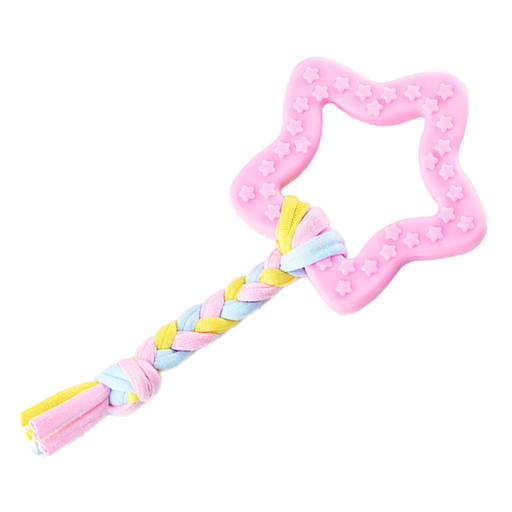
Why it suits this need: According to the product information, this compact 16.5 × 8 cm toy is intended for puppies and small dogs. It can be used for chewing, tugging and fetching.
The intended users and size are clearly stated. This makes it less likely that an owner will choose a toy that’s too large or awkward for a small dog.
TPR and fabric; suitable for tugging, chewing and interactive training; check regularly for wear and tear.
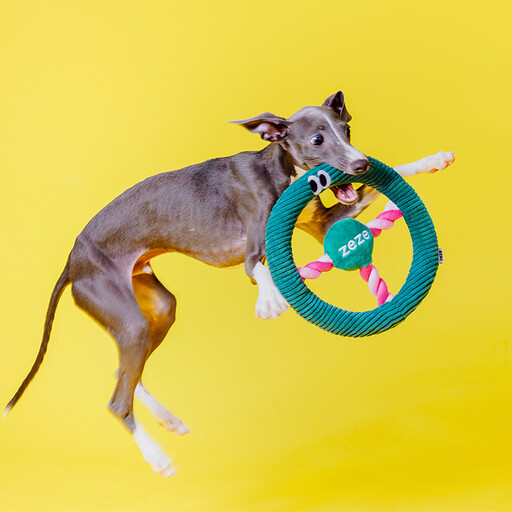
Why it suits this need: At 23 × 23 × 3.5 cm, the ring shape offers several places to grip during play with your dog. The built-in “DuDu” sound may attract extra attention during short play sessions.
The dimensions and materials are specified. Considering the sound before you buy can help you avoid bringing home a toy that turns out to be disruptive.
Fleece, woven fabric, EVA plastic and rope; compact and lightweight; suitable for interactive play and supervised chewing.
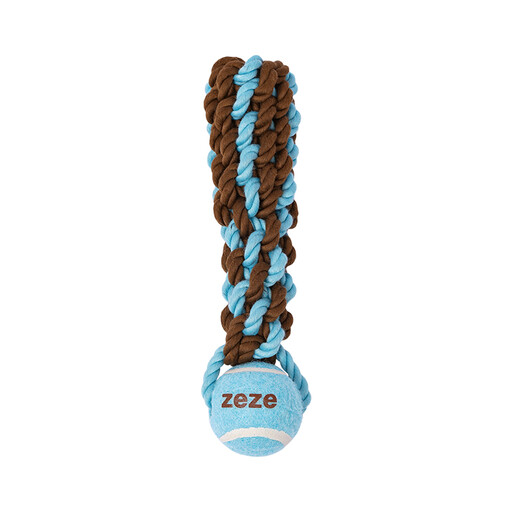
Why it suits this need: The combination of a tennis ball and braided rope is practical for fetching, tugging and outdoor play. The stated rope length gives you room to interact at a distance.
Its intended use is clearly defined: fetching and gentle tugging. Still, check the ball, seams and rope fibres after every vigorous play session.
Tennis ball with braided rope; stated dimensions of 26 cm for the rope and ball; suitable for indoor and outdoor play according to the product information.
We’ve put together a complete, up-to-date list of products that meet these strict selection criteria and the applicable European safety regulations.
How long a toy lasts depends on your dog’s bite strength, how long they play and how they use it. A fetch toy may last longer if your dog isn’t left to chew it unsupervised. Rotate different types of toys: for example, a dog rope for playing together, a fetch toy for outdoor fun and a compact toy for quieter moments indoors.
Use this checklist:
It depends on the material and your dog. A toy may last longer with a gentle chewer than with a dog that pulls and bites hard every day. There’s no set lifespan. Inspect the toy regularly and replace it if you notice any damage.
Choose a size your puppy can hold comfortably, with no small parts. TPR or fabric toys may be suitable for supervised chewing, while a soft tug toy can be useful for short training sessions. Always supervise your puppy and check that the product is specifically intended for puppies.
According to the product description, a rope or TPR texture may provide extra stimulation for chewing. That doesn’t make it a product with medical benefits. Dog toys for dental care should be seen as an addition to routine oral care, not a replacement for it.
