
Vandaag of morgen in huis

Kwaliteit gegarandeerd

Welkomstaanbiedingen ontgrendelen: GRATIS bezorging | Tot 80% korting | Gratis 30 dagen JoyPlus-proefperiode
Download de app
A dog can quickly ignore a toy, chew it to pieces, or simply find it too big. With interactive dog toys, it’s not just about a bright colour or a promise of hours of fun. The shape, the material, the size, and the way your dog plays with it all determine whether a purchase actually works in practice.
Words like “smart”, “indestructible” or “for all dogs” sound appealing, but they don’t tell you much without technical details. According to Petgravity’s own information, some balls are made from chew-resistant materials and feature a smart movement algorithm. That doesn’t mean they’re suitable for dogs that chew intensively or aggressively. The product information actually states that supervision is required and that you should replace the toy when the core becomes visible.
A ball that’s suitable for a medium-sized dog can be too big or too heavy for a small dog. Conversely, small toys can be swallowed more easily or chewed to bits by a larger dog. Always check the target breed, dimensions and weight of the product. With a treat-dispensing dog ball, the opening also needs to fit the kibble or treats you use.
Automatic dog toys with a built-in battery need to be charged and kept clean. A USB-C connection is practical, but only if you keep the cable out of your dog’s reach and the charging port stays dry. With food or treat dispensers, food can also get stuck in the seams. Check whether the toy can be easily cleaned with a damp cloth or warm water.
For dog chew toys, rubber, nylon and sturdy plastic are commonly used materials. Don’t just look at the material name, but also at the warnings. A product may be described by the manufacturer as chew-resistant, yet still not be intended for aggressive chewers.
A natural rubber toy with unpredictable rolling and bouncing movements can be suitable for small and medium-sized dogs up to around 15 kg, as stated for the PetDreamHouse Chewtastic Geometrics. Check during the first play sessions for any cracks, deep grooves or loose parts.
For dog toys for small dogs, a compact size is usually more convenient for indoor use. A medium-sized dog often benefits more from a ball that is sufficiently visible and sturdy, with room to move. Measure the play area in your home and watch out for obstacles, stairs and delicate furniture when outside.
A bouncing ball with electronics needs an open floor. A dog ball for outdoor use should also be easy to find and clean. An inflatable ball can be practical for travel, as you can store it smaller after use.
Interactive toys can work in different ways:
No product replaces supervision. Check toys before and after use and remove them immediately if there are loose seams, sharp edges, exposed electronics or broken pieces.
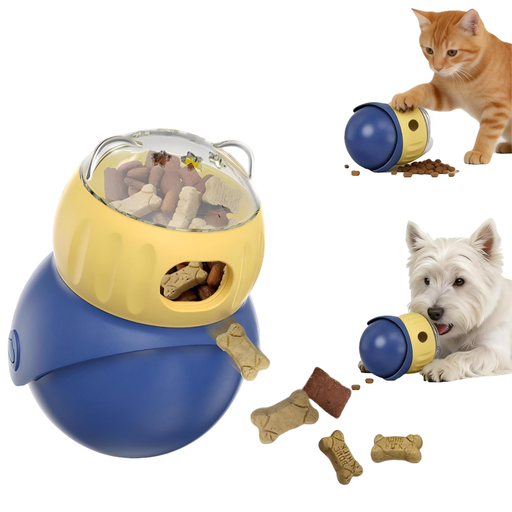
Why this fits the profile: This treat ball combines a slow feeder with an adjustable treat dispenser and is designed for small and medium-sized dogs that enjoy foraging for their reward.
The adjustable opening makes it possible to change the difficulty level. Do check that treats don’t get stuck.
Slow feeder, treat dispenser and suitable for indoor use according to the product title.

Why this fits the profile: A natural rubber toy for dogs up to around 15 kg that combines rolling, bouncing and filling with treats.
The specified target group and material type make the choice more verifiable than a general claim for all dogs.
Natural rubber, unpredictable movements and suitable for treats or xylitol-free peanut butter according to the product description.

Why this fits the profile: This self-moving ball is designed for medium-sized dogs and can be used indoors or outdoors under supervision.
The product information explicitly states that the toy is not intended for aggressive chewers. This prevents a mistaken expectation about the material.
Two play modes, USB-C charging and a replaceable plush cover according to the product description.
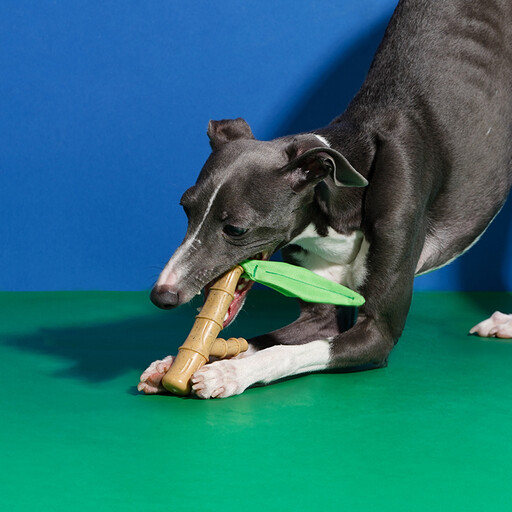
Why this fits the profile: A non-electric chew toy that can also be used for fetch and tug-style games.
No batteries or charging cable required. Do check the nylon and wooden parts regularly for cracks and deep grooves.
Dimensions of approximately 12 × 5.5 × 2.5 cm without leaves and suitable for chewing and fetching.
We’ve put together a full, up-to-date list of products that fully meet these strict selection criteria and comply with current European safety regulations.
Choose a compact product with a clearly stated target group, such as a small dog ball or an adjustable food dispenser. Avoid toys with parts that your dog can easily detach. Keep the first play session short and observe how your dog bites, pushes and chews.
The lifespan depends on the material, the intensity of play and your dog’s behaviour. An electronic toy can remain usable for longer when the plush cover is replaceable, but the battery and moving parts remain vulnerable. Check chew toys regularly and replace them if there are cracks, loose pieces or an exposed core.
USB-C rechargeable models generally use little power during play, but consumption depends on the battery and how often you activate the toy. Don’t leave a toy running unnecessarily and charge it according to the manufacturer’s instructions. For lower running costs, you can alternate a non-electric treat ball, rubber puzzle or chew toy with automatic dog toys.
