
Livraison le jour même et le lendemain

Qualité garantie

Débloquez vos offres de bienvenue: Livraison GRATUITE | Jusqu'à -80 % | 30 jours d'essai gratuits à JoyPlus
Téléchargez l'application
An insulated lunch box can come in handy for a hot meal at the office, a chilled lunch at school or snacks on a picnic. But not every lunch box is suited to every use. A compact food flask works differently from a bento lunch box with a cool bag, while a portable cool box is designed primarily for several people.
Marketing copy often promises long-lasting insulation or a “leak-proof” seal. Always check the capacity, materials, closure and instructions for use. That way, you can avoid finding that your lunch box is too small, leaks in your bag or is difficult to clean after a short time.
A flask lunch box, food flask or cool box keeps the contents at their original temperature for longer, but it does not heat or cool them by itself. The starting temperature, the amount of air in the container, how often you open it and the outside temperature all make a difference.
According to Mobi Garden’s product information, the 22-litre cool box can insulate for up to 36–48 hours with ice packs. This is a stated product figure under certain conditions, not a guarantee for every day of the Dutch summer. For a lunch break lasting a few hours, you’ll usually need different features from those you’d want for camping.
A silicone seal and a sturdy lid can help prevent leaks. However, some food flasks explicitly state that you shouldn’t turn the container upside down or tilt it. So soup or sauce can only be carried safely if the lid is closed properly and the lunch box stays upright.
Also check whether removable parts, such as a rubber ring, can be taken out. A seal that can’t be cleaned properly may trap smells or food residue.
304 stainless steel and 316 stainless steel are commonly used for food containers. The number alone doesn’t determine whether a lunch box is easy to use. Also consider its weight, opening, size and how easy it is to clean.
A wide opening is practical for rice, pasta or soup, and makes cleaning easier. According to the product description, a double-layer design with PP on the outside can help reduce heat transfer, but it also makes the container larger than its inner compartment might suggest.
For one meal, 600 to 1,200 ml is often a useful range, depending on the type of food. A set with several containers is handy for a main course, fruit and sauce. Check whether the stated capacity applies to each container or to the set as a whole.
A bento lunch box is a good choice if you want to keep different foods separate. A 1.5-litre food flask is better suited to soup, stew or a larger portion, but takes up more space.
Preheating can help keep hot meals warm: fill the container with hot water for a few minutes, pour it away, then add the food. To keep cold food chilled, you can cool the container with cold water first. This method is also recommended in the product information for various Maxcook food flasks.
If you’re using an insulated lunch bag or a lunch box with a cool bag, you could add an ice pack. A hard cool box is generally better for larger quantities, but it is heavier. Put chilled food in the box before setting off and avoid opening it too often on the way.
Look out for the following:
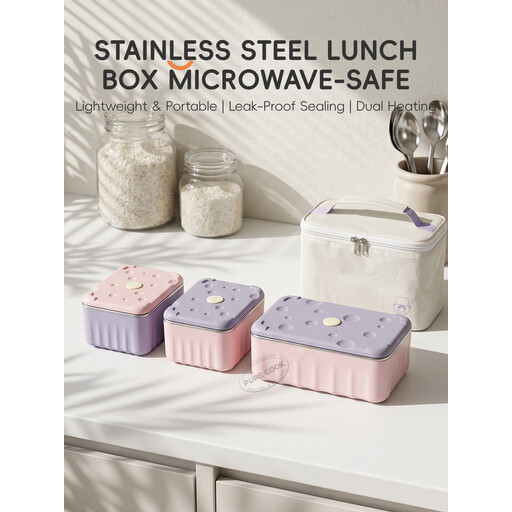
Why it suits this profile: The set contains one 1,200 ml container and two 600 ml containers. It’s a practical choice for school, the office or a short picnic with a variety of foods.
The three separate containers keep fruit, sauce and your main course apart. Silicone seals help the lids fit securely, but it’s best to carry the containers upright.
304 stainless steel inner containers, a PP outer layer and an included bag with a foil lining. The set is reusable and easy to organise.

Why it suits this profile: This 1.5-litre food flask has a wide opening and is well suited to hot meals on your commute, during long working days or on short trips.
The wide opening makes filling and cleaning easier than with a narrow-necked flask. The product information describes the closure as leak-proof, but advises against carrying the container upside down.
316 stainless steel, vacuum insulation, a 1.5-litre capacity and a matching insulated lunch bag. The product description states a temperature retention time of 4–6 hours.
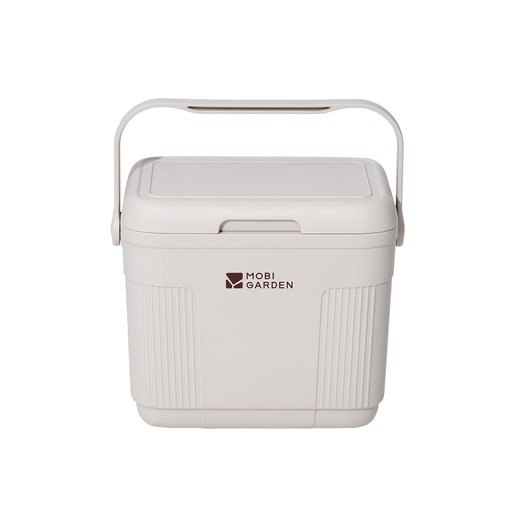
Why it suits this profile: This portable cool box is designed for camping, fishing, family picnics and car journeys where several people are bringing food and drinks.
The hard PP casing, silicone gasket and separate slots for two ice packs make this a practical design for organised days out. The box doesn’t actively cool its contents and shouldn’t be used with dry ice.
A 22-litre capacity, two included ice packs and a rotating handle. According to the product information, the stated insulation time with ice packs is up to 36–48 hours.
We’ve put together a complete, up-to-date list of products that meet these strict selection criteria and the applicable European safety requirements.
It depends on the model, the amount of food, its starting temperature and how often you open the lunch box. Heat or cool the container beforehand and fill it as full as possible. Manufacturers may state an insulation time, but that figure won’t necessarily apply in every situation.
Don’t assume that you can. Check the instructions for both the lunch box and the microwave. The PURECOOK set has specific conditions for microwave use: the container must be open, the bag shouldn’t go in the microwave, and the product instructions prohibit grill, oven and combination settings.
For one person at school or work, a reusable lunch box is usually more practical: it takes up less space and generally doesn’t need much ice. For several people, camping or a long car journey, a cool box may be more efficient, provided you chill it beforehand, use enough ice and open it as little as possible.
