
Livraison le jour même et le lendemain

Qualité garantie

Débloquez vos offres de bienvenue: Livraison GRATUITE | Jusqu'à -80 % | 30 jours d'essai gratuits à JoyPlus
Téléchargez l'application
An insulated lunch box may seem simple at first glance: fill it, close the lid and take your meal with you. In practice, problems often arise because of the wrong capacity, a poor seal or expectations that do not match the product specifications. Soup leaks into a bag, pasta cools down faster than expected or a large food container turns out to be impractical for the daily commute.
With this buying guide, you can compare practical features such as insulation, material, capacity, opening and cleaning. That way, you can find a lunch box for work or school, a food flask for travelling or an insulated food container for larger portions.
A leakproof lunch box depends on the lid, the sealing ring and the way you close the box. A screw-top lid may be suitable for soup and stews, while a bento lunch box with clips is particularly useful for solid foods. Therefore, check:
No closure makes incorrect use completely risk-free. Do not fill a container to the brim and check the ring regularly for deformation or damage.
A capacity of 1.4 or 1.5 litres may sound practical for meal prep, but a container of this size also takes up more space and adds weight. For a single lunch, 400 to 700 ml is often easier to manage. If you are taking a meal for several people, a long working day or an outdoor activity, a larger insulated food container may be more suitable.
As well as the capacity in millilitres, consider the dimensions. A tall, narrow food jar fits into a rucksack differently from rectangular meal prep boxes.
According to information provided by brands, vacuum containers can keep food hot or cold for several hours. The actual temperature depends on factors including the starting temperature, the amount of food, the surroundings and how often you open the lid. For better results, preheat the food flask for a few minutes with hot water, or pre-cool it with cold water.
When using hot contents, also follow the manufacturer's warnings. Some models are not suitable for use in a microwave, freezer or on a hob, or for carbonated drinks.
A double-wall vacuum construction limits heat transfer between the inside and the surrounding environment. This is the basis of an insulated lunch box and a food flask. Do not just look at a marketing claim about the number of hours; also consider:
A wide opening generally makes an insulated food container easier to fill and clean. A narrow opening may be more compact, but is less convenient for thick soup, pasta or stew.
304 stainless steel is often used for food containers and is a common choice for everyday use. 316 stainless steel has a different alloy composition and is positioned by some products as offering extra resistance to corrosive conditions. However, the material name alone does not tell you everything about the insulation or the quality of the seal.
Also check whether the inside has a coating. An uncoated stainless steel lunch box means you do not have to rely on a delicate inner layer. With glass lids, you need to consider impact resistance and sudden changes in temperature.
A product that is difficult to clean becomes less convenient for everyday use. Look for:
Instructions may vary by model. For example, hand washing is recommended for some Thermos models, while other variants are described as dishwasher-safe in the product information, sometimes only on the top rack. With the COOKER KING set, the stainless steel containers are dishwasher-safe, but the lids and silicone seals are recommended for the top rack or for hand washing.
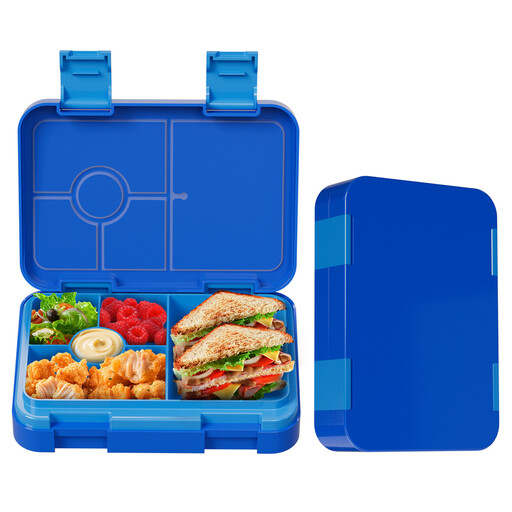
Why it suits this profile: The five compartments are practical for bread, fruit, snacks and other solid foods. The double closures make the box suitable for school, the office or a short train journey.
The compartment layout prevents different solid foods from mixing together. Before buying, check whether the box is suitable for liquid dishes; the available information does not mention thermal vacuum insulation.
Five separate compartments and double clips. Available as a bento lunch box for neatly organised cold lunches.
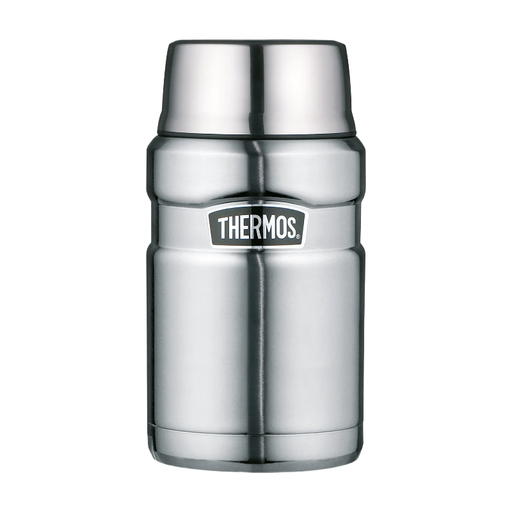
Why it suits this profile: The 710 ml capacity is suitable for a generous lunch at work, school, while travelling or when camping. The wide opening makes filling, eating and cleaning easier.
The product information mentions a double-wall vacuum construction, a wide opening and a screw-top lid with an integrated seal. The stated cleaning instructions specify hand washing, so do not automatically put it in the dishwasher.
18/10 stainless steel, a 710 ml capacity and a wide opening. According to the product information, the container is intended for foods including soup, pasta, stews and porridge.

Why it suits this profile: The 1.5-litre capacity is designed for larger portions, longer days, outdoor activities or carrying multiple portions.
The wide opening makes filling and cleaning easier than with a narrow food jar. The product description recommends hand washing and warns against turning or tilting the container.
316 stainless steel, vacuum insulation and a wide opening. According to the product information, temperature retention of 4–6 hours is stated; in practice, this depends on use and conditions.
We have put together a complete, up-to-date list of products that fully meet these strict selection criteria and the applicable European safety regulations.
This varies by model and use. Manufacturers may state anything from several hours to longer periods for vacuum-insulated containers. Preheating, filling the container well and opening the lid as little as possible all help to limit heat loss. Treat the stated number of hours as product information under specific conditions, not as a guarantee for every lunch.
Check that the sealing ring is correctly positioned and clean. Tighten a screw-top lid fully, do not overfill the container and transport it upright wherever possible. Test a new insulated food container with water first before taking it in a full bag with soup.
With normal use, a stainless steel lunch box can last for a long time. Its lifespan mainly depends on drops, scratches, exposure to heat and the condition of the silicone ring. Replace a damaged seal and do not use an abrasive sponge if the manufacturer advises against it. Also check the statutory guarantee and returns policy when buying.
