
Same-day & Next-day Delivery

Quality Guaranteed

Unlock Your Welcome Offers: FREE Delivery | Up to 80% OFF | Free 30-day JoyPlus trial
Download the APP
Taking a meal to the office, school, a campsite or a picnic sounds simple. Yet the wrong insulated food container can quickly prove disappointing. A lid that does not seal properly, an opening that is too narrow for comfortable eating or a capacity that does not suit your portion can make the product less useful than the packaging suggests.
The Joybuy Product Recommendation Officer filters the most important product specifications and highlights the most common pitfalls. This makes it easier to choose between a food thermos, soup thermos, insulated lunch box or insulated cool box.
Brands sometimes state how many hours food will remain hot or cold. However, this result depends on the starting temperature, the amount of food, how often you open the container and the ambient temperature.
According to the product information, the Maxcook models mentioned offer thermal retention of 4 to 6 hours. According to its own product information, Thermos states that the 0.71-litre SK Food Jar keeps food hot for up to 14 hours and cold for up to 24 hours. These figures therefore cannot be compared directly. Always check:
A leak-proof food container relies on a properly sealed lid, an intact sealing ring and correct use. For example, the Maxcook product information advises against turning the pot upside down or tilting it. A full 1.5-litre food container can also be heavy in a rucksack.
So check that the lid screws on securely, that the seal is visible and that the opening is suitable for cleaning. When carrying a thermos for hot food, keep it upright wherever possible, particularly when taking soup or sauce with you.
Stainless steel is durable and generally absorbs odours less readily than some plastics, but the type of stainless steel is not the only deciding factor. The insulation layer, lid, cleaning instructions and shape also affect everyday use.
304 stainless steel is often used for food containers. 316 stainless steel is another type of steel with a modified composition. This does not automatically mean that every 316 model offers added value for every user. Consider the overall construction and the conditions in which you will use the container.
A food jar of around 470 ml is suitable for an individual portion of soup, yoghurt or a small meal. A capacity of 710 ml provides more room for a generous lunch. If you are taking several portions, stew or ingredients with you, consider a 1.4-litre or 1.5-litre food container.
Also pay attention to the external dimensions and weight. According to the product specification, the Maxcook 1.4-litre model weighs approximately 0.82 kg. The 1.5-litre version with lunch bag weighs approximately 1 kg. This is relevant if you need to carry the container every day in a bike bag or rucksack.
A vacuum-insulated lunch box has a double wall with an insulating space between the two layers. The container does not actively heat or cool its contents; it mainly helps maintain the temperature for longer.
For better results:
An insulated cool box works in a similar way, but usually uses ice packs or cool packs. According to the product information for the Mobi Garden models, the box is designed to maintain the temperature and does not actively cool or heat its contents.
A wide opening makes filling, eating and cleaning easier. This is practical for soup, pasta, rice and stews. Also check whether the lid is dishwasher-safe. The Maxcook product information recommends hand washing and advises against submerging the sealing area of the lid for long periods. According to the product information, the 0.71-litre Thermos SK Food Jar can be placed on the top rack of the dishwasher.
A wide opening is convenient when you are out and about, but a narrow, well-sealed lid can reduce the risk of spills. Choose according to your priority: eating directly from the pot or making transport as simple as possible.
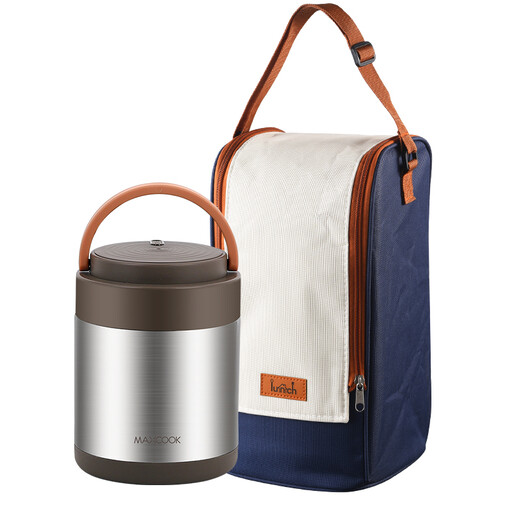
Why it suits this profile: The 1.4-litre capacity is suitable for a generous meal or several smaller portions. The wide opening makes filling and eating easy at work, at school or during a short trip.
The product specification states that it is made from 304 stainless steel and features vacuum insulation, a wide opening and a sealable lid. According to the product information, the stated thermal retention is 4–6 hours.
1.4-litre capacity, approximately 0.82 kg and a storage bag included. Hand washing is recommended.

Why it suits this profile: This 1.5-litre insulated lunch box combines 316 stainless steel with a separate lunch bag. It is practical for commuters who want to carry a generous meal together with cutlery or a snack.
The wide opening and vacuum insulation are clearly stated. The lunch bag makes it easier to carry, while the lid seals without leaking according to the product information when used correctly.
316 stainless steel, 1.5-litre capacity, approximately 1 kg and an insulated lunch bag included.
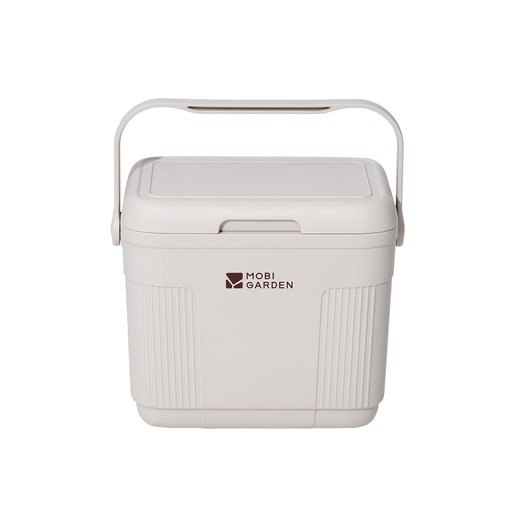
Why it suits this profile: For camping, fishing, family days out and longer car journeys, a portable cool box is more practical than several small food jars. According to the specification, the capacity is suitable for supplies for approximately four to six people.
The box has a silicone seal, includes two ice packs and has a PU insulation layer. According to the product information, the stated cooling time of up to 36–48 hours applies when used with ice packs.
22-litre capacity, two ice packs, rotating handle and reinforced corners. Do not use dry ice, according to the safety information.
We have compiled a complete, up-to-date list of products that fully meet these strict selection criteria and the applicable European safety regulations.
This varies depending on the model, quantity and how it is used. According to the product information for various models, the stated storage time for hot food ranges from 4 to 14 hours. Fill the container with hot food, preheat it first and keep the lid closed as much as possible.
Yes, that is one of the common uses for a soup thermos. Check that the lid closes properly, do not fill the container to the brim and carry it upright. Test a new container with water first before putting it in a bag with soup.
A cool box does not require electricity, but it does use ice packs or cool packs that need to be chilled beforehand. A food jar works without additional cooling agents, making it more convenient for a single meal. For several people or a camping trip, an insulated cool box generally offers more storage space.
