
Same-day & Next-day Delivery

Quality Guaranteed

Unlock Your Welcome Offers: FREE Delivery | Up to 80% OFF | Free 30-day JoyPlus trial
Download the APP
An insulated food container seems simple enough: fill it with soup, pasta or a stew and take it with you. In practice, most problems are caused by a lid that doesn’t seal properly, an opening that’s too narrow or a capacity that doesn’t suit when you’ll be eating. A 500 ml model, for example, might be suitable for one lunch but too small for a long day’s walking.
Marketing claims also deserve a little caution. “Leakproof”, “hot all day” and “unbreakable” only tell you so much if the product description doesn’t include clear specifications. So don’t just check the brand name, such as Stanley food jar or THERMOS food jar. Pay particular attention to the construction, capacity and care instructions.
Brands sometimes state how many hours a product will keep food hot or cold. According to the manufacturer’s own information, for example, one model can keep food hot for up to 13 hours. That’s no guarantee for every situation: the starting temperature, amount of food, how often you open the lid and the outside temperature all have an effect.
So treat the stated insulation time as a product specification under certain conditions, not a guaranteed result for every lunch. For a commute of a few hours, a food flask with a shorter stated insulation time may be perfectly adequate.
A screw-top lid with a silicone sealing ring can leak if the ring is misaligned, damaged or not cleaned properly. Check whether the ring is removable and whether any separate parts are clearly described. Pressure can also build up inside a container holding hot soup. If a product has a pressure-release valve, open it carefully and follow the instructions.
A leakproof food container is only practical if you can carry it upright or safely in your bag. Test a new model at home with water before carrying it alongside your laptop or books.
A stainless steel food container is sturdy and less prone to breaking than glass, but not every model is dishwasher-safe. Some containers can go in the dishwasher, while their lids and silicone rings may need to be placed on the top rack or washed by hand.
Also check whether the product is suitable for use in a microwave, freezer or on a hob. A food flask is generally designed for carrying food, not for heating it directly. Always follow the manufacturer’s instructions.
The right capacity depends on your meal:
As well as capacity, consider the shape. A tall, narrow soup flask takes up little space but can be harder to clean. A wide opening makes filling, eating and washing up easier. According to the product information, THERMOS THERMOcaf models have a 6.5 cm opening.
Double-wall vacuum insulation reduces heat exchange between the contents and the surroundings. Products use different names for this, such as Thermax technology or 4D Thermology. These brand names aren’t automatically comparable, so focus on the stated number of hours for keeping food hot or cold.
For a flask for hot meals, it’s a good idea to preheat it: fill the container with hot water for a few minutes, pour the water away, then add your food. For cold dishes, you can chill the container beforehand. Don’t fill it right to the brim, especially with very hot liquids.
18/8 or 18/10 stainless steel is often used for the inner and outer walls. Check whether the lid is also made of steel or is plastic, and whether there’s a silicone ring. A cork insert or lid may be appealing if you want to avoid direct contact between plastic and food; the product descriptions for certain Stanley models state this explicitly.
Finally, consider the weight. A large food container weighing almost a kilo can feel noticeably heavier on a walk than a compact model weighing around 400 grams. That difference matters to cyclists, students and walkers.
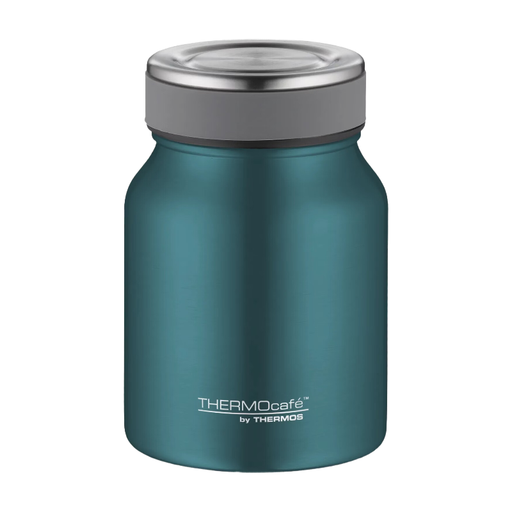
Why it suits this profile: The 500 ml capacity is a handy size for lunch at school, in the office or on the go. Its compact design is made for one person and everyday use.
The product description states that it has a screw-top lid, a silicone sealing ring and a capacity of 500 ml. Check the ring regularly and tighten the lid fully.
500 ml capacity; according to the product information, keeps food hot for up to 9 hours and cold for up to 14 hours; compact design.
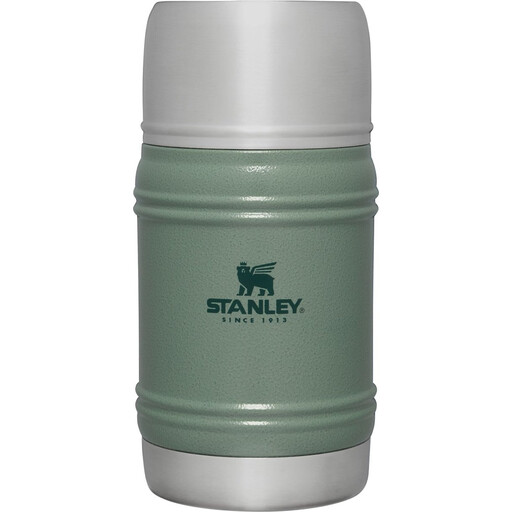
Why it suits this profile: According to the product description, this model combines a 500 ml capacity with recycled stainless steel and a cork insert and lid. It’s a good choice if you value material choices and quality finishing.
The specifications state that it has a leakproof seal and is dishwasher-safe. However, hand washing is recommended to help it last longer, so check the latest care instructions.
500 ml capacity; according to the product information, keeps food hot for up to 13 hours and cold for up to 15 hours; cork components and stainless steel construction.
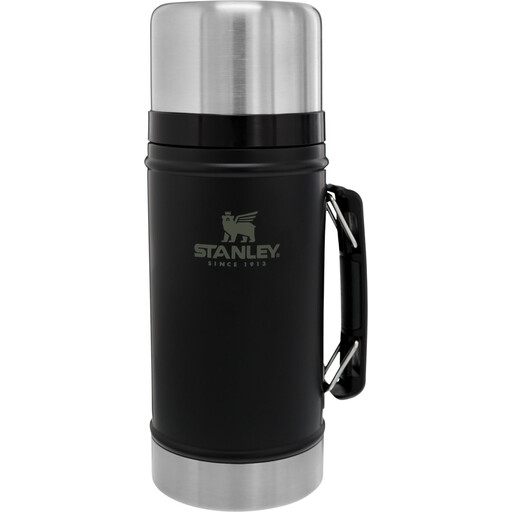
Why it suits this profile: The 0.94-litre capacity is designed for larger meals, long days outdoors or sharing. The wide opening and folding handle are practical for camping and walking.
The wide opening makes filling and cleaning easier. With its larger capacity and weight of around 730 grams, this model is less suitable if you need to keep every gram in your rucksack to a minimum.
0.94-litre capacity; double-wall vacuum insulation according to the product description; the lid can be used as a cup and the handle folds down.
We’ve put together a complete, up-to-date list of products that meet these strict selection criteria and the applicable European safety regulations.
It varies by model and how you use it. Manufacturers often state a maximum time, such as 9, 13 or 20 hours. According to the brand’s own information, these figures are based on conditions that won’t be the same for every user. For a reliable start, preheat the container and fill it just before you leave.
For many lunches, yes. A 500 ml food container is generally suitable for one portion of soup, curry, pasta or porridge. If you’re taking a large meal, an extra side dish or food for two, it’s worth looking at 700 ml or more.
Follow the care instructions for each part. Wash the silicone ring separately with mild washing-up liquid, remove any food residue from the screw thread and let everything dry completely before closing the container. If it’s labelled dishwasher-safe, check whether this applies to the lid and sealing ring too. Don’t use an abrasive scourer, as it could damage the surface.
