
Soup maker with limited worktop space
You want to prepare a bowl quickly, but still need room to fill the appliance and place your bowl beneath the spout.


A freestanding hot water dispenser is a good option if you make soup regularly, want to dispense a measured amount and have enough room on your worktop and beneath the spout. If you only use it occasionally, a small kettle may be more practical; a boiling water tap needs space and connections beneath the worktop. Dispensing water directly doesn’t automatically use less energy: Milieu Centraal emphasises that the amount of water you heat is what matters most.
You want to prepare a bowl quickly, but still need room to fill the appliance and place your bowl beneath the spout.
You want to choose the amount of water for each bowl and check that the spout and the instructions on your soup packaging work together.
You’re weighing convenience against space, maintenance and energy use, without assuming that dispensing water directly is always more efficient.
A good fit if: you often make one bowl and want to dispense a measured amount without a fixed installation.
Bear in mind: the space on your worktop, the clearance beneath the spout, and differences in portion settings and temperature controls.
A good fit if: you make soup occasionally and can measure the amount of water you need.
Bear in mind: you’ll need to pour the hot water yourself. According to the Consumentenbond, some kettles tested don’t work with less than half a litre of water.
A good fit if: you also want boiling water on demand for other everyday tasks and have the necessary connections and cupboard space.
Bear in mind: the tank takes up space beneath the worktop, and keeping water hot uses energy. Milieu Centraal notes that adding another hot water appliance is not necessarily better for the environment.
First, read the preparation instructions on your soup packaging. Then measure the space for the appliance, the room you’ll need to fill it and the clearance for your bowl beneath the spout.
| What to consider | What should you check? | Who should pay most attention? |
|---|---|---|
| Space and filling | Measure the worktop, the clearance above the appliance, the filling direction and the space beneath the spout. CASO states that the HW 660 measures 155 × 315 × 255 mm; check the dimensions of the exact model. | If I have limited worktop space, I want to be able to position both the appliance and my bowl properly. Around 33% of consumers in this choice scenario put fitting the appliance into their space first. |
| Portion and temperature | Compare the amount and water temperature specified on the soup packaging with the model’s portion settings and controls. | If I’m making one bowl, I want to match the amount and temperature to my soup. Around 27% of consumers in this choice scenario prioritise getting that match right. |
| Dispensing safely | Read the manual and make sure the appliance is stable. Keep your hands away from the spout and steam; don’t assume it has a child lock unless this is confirmed. | When dispensing hot water, I want to understand how to use the controls and follow the warnings for the exact model. Around 20% of consumers in this choice scenario prioritise safe dispensing. |
| Electricity and maintenance | Compare the amount of water heated and whether there’s a keep-warm function. Also check the cleaning and descaling instructions, whether a filter is needed and how much replacement filters cost. | If I use the appliance regularly, I want to know what’s involved in terms of electricity and maintenance. Around 20% of consumers in this choice scenario weigh these factors most heavily. |
An appliance might fit, but you may find it difficult to fill the tank or fit your bowl beneath the spout.
Also measure the clearance above and the space in front of the spout. Compare these with the dimensions and filling method of the exact model.
Energy use depends in part on how much water you heat. With a boiling water tap, you also need to account for the energy used to keep the water hot.
Compare appliances using the same amount of water and frequency of use. Don’t rely on a general percentage saving unless the conditions are comparable.
A boiling water tap needs a tank, and the configuration you choose may also require connections and cupboard space.
Before buying, check the installation requirements for the specific tap and tank combination, and measure the space available beneath the worktop.
The HW 660 is a freestanding dispenser with several temperature and volume settings. It’s worth considering if you want to compare its size and portions with the space you have available.
The TWD2503B and TWD2501B offer different ways to dispense water, so compare the features of each model.
The ADD5910M/10 is a dispenser with several temperature settings and set volumes, which you can compare with the portion specified on your soup packaging.
A boiling water tap is an installed solution, not a portable worktop dispenser. It could be a good fit if you also want boiling water on demand for other everyday tasks.
These freestanding hot water dispensers let you match the amount or temperature of the water to your soup preparation. If you’re buying a new electrical appliance for the Dutch market, also check that the specific product carries the CE marking, which is required according to the NVWA.
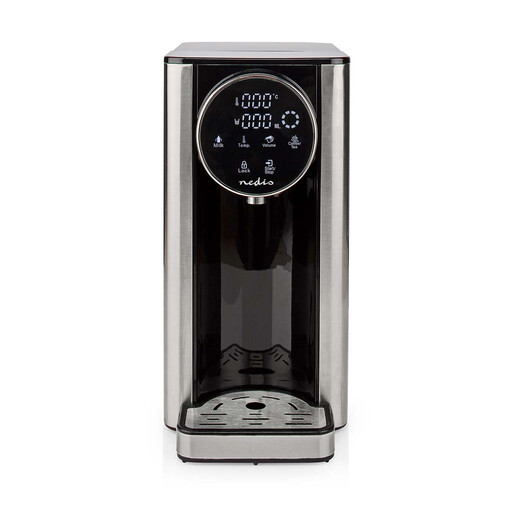 No image available
Could be a good fit if you want to match the amount and temperature to the soup instructions and have enough room for the spout.
According to the product description, it has five volume settings from 100 ml to 2.7 litres and seven temperature settings. The holder beneath the spout can be up to 16 cm high.
The tank and drip tray are removable.
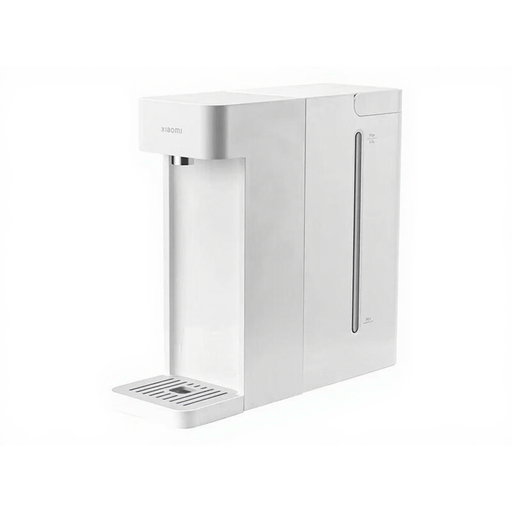 No image available
Could be a good fit if you want to choose a portion and temperature that match the preparation instructions for your soup.
The product description lists amounts of 250, 500 and 750 ml and four temperature presets, with an adjustable range of 45 to 90 °C.
The description gives the tank capacity as 3 litres.
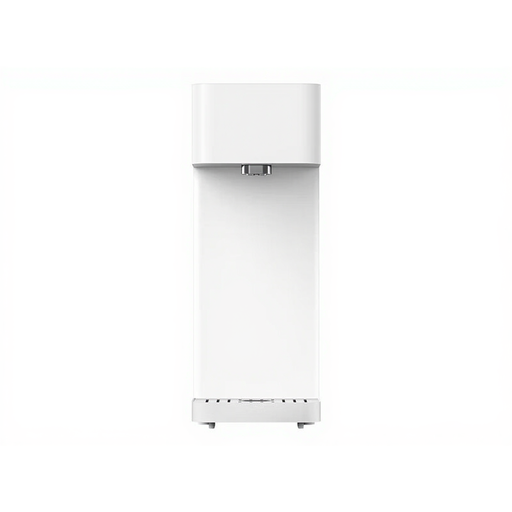 No image available
Could be a good fit if you want hot water on demand and the stated settings suit the way you prepare your soup.
The product description lists four set water volumes and a 3-litre tank. The product title states that it has two modes and five temperature settings.
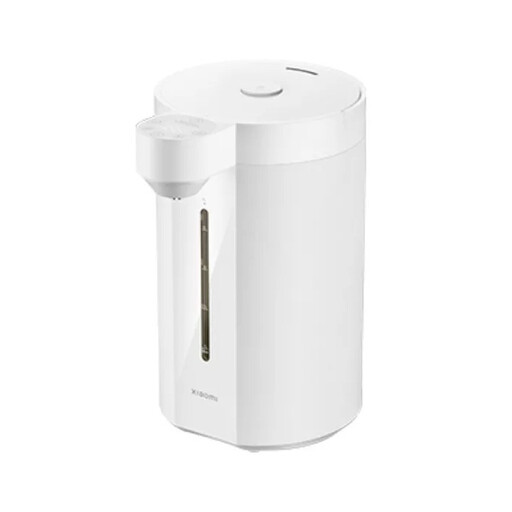 No image available
Could be a good fit if you’re looking for a hot water dispenser with adjustable temperature settings and have space for a 5-litre tank.
The product description lists adjustable temperatures, touch controls, automatic shut-off and a child lock.
 No image available
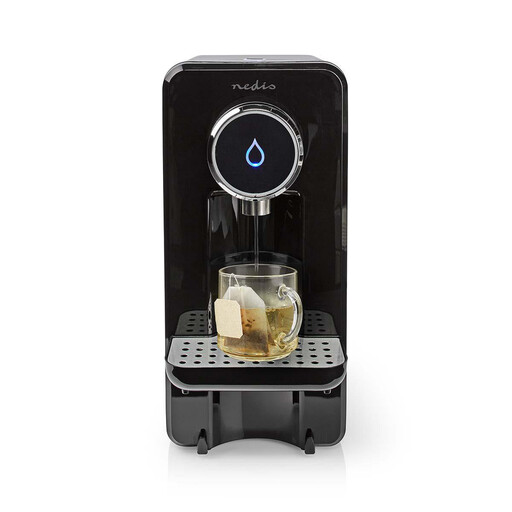
Could be a good fit if a set portion of around 200 ml or continuous dispensing up to 500 ml suits your soup preparation.
The product description states that it dispenses boiling water at around 98–100 °C and has no temperature selection. This model is therefore not suitable for soup instructions that specify a lower water temperature.
The spout is adjustable and the drip tray is removable.
No. Follow the preparation instructions on the packaging of the soup you buy. The Voedingscentrum uses boiling water in a specific noodle soup recipe; this isn’t a general instruction for all instant soups.
No, not with the Tomado TWD2501B: its manual says to fill the appliance with water only. Put the soup in a suitable bowl, and check the user manual for any other model.
Follow the cleaning and descaling instructions for the exact model. The Tomado TWD2501B manual recommends regular cleaning; Milieu Centraal advises descaling water-heating kitchen appliances in good time.
CE marking is required for a new electrical consumer product placed on the Dutch market, according to the Netherlands Food and Consumer Product Safety Authority. Check the marking on the specific product; CE marking is not the same as a mandatory independent inspection.
Yes. According to ACM ConsuWijzer, your statutory guarantee is in addition to the seller’s guarantee.