
Vandaag of morgen in huis

Kwaliteit gegarandeerd

Welkomstaanbiedingen ontgrendelen: GRATIS bezorging | Tot 80% korting | Gratis 30 dagen JoyPlus-proefperiode
Download de app
A bowl of instant shrimp-flavoured noodles can be on the table in no time, but the options vary widely. One packet contains mostly seasoning powder and a small amount of shrimp flavouring, while another also includes dried vegetables, fish or other seafood. Portion size, spiciness and preparation method also differ.
So don’t just rely on a picture of a steaming bowl. Always check the label, the allergens and the number of servings. That way, you can avoid buying a large box whose flavour doesn’t suit you, or choosing portions that are too small for an office stash.
The words “shrimp”, “seafood” or “garnalen” on the front don’t tell you how much shellfish has actually been added. The ingredients list may mention shrimp powder, flavouring or a spice blend containing several types of fish and seafood. Some products also include squid, mussel, scallop or crab.
If you’re after a clear shrimp taste, it’s worth checking the order of ingredients and any percentages. A product with seafood powder can taste more complex than a simple shrimp broth, but it’s not suitable if you want to avoid specific shellfish.
A box of 24 or 30 sachets is handy for student houses, families and offices. But you still need to compare the weight per serving. A pack of 30 × 60g contains significantly fewer noodles per sachet than a box of 24 × 127g.
So the term instant noodles 30 pieces only tells you the number of packets, not the amount per meal. Divide the total price by the number of servings and compare the net weight.
With Thai and Korean varieties, the chilli may be in the seasoning powder, the oil or a separate chilli paste. A seafood ramen with tomato, pepper and spices can therefore be noticeably hotter than a Japanese shoyu variant with shrimp.
For an office or a family with different taste preferences, mild Japanese instant noodles are often more practical. Those who love bold flavours can instead choose Korean ramen, Thai instant noodles or an explicitly spicy seafood product.
Most sachets in this category are prepared with around 400 to 500 ml of boiling water and need three to four minutes. Check whether the noodles need to be boiled in a pan or can be steeped in a bowl. A cup variant is handy without a kitchen, while a sachet often gives you more flexibility to add vegetables, egg or tofu.
Also pay attention to the number of sachets:
Instant ramen with seafood often contains several allergens. Think of wheat, soya, fish, shellfish, molluscs and sesame. Always read the current packaging before each purchase, especially if you have an allergy or food intolerance. Online product information can change, and packaging may carry additional warnings.
For example:
So a product labelled “seafood” is not the same as a product with only shrimp flavouring.
Compare the nutritional values per 100g, not just per sachet. A serving can have a very different amount of energy, fat or salt due to the difference in weight. Instant noodles often contain quite a lot of salt, so don’t automatically use all the seasoning oil or the full powder if you want a less intense flavour.
The nutritional values and preparation instructions on the packaging are the definitive guide. The information on a webpage may be limited, so always check the label when you receive the product.
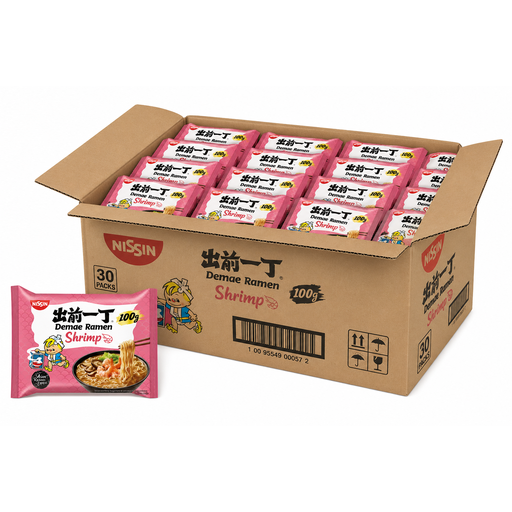
Why it fits this profile: The box contains 30 servings of 100g each, making it straightforward for a student, family or shared stash. According to the product information, the noodles are ready in about three minutes.
The number of sachets and the weight per sachet are clearly stated. The ingredients list mentions shrimp and several types of seafood, so you can check allergens in advance.
30 × 100g, Japanese ramen style, preparation with 500ml water and three minutes’ cooking time according to the product description.
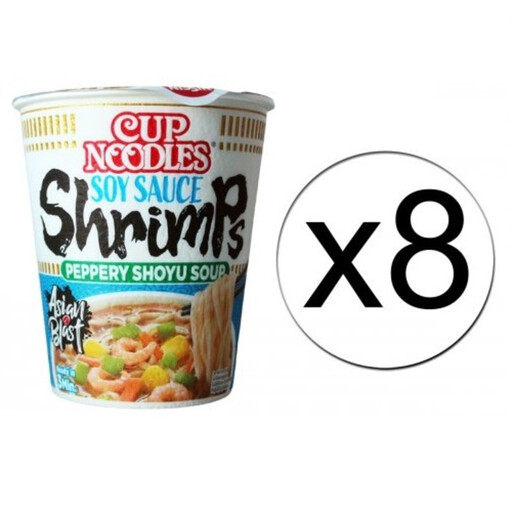
Why it fits this profile: The cups are convenient for a desk, student room or workplace where no pan is available. You just add boiling water up to the fill line.
The portion is pre-measured and the preparation steps are simple. Do check the listed allergens, which include gluten, shellfish, soya, sesame and fish.
8 cups of 63g, three minutes’ steeping and, according to the product description, shrimp, vegetables and herbs.
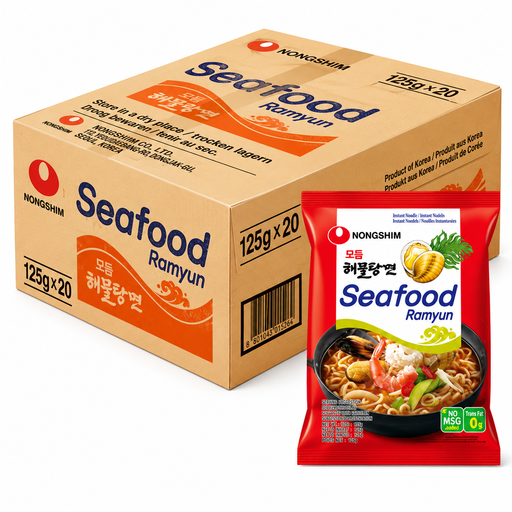
Why it fits this profile: This box is aimed at fans of Korean ramen who want a distinctive seafood broth and larger portions for regular use.
The product information separately lists soup powder and vegetable flakes, plus ingredients such as shrimp, squid, mussel and pollock. This makes the seafood composition verifiable.
20 × 125g, Korean style, seafood in the seasoning profile and dried vegetables such as seaweed and carrot.
We’ve put together a full, up-to-date list of products that fully meet these strict selection criteria and comply with current European safety regulations.
A sachet of instant noodles is quick to prepare, but you can easily adapt the meal:
Please note: fresh shrimp must be fully cooked. Add them to the pan in good time and follow the instructions on the packaging.
Usually you boil or steep the noodles in 400 to 500 ml of boiling water for three to four minutes. Then add the seasoning powder, oil and any vegetable flakes. Always follow the instructions on the individual product.
Store unopened packets in a cool, dry place away from direct sunlight. Check the best-before date on the packaging. Do not use any sachets whose packaging is damaged or feels damp.
Not automatically. Seafood ramen can contain shrimp, fish, mussels, squid or other molluscs. Check the allergen list for each product and don’t rely solely on the name or picture on the front.
